Sciatica and piriformis syndrome can feel almost identical, but they come from different places, and telling them apart changes the entire treatment plan. True sciatica usually starts with a compressed nerve root in the lower spine, while piriformis syndrome comes from a muscle deep in the buttock irritating the sciatic nerve. Treating one as if it were the other is a common reason people do not get better. At Princeton Spine Disc and Chiropractic in Princeton, NJ, Dr. Sojitra focuses on getting that diagnosis right before choosing how to treat it.
Why These Two Get Confused
Both conditions produce that unmistakable pain running from the buttock down the leg, sometimes with tingling, numbness, or weakness. Because the symptom pattern overlaps so heavily, they are easy to mix up, even in a clinical setting.
The key distinction is where the sciatic nerve is being irritated. In one case the trouble starts in the spine. In the other it starts in a muscle. Same nerve, different origin, and that origin is what a treatment plan has to target.
Part of the confusion is that “sciatica” gets used loosely, almost as a name for any leg pain that travels. Used precisely, though, it points to a nerve-root problem in the spine. Piriformis syndrome is one of the conditions most often mislabeled as sciatica, which is exactly why separating them matters.
What Is Sciatica?
True sciatica refers to pain caused by compression or irritation of the sciatic nerve at its root, usually in the lower lumbar spine. A herniated or bulging disc is a frequent culprit, pressing on the nerve where it exits the spine.
Because the problem originates at the spine, sciatica often comes with lower back involvement, and the leg symptoms may follow a specific path that matches the affected nerve level. Certain positions, like sitting or bending forward, can make it worse.
What Is Piriformis Syndrome?
The piriformis is a small muscle deep in the buttock, and the sciatic nerve runs directly beneath it, or in some people through it. When that muscle becomes tight or goes into spasm, it can compress the sciatic nerve right there in the buttock.
The result feels like sciatica, but the source is muscular and well below the spine. This type is often linked to prolonged sitting, overuse, or muscle imbalance, and the tenderness tends to center deep in the buttock rather than the back.
One classic clue is that sitting on a hard surface, or sitting for a long stretch, tends to aggravate piriformis syndrome, since it puts direct pressure on the muscle and the nerve beneath it.
Sciatica vs. Piriformis Syndrome: How to Tell Them Apart
- Origin: a spinal nerve root for sciatica, a buttock muscle for piriformis syndrome.
- Back pain: common with sciatica, often absent with piriformis syndrome.
- Main tender spot: the lower back or path of the nerve versus deep in the buttock.
- Common trigger: disc problems and spinal positions versus a tight, overworked muscle.
- What aggravates it: bending and sitting for sciatica, direct pressure on the buttock for piriformis.
Why the Difference Changes Everything
Here is where getting it right pays off. If the real problem is a compressed nerve root in the spine, treatment aimed at the buttock muscle will not touch the cause. And if the problem is a tight piriformis muscle, spinal treatment alone may miss the mark.
This is exactly why so many people bounce between treatments without lasting relief. The care was not wrong so much as aimed at the wrong location. An accurate diagnosis is not a formality here, it is the thing that determines whether treatment works.
It also affects how quickly you improve. When the plan matches the source from the start, there is far less trial and error, and progress tends to come sooner.
What Happens When the Diagnosis Is Wrong
Picture someone with a tight piriformis muscle who is treated as though they have a disc problem. Weeks of spine-focused care may bring little change, because the muscle causing the trouble was never addressed. The reverse is just as common: a genuine disc issue treated only with muscle work that never reaches the compressed nerve.
In both cases the patient often concludes that treatment “does not work” for them, when the real issue was aim. This is a big reason leg and buttock pain becomes a long, frustrating saga for so many people, and why the diagnosis deserves real attention up front.
How Dr. Sojitra Pinpoints the Real Source
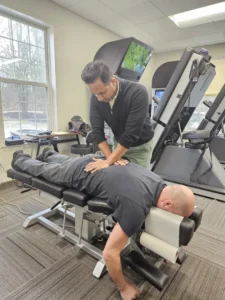
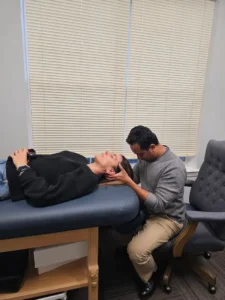
Distinguishing the two takes more than noting where it hurts. Dr. Sojitra uses a detailed evaluation, including orthopedic and neurological testing, specific movement and positional tests, and a careful history, to trace the symptoms back to their origin.
When the picture points toward the spine, imaging may be used to confirm disc involvement. When it points toward the muscle, the exam findings guide the plan instead. This diagnostic step is the heart of the practice’s root-cause approach, and it happens before any treatment begins.
That upfront clarity is what spares people from months of aiming at the wrong target.
Treating Each One Correctly
Once the source is clear, the treatment follows naturally.
Treating True Sciatica
When a disc and nerve root are the cause, the priority is relieving that compression. Spinal decompression is a primary tool, gently reducing pressure on the disc and nerve. Since disc problems often drive sciatica, this guide on herniated versus bulging discs is a helpful companion.
Treating Piriformis Syndrome
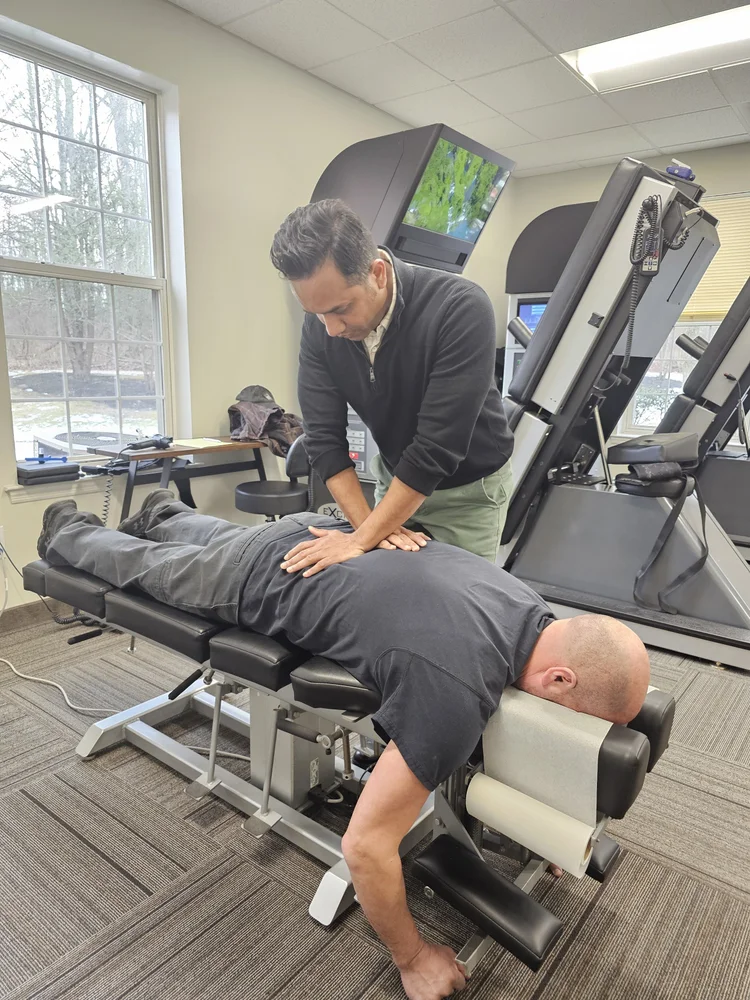
When a tight muscle is the cause, treatment focuses on releasing the piriformis and correcting whatever is keeping it tight. That can include hands-on chiropractic care, soft-tissue work, and addressing the movement patterns or pelvic mechanics behind the spasm. Any related back pain is factored in as well.
Frequently Asked Questions
Can I have both at once?
Yes. It is possible to have both a spinal contribution and a tight piriformis at the same time, which is another reason a careful evaluation matters. The plan then addresses both sources rather than assuming one.
Can I tell which one I have on my own?
It is difficult, because the leg symptoms feel so similar. Some clues, like whether you also have back pain, can hint at the answer, but a proper exam is the reliable way to know.
Is surgery needed for either one?
Usually not. Both often respond to non-surgical care once correctly diagnosed. Surgery is generally reserved for specific situations, such as significant nerve compression that does not improve with conservative treatment.
Why did my previous treatment not help?
One common reason is that the treatment was aimed at the wrong source, treating the spine when the muscle was the problem, or the reverse. Revisiting the diagnosis is often the first step toward getting unstuck.
Get the Right Diagnosis First
If buttock and leg pain has not improved, the issue may be that it is being treated as the wrong condition. Call the practice at (609) 228-9996 or reach out through our contact page to schedule an evaluation in Princeton, NJ.