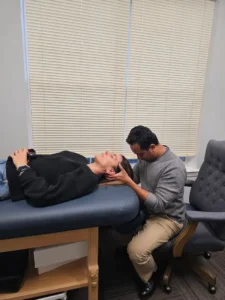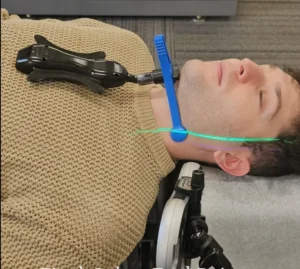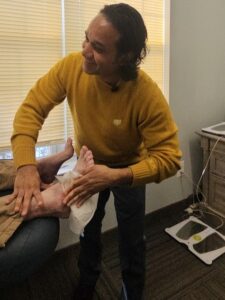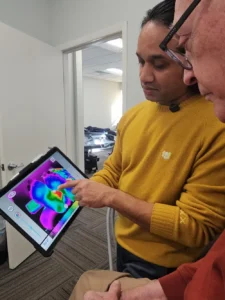
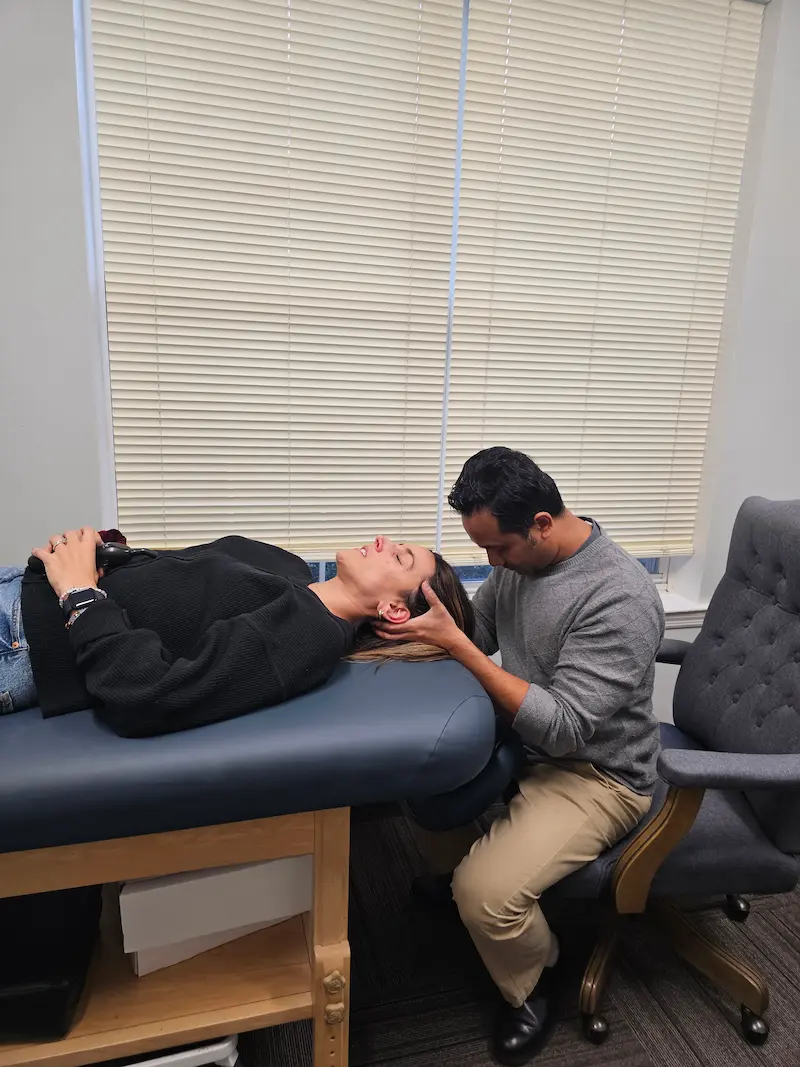
A cervicogenic headache is a headache that actually originates in the neck, even though the pain is felt in the head. It usually comes from restricted or irritated joints in the upper cervical spine, the C1 to C3 region, which refer pain up into the head. These headaches are often mistaken for tension headaches or migraines, which is why they can go unresolved for years. At Princeton Spine Disc and Chiropractic in Princeton, NJ, Dr. Sojitra addresses the neck-based source directly, as a complement to any medical care you are already receiving.
What Makes a Headache “Cervicogenic”
The word cervicogenic simply means “originating from the neck.” So a cervicogenic headache is one where the pain shows up in your head, but the actual source is in your cervical spine.
This is different from a headache caused by things happening inside the head itself. Here, the structures of the upper neck are generating the pain and referring it upward, which changes how it should be approached.
Signs Your Headache May Be Coming From Your Neck
Cervicogenic headaches have some telltale features. They often include:
- Pain that starts at the base of the skull and spreads forward
- Headache on one side, often the same side each time
- Pain that worsens with certain neck positions or movements
- Reduced neck mobility or stiffness alongside the headache
- Tenderness in the upper neck and the base of the skull
If your headaches travel with your neck pain, or flare when you have been at a screen too long, the neck is worth a serious look.
Why the Upper Neck Causes Head Pain
The top three vertebrae in your neck, C1 through C3, share nerve pathways with the head and face. When joints in this region become restricted or irritated, they can refer pain into the head through those shared pathways.
Forward head posture, the kind that comes from long hours looking down at a phone or laptop, loads this exact area. Over time that steady strain on the upper neck can keep the whole headache pattern going. This overlaps closely with what drives a lot of everyday headaches and tension.
There is a name for the mechanism behind this. The upper cervical nerves and the nerve that handles sensation for much of the head converge in the same area of the brainstem, so the brain can misread neck pain as head pain. That crossover is why a neck problem can feel so convincingly like a headache.
Posture, Screens, and Tech Neck
A lot of cervicogenic headaches trace back to a very ordinary habit: hours spent looking down at a phone, laptop, or tablet. That forward-head position quietly loads the upper neck, hour after hour.
Over time, the muscles at the base of the skull stay tight, the upper cervical joints stiffen, and the pain-referring structures get irritated. For anyone in Princeton or the greater Princeton area juggling desk work and screens, this is one of the most common setups behind recurring head pain.
Cervicogenic Headache vs. Migraine: How They Differ
These two get confused constantly, partly because they can overlap. But there are some useful differences.
A cervicogenic headache usually stays on one side, is tied to neck movement, and starts from the back of the head. A migraine more often brings its own package of symptoms, like nausea, light and sound sensitivity, and sometimes visual aura, and it is not primarily driven by neck position. That said, the neck can contribute to migraines too, which is why an evaluation matters more than self-diagnosis.
How Dr. Sojitra Treats Cervicogenic Headaches in Princeton, NJ
Since the source is in the neck, that is where the work centers. The plan is tailored to what the evaluation finds.
Upper Cervical Chiropractic Care
Chiropractic care focused on the upper cervical spine aims to restore proper movement to those C1 to C3 joints and take the strain off the pain-referring structures. This is the core of addressing a cervicogenic headache at its source.
Supporting Therapies
Cold laser and other supporting tools are often added to calm irritated tissue and muscle tension in the neck. The goal is to reduce how often and how intensely the headaches show up, not to mask them.
Posture and movement guidance often comes into the plan as well. If forward head posture is feeding the problem, changing how you sit and hold your head during the day helps the hands-on work actually hold.
Cranial Facial Release Where Relevant
For some patients, especially where sinus pressure or cranial tension is involved, Cranial Facial Release may be part of the plan. You can learn more in this guide on what Cranial Facial Release is.
What to Expect at Your Evaluation
The first visit is an evaluation rather than a treatment session. Dr. Sojitra assesses how the upper cervical joints move, checks posture and muscle tension, and works to confirm whether the neck is actually the source of your headaches. Care begins at a follow-up visit, once there is a clear plan.
That step matters, because not every headache is cervicogenic. Confirming the source first is what keeps the treatment aimed at the right target instead of guessing.
A Complement to Your Medical Care, Never a Replacement
This point matters, so here it is plainly. Chiropractic care for headaches is meant to address the cervical, neck-based component. It is not a cure for migraines, and it does not replace neurology or the care of your physician.
If you take medication for headaches or migraines, you should not stop it on your own. The right approach is to let neck-focused care work alongside your medical treatment, so both are pulling in the same direction.
When to See a Doctor Right Away
Most headaches are not dangerous, but a few warning signs call for immediate medical attention rather than a routine visit:
- A sudden, severe headache unlike any you have had before
- Headache with fever, stiff neck, confusion, or vision changes
- Headache after a significant head injury
- A headache that steadily worsens or does not let up
If any of these apply, seek medical care promptly. For persistent, neck-linked headaches without these red flags, an evaluation is a sensible next step.
Frequently Asked Questions
Can neck problems really cause headaches?
Yes. The upper cervical spine shares nerve pathways with the head, so restricted or irritated joints there can refer pain upward. This is a well-recognized headache pattern.
Will chiropractic cure my migraines?
No, and it should not be presented that way. What it can do is address the neck-driven component, which for some people helps reduce how often and how severely headaches occur, alongside their medical care.
How do I know if my headache is cervicogenic?
An evaluation is the reliable way to tell. Features like one-sided pain that tracks with neck movement point toward it, but they need to be confirmed rather than assumed.
Find Out if Your Neck Is Behind Your Headaches
If your headaches keep coming back and the usual explanations have not fit, your neck may be the missing piece. Call the practice at (609) 228-9996 or reach out through our contact page to schedule an evaluation in Princeton, NJ.