Knee Pain Treatment in Skillman NJ

Knee pain is one of the hardest conditions to treat well because most providers address either the inflammation or the joint space but rarely both at once. Dr. Sojitra’s knee protocol covers both, and the results reflect it.

Knee Pain Relief in Princeton NJ

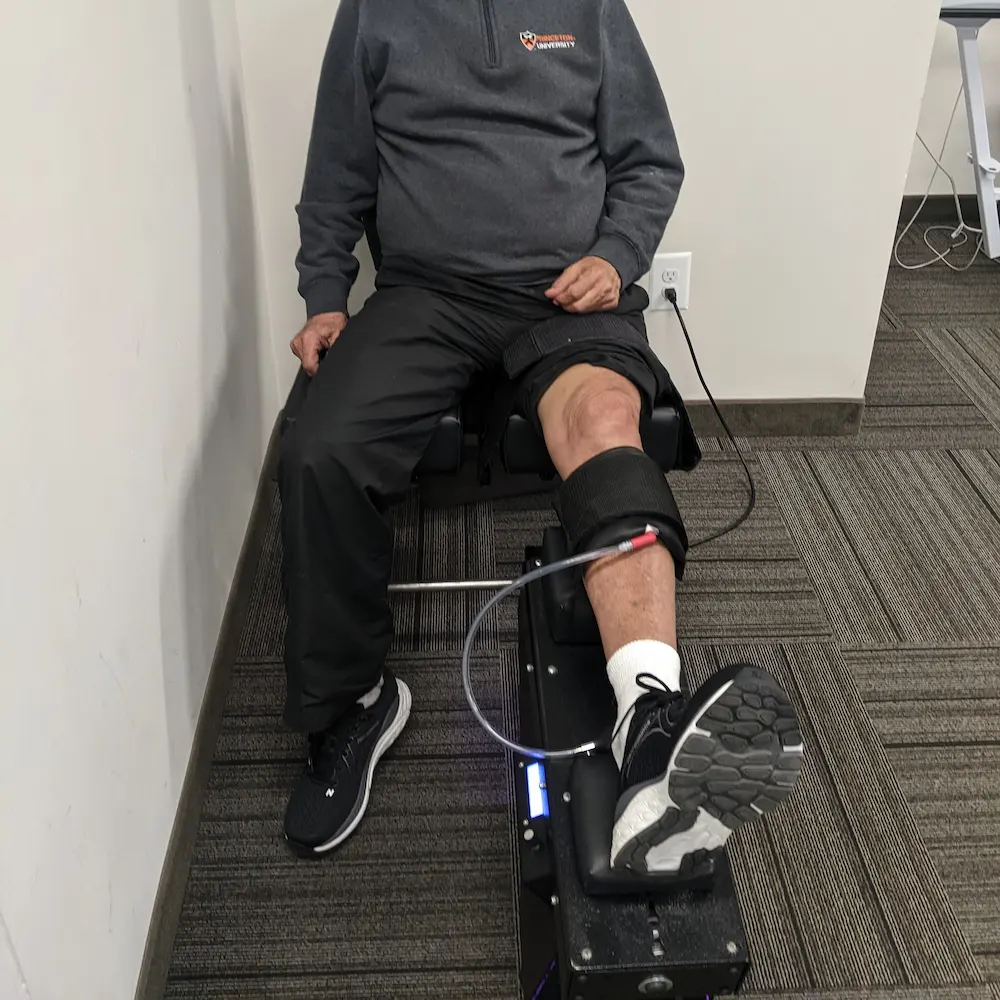
A person seated, with their right leg strapped into a rehabilitation machine, wearing a Princeton University sweatshirt.
The knee that catches on the stairs. The grinding sensation gradually getting worse. The swelling that returns every time you push too hard. Being told it’s bone on bone and replacement is the next step. If that sounds familiar, you’ve likely been through the standard progression: anti-inflammatories, cortisone injections, physical therapy, and eventually a conversation about surgery.
What that progression shares is addressing symptoms without reversing deterioration. Anti-inflammatories reduce swelling temporarily. Cortisone shots last weeks to months. Physical therapy builds muscle support without addressing what’s happening inside the joint. Surgery replaces the joint once it’s degraded past function. At no point does anything drive genuine regeneration inside the knee tissue or restore the joint space that cartilage and function depend on.

Dr. Sojitra’s knee protocol is built around those two missing elements, tissue regeneration and joint space restoration, combined with a neurological and spinal assessment to determine whether the lumbar spine is contributing through its nerve supply.

White line art icon of a knee joint with radiating lines indicating pain.

Chronic aching inside or around the knee that worsens with activity

Icon of two separated, stylized white bone segments with radiating lines on a black background.

Swelling that returns after exertion or prolonged standing

A white outline drawing of a stylized figure with a circular head, horn-like protrusions, and arm-like extensions, on a black background.

Stiffness and reduced range of motion difficulty fully straightening or bending the knee

Icon of a painful or inflamed joint with jagged bone ends and radiating pain indicators.

Grinding, clicking, or catching sensation with movement

White outline icon of two bent legs on a black background.

Giving way or instability during weight-bearing

White pixelated silhouette of a person walking up stairs, holding an object.

Pain that limits stairs, walking distance, or normal daily activity

What Drives Knee Degeneration and Pain

Knee pain develops from a combination of mechanical stress, tissue damage, and the body’s compensatory response. The patterns are predictable once you understand the underlying biology.

01

Osteoarthritis and cartilage wear the most common cause of chronic knee pain, where cartilage gradually breaks down and reduces the space between joint surfaces

02

Bone-on-bone degeneration the endpoint of cartilage loss, where direct contact between joint surfaces creates friction and inflammation with every step

03

Meniscus tears the fibrocartilage discs that cushion and stabilize the knee are vulnerable to both acute injury and gradual degeneration, disrupting normal joint mechanics

04

Ligament laxity and instability from prior injuries that were never fully rehabilitated

05

Patellar tendinopathy and tracking problems creating chronic anterior knee pain with activity

06

Lumbar and sciatic nerve involvement the knee’s nerve supply originates at L4-L5, meaning lumbar disc compression at those levels can produce knee symptoms without obvious back pain

07

Post-surgical changes scar tissue, altered mechanics, and residual inflammation after prior knee surgery

How Princeton Spine Disc and Chiropractic Addresses Knee Pain in Skillman NJ

The knee protocol at this practice combines four elements that each address a different layer of the problem simultaneously making it the most comprehensive non-surgical knee treatment approach in central New Jersey.

SoftWave Therapy

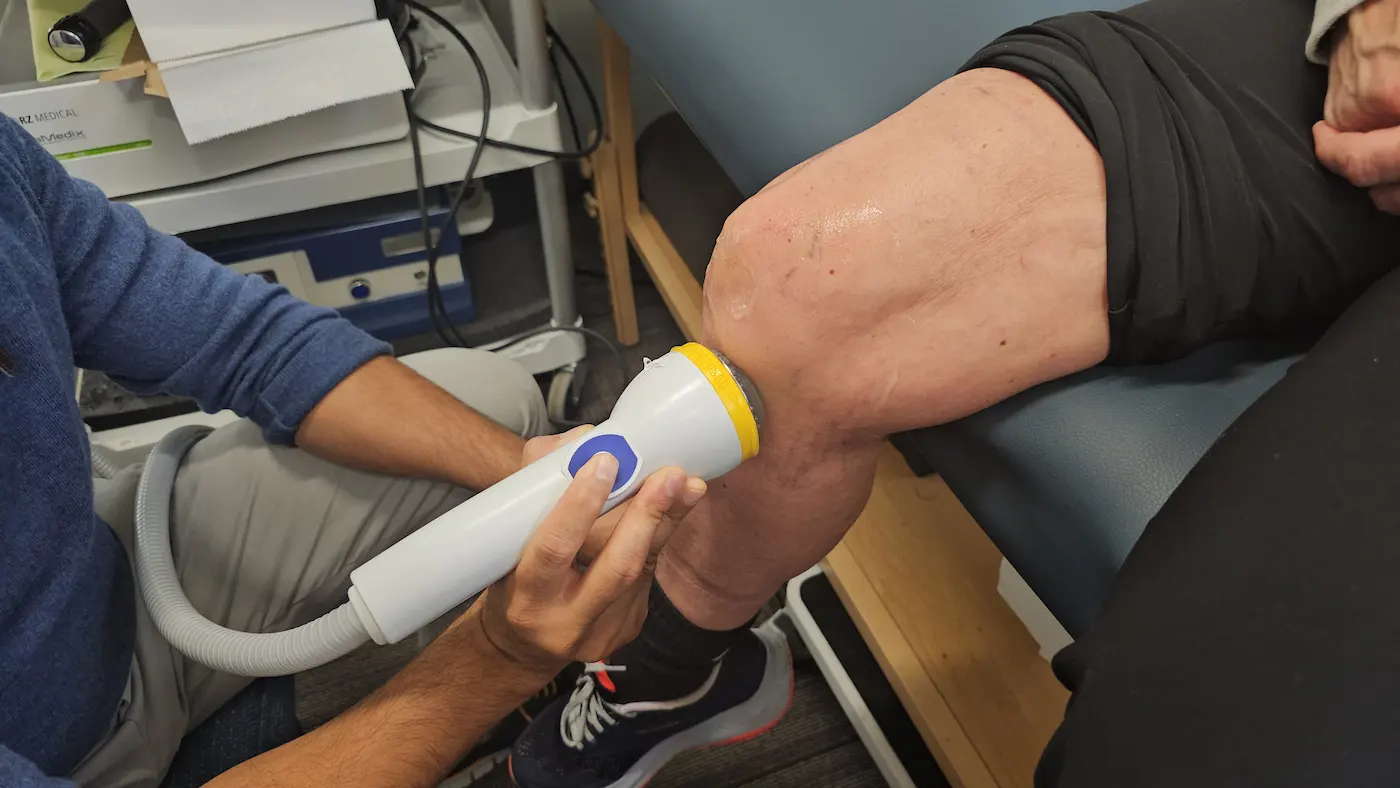
SoftWave delivers electrohydraulic acoustic waves deep into the knee joint stimulating blood flow, breaking down scar tissue and calcifications, activating stem cell recruitment in damaged cartilage, and restarting a regenerative process that has stalled. Dr. Sojitra was one of the first providers in New Jersey to offer SoftWave and has years of experience applying it specifically to knee conditions. Learn more about SoftWave therapy.

Knee Decompression

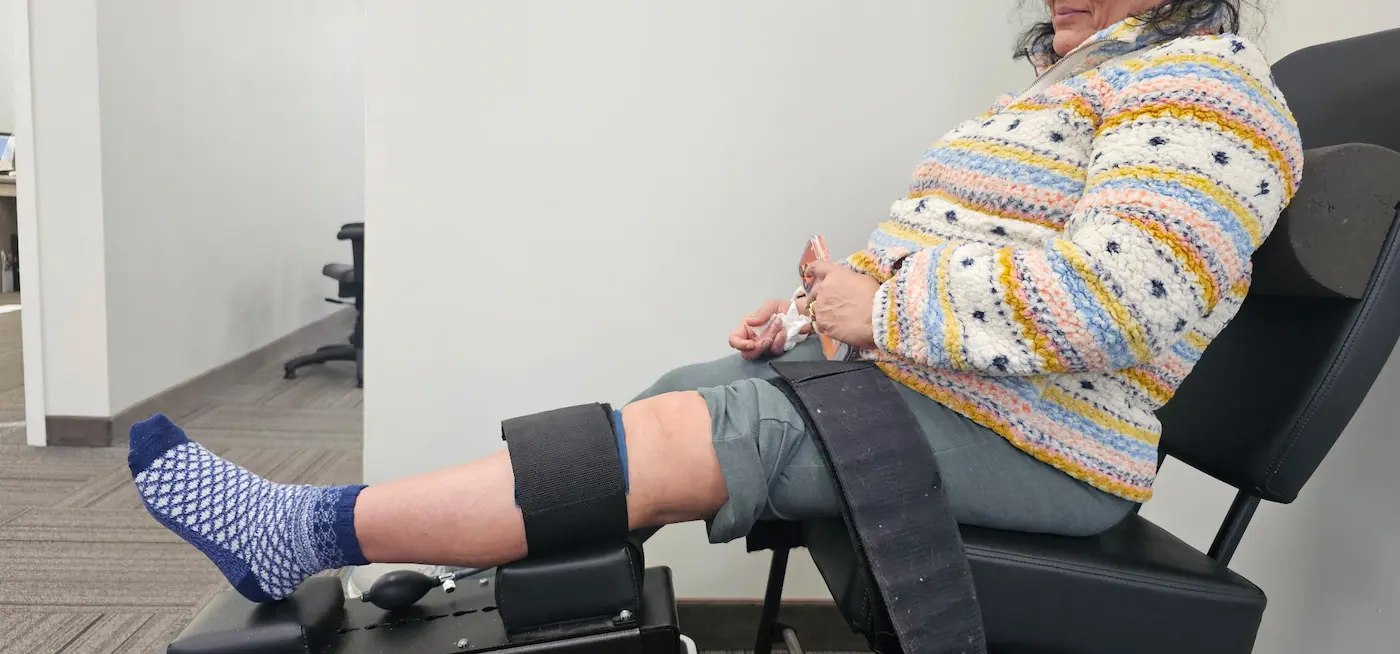
SoftWave addresses the tissue. Knee decompression addresses the joint space. A specialized device gently distracts the knee joint surfaces, creating negative pressure inside the joint capsule that restores spacing, improves synovial fluid circulation, and reduces bone-on-bone pressure. For patients with confirmed joint space loss, this is the structural intervention SoftWave alone cannot provide. Sessions run seven to ten minutes and are comfortable. Learn more about knee decompression.

EMTT - Magnetolith

EMTT adds the cellular regeneration layer that completes the protocol. Working from inside the cell through electromagnetic transduction, it charges mitochondrial energy production and activates stem cell activity at the deepest biological level. Where SoftWave works from outside the cell, EMTT works from within together producing a layered regenerative response neither achieves alone. Learn more about EMTT therapy.

Zone Technique Chiropractic

The knee’s nerve supply originates at L4-L5. When those segments are restricted or a disc is compressing the relevant nerve roots, knee function is compromised contributing to weakness, altered mechanics, and reduced healing capacity. Zone Technique analysis identifies any spinal contribution, and adjustments address it directly. For many knee patients, correcting that lumbar dysfunction produces a noticeable change in knee symptoms. Learn more about chiropractic care and Zone Technique.
Side view of a person seated on a black therapy chair, with their left leg extended and secured to medical equipment. They wear a colorful jacket and blue patterned socks.

What "Bone on Bone" Actually Means and What Can Be Done
Being told your knee is bone on bone implies a structural endpoint, with replacement almost always the next sentence. What that framing misses is that bone-on-bone degeneration describes joint space loss, and joint space can be mechanically restored and biologically supported.
Knee decompression physically restores joint spacing, creating the environment cartilage needs to receive synovial fluid and reduce friction. SoftWave and EMTT drive tissue regeneration inside the joint, activating stem cells and rebuilding the cellular environment remaining cartilage depends on. Zone Technique adjustments address the neurological and spinal contributions to the knee’s healing capacity.
This is not a guarantee. Some knees have degeneration beyond what conservative care can meaningfully address, and replacement is the right path for those patients. But many with bone-on-bone diagnoses have reduced pain, improved function, and avoided or delayed surgery through this protocol. It deserves a serious evaluation before replacement is scheduled.
Close-up of a medical device being applied to a patient's knee, which has gel on it.

Who This Protocol Is Designed For

Frequently Asked Questions About Knee Pain

Can SoftWave actually regenerate cartilage in a bone-on-bone knee?
SoftWave activates stem cell recruitment and drives tissue regeneration in the joint, meaningfully different from the zero regenerative activity of cortisone injections or standard physical therapy. Whether it translates to significant clinical improvement depends on degeneration severity and how consistently the full protocol is applied. Many bone-on-bone patients have seen significant improvement in pain and function. Dr. Sojitra presents what the protocol can do based on his patients’ actual outcomes.
How is this different from the shockwave therapy advertised for knees?
Most advertised shockwave therapy is radial pulse therapy, a different, less powerful technology. SoftWave is electrohydraulic, penetrating deeper, working safely on bone and joint structures, and producing a stem cell activation response that radial pulse devices cannot. Dr. Sojitra also offers E-PAT radial pulse therapy for appropriate soft tissue conditions and applies the right tool for each case.
Can I have this treatment if I've already had a knee replacement?
Yes, in most cases. Patients at least six months post-op can safely receive the full knee protocol including SoftWave, knee decompression, and EMTT. It is particularly useful for continued stiffness or limited range of motion after replacement.
How many sessions does the knee protocol take?
SoftWave protocols typically run 8 to 12 sessions over two to three months, with knee decompression and EMTT integrated throughout. Dr. Sojitra sets the specific session count and timeline at the Day 2 visit based on evaluation findings and condition severity.
Is this covered by insurance?

Princeton Spine Disc and Chiropractic is an out-of-network practice. SoftWave therapy, knee decompression, and EMTT are not covered by standard insurance plans. Patients with PPO coverage may submit claims for potential reimbursement. Full details are reviewed at the Day 2 visit.

Have questions about the knee protocol? We are happy to help.

Ready to Explore What the Full Knee Protocol Can Do in Skillman?

If you have been told replacement surgery is your only option, we would like to show you what the non-surgical protocol can do first.