Extremity and Joint Pain Treatment in Princeton NJ
When Pain in Your Joints and Limbs Will Not Go Away
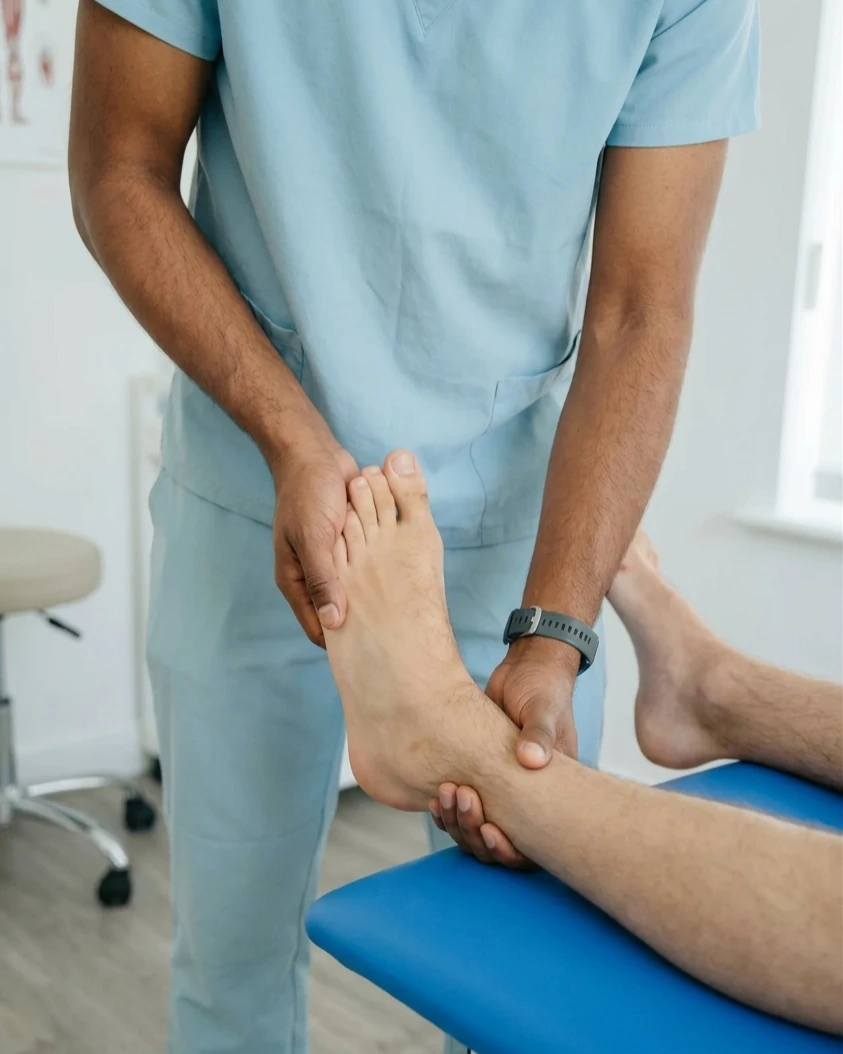
The shoulder that aches reaching overhead. The elbow sore for months since a new workout. The ankle that never felt right after that sprain two years ago. The plantar fasciitis that keeps coming back. Extremity and joint pain covers an enormous range of conditions, but patients who find this practice tend to have one thing in common: they’ve tried the standard approach and are still dealing with it.
Dr. Sojitra evaluates both. Full-body adjusting addresses joint mechanics directly. Zone Technique analysis identifies cervical or lumbar contributions. SoftWave, EMTT, and NeuFit address the tissue, cellular, and neuromuscular layers. The combination produces outcomes that treating the extremity alone consistently fails to achieve.
When the Pain in Your Arm or Leg Is Coming From Your Spine
Common spinal contributions to extremity pain:
- Cervical disc compression at C5-C6 commonly refers to the outer shoulder and upper arm often diagnosed as rotator cuff impingement when the cervical spine has never been assessed
- C6-C7 compression refers to the forearm and into the thumb and index finger often misattributed to carpal tunnel syndrome
- L4-L5 compression refers to the outer thigh and knee area
- L5-S1 compression refers into the calf and foot
This doesn’t mean all extremity pain comes from the spine it means both possibilities need to be evaluated, which is what the Day 1 assessment at this practice does.
Treating the Joint Directly
Many extremity conditions are local problems at the joint, tendon, or surrounding tissue that respond to direct treatment. Dr. Sojitra addresses these with a combination of joint adjusting and regenerative tools.
01
Extremity Adjustments
02
SoftWave Therapy
03
EMTT - Magnetolith
04
NeuFit Therapy
05
Cold Laser Therapy
Cellular inflammation in joints, tendons, and bursae responds to the multi-wavelength photobiomodulation of the Erchonia GVL and Avant systems. Laser is often the fastest-acting tool for reducing the acute inflammatory response that makes certain extremity conditions painful to treat directly at the start of care. Learn more about cold laser therapy.
Extremity and Joint Conditions We Address in Princeton NJ
Upper extremity:
- Shoulder pain, rotator cuff tendinopathy, and impingement
- Frozen shoulder and adhesive capsulitis
- AC joint pain and shoulder separation
- Calcific deposits in the shoulder confirmed by imaging
- Tennis elbow (lateral epicondylitis) and golfer's elbow (medial epicondylitis)
- Carpal tunnel symptoms - both from wrist compression and from cervical nerve root involvement
- Wrist and hand pain, stiffness, or weakness
- Numbness and tingling in the arm or hand from cervical origin
Lower extremity:
- Knee pain - see dedicated knee pain page for the full knee protocol
- Hip pain, bursitis, and degenerative hip conditions
- IT band syndrome and chronic lateral hip and thigh pain
- Patellar tendinopathy and anterior knee pain
- Ankle sprains with chronic instability or incomplete recovery
- Plantar fasciitis and heel pain
- Achilles tendinopathy
- Foot and toe pain including bunion-related discomfort
Neurological referral patterns:
- Arm pain or numbness from cervical nerve roots - learn more about neck pain treatment
- Leg pain or numbness from lumbar nerve roots - learn more about sciatica treatment
Your Extremity Evaluation at Princeton Spine Disc and Chiropractic
- Zone Technique analysis to assess the full neurological picture
- Health history focused on the specific joint, including onset, mechanism, prior treatments, and functional limitations
- Spinal assessment to determine whether cervical or lumbar nerve root involvement is contributing, a step most extremity-focused practitioners skip
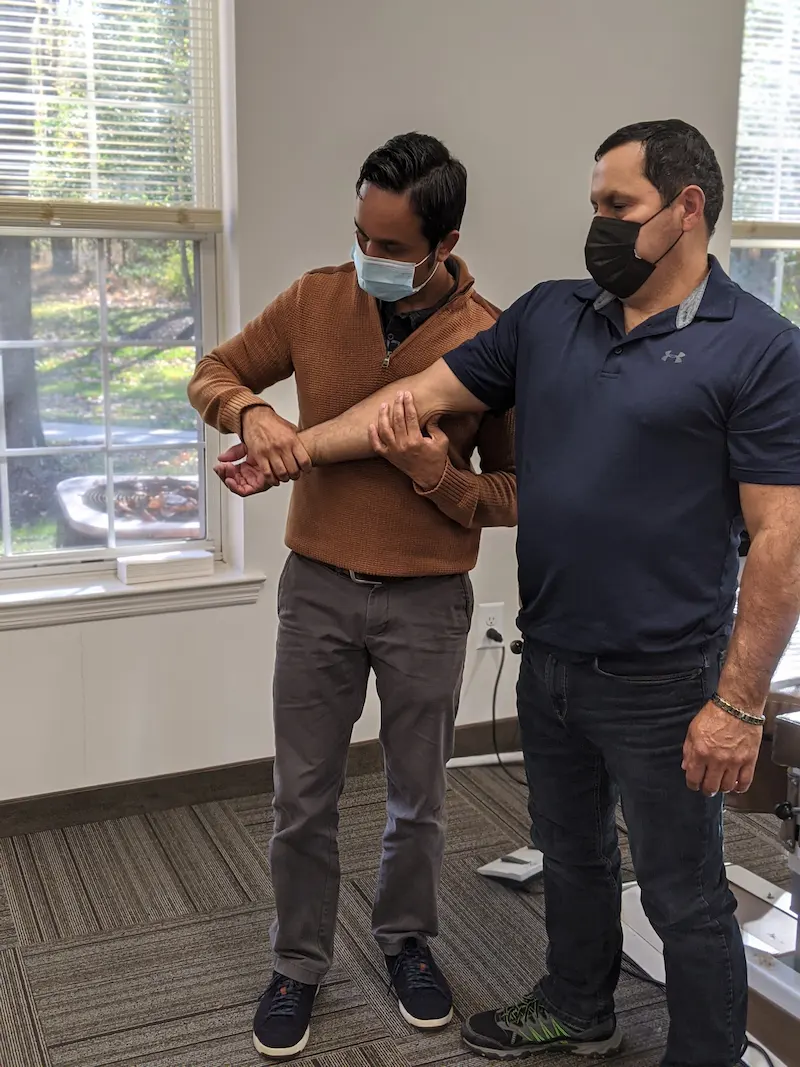
- Joint assessment covering range of motion, stability, strength, and palpation of the joint capsule, surrounding tendons, and bursae
- Orthopedic testing specific to the joint in question
- Digital X-rays where degenerative joint changes or structural injury is suspected
- Thermography for physiological heat pattern assessment, particularly useful for knee and shoulder cases