
Herniated and Bulging Disc Treatment in Princeton NJ
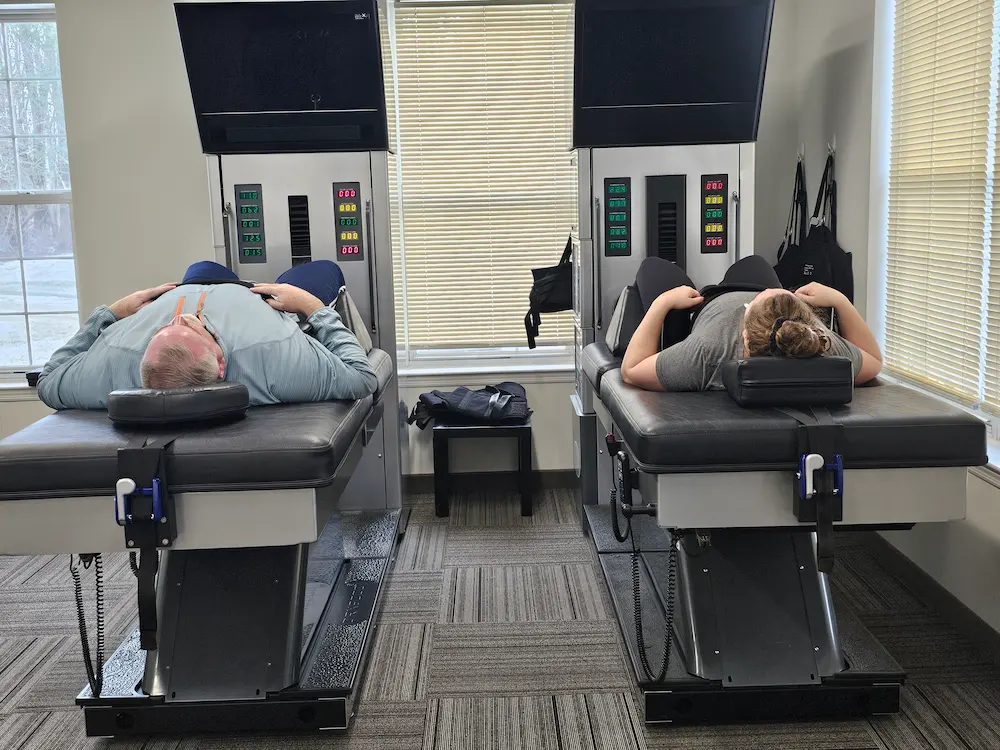
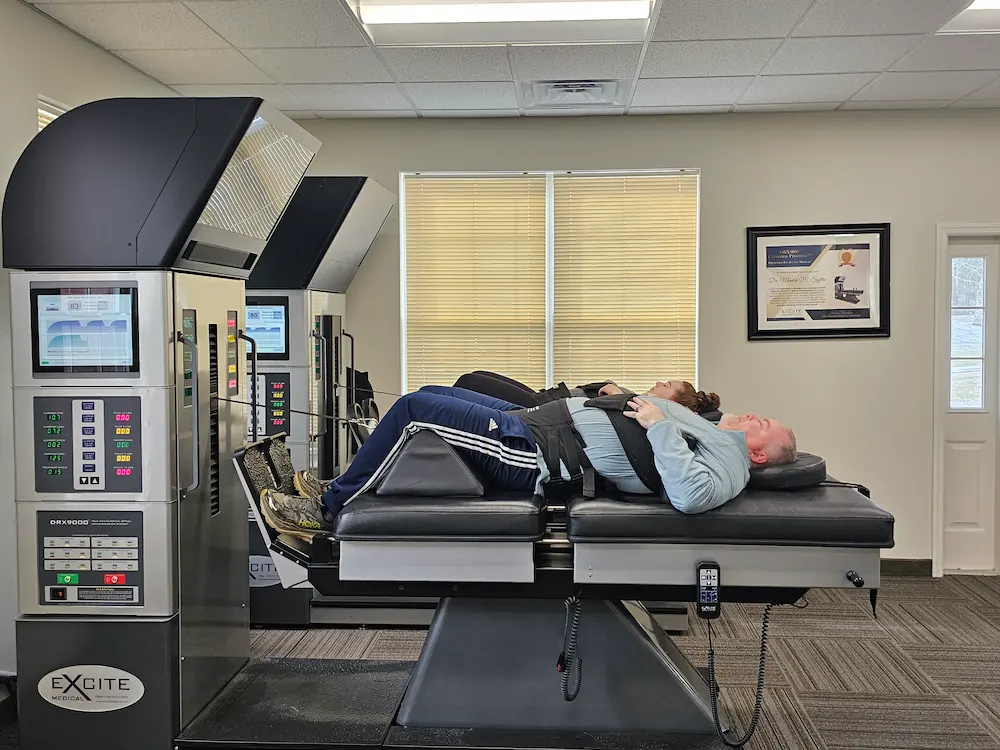
Disc pain is Dr. Sojitra’s clinical home. It’s literally in the name of this practice, and the DRX9000 decompression system was one of the first tools he invested in after experiencing disc herniation himself.
Understanding Disc Pain in Princeton NJ
Disc patients describe a deep, unrelenting ache in the lower back combined with a sharp electric sensation shooting down the leg. Numbness that wakes them at 3am. Coughing or sneezing that sends a wave of pain that takes their breath away. If that sounds familiar, you’re almost certainly dealing with a disc problem.
The bulge vs. herniation distinction matters less than which disc is involved, which nerve roots are compressed, how severe the compression is, and what’s driving the mechanical load that caused the disc to fail. Dr. Sojitra’s evaluation answers all four questions before recommending anything.

Deep, aching low back or neck pain that doesn't resolve with rest

Pain that radiates into the leg (lumbar discs) or arm and hand (cervical discs)

Numbness or tingling in the leg, foot, hand, or fingers

Muscle weakness in the affected limb, difficulty lifting the foot, gripping, or controlling movement

Pain that significantly worsens with sitting, bending forward, coughing, or sneezing
Why Disc Problems Develop
01
02
03
04
05
06
Dr. Sojitra's Approach to Disc Pain in Princeton NJ
Zone Technique Chiropractic Adjustments
DRX9000 Spinal Decompression
Cold Laser Therapy
The inflammation around a compressed nerve root produces the burning, shooting sensation disc patients describe. Cold laser therapy using the Erchonia GVL and Avant systems reduces that cellular inflammation directly, helping decompression corrections hold longer and shortening the overall healing timeline. Learn more about cold laser therapy.
EMTT - Magnetolith
Your First Disc Pain Evaluation at Princeton Spine Disc and Chiropractic
- Zone Technique analysis to assess nervous system status
- Health history focused on symptom onset and progression, aggravating and relieving factors, and prior treatments
- Orthopedic and neurological testing specific to disc conditions, including straight leg raise, disc provocation testing, and dermatome and reflex assessment to identify affected nerve roots
- Digital motion analysis X-rays to evaluate segmental disc height, vertebral positioning, and movement patterns under load
- Review of any prior MRI, CT, or imaging, with Dr. Sojitra reviewing images himself rather than relying on radiology reports alone
- Thermography where indicated to identify physiological heat patterns correlated with disc inflammation

Why Most Disc Problems Do Not Require Surgery
The majority of herniated and bulging disc cases resolve with conservative care. Surgery is necessary only in a small percentage of cases, specifically those involving severe neurological compromise such as loss of bowel or bladder control, rapidly progressing leg weakness, or foot drop unresponsive to conservative treatment. For most patients with disc pain, sciatica, and radiating symptoms, conservative care is the appropriate first-line approach.
The body can naturally reabsorb disc material when the mechanical pressure driving the problem is addressed. Dr. Sojitra’s own herniation reduced from 11.5mm to 4.5mm within a year of decompression and chiropractic care, and to 3.5mm over the following years, documented on MRI. For patients told surgery is their only option, a serious evaluation of the non-surgical protocol here is worth having before that decision is made.
- No hospital stay or surgical recovery
- No risk of failed back surgery syndrome, a complication that leaves some surgical patients worse than before
- Preserves the disc's natural structure and function rather than removing or fusing it
- Addresses the mechanical cause of disc failure rather than just removing the symptomatic disc
Frequently Asked Questions About Disc Pain
Can chiropractic actually fix a herniated disc, or does it just manage the pain?
How long does it take for disc pain to get better?
Is it safe to get adjusted if I have a herniated disc?
What daily habits make disc pain worse?
When is surgery actually necessary for a disc problem?
Loss of bowel or bladder control, rapidly progressive leg weakness, foot drop, or saddle anesthesia require immediate medical evaluation and likely surgical consultation. For all other presentations including pain, sciatica, numbness, tingling, or weakness, conservative care with decompression, chiropractic, and supporting therapies is the appropriate first step.