TMJ Treatment in Skillman NJ

TMJ is a joint problem that most providers treat as a jaw problem and that is why so many patients cycle through mouth guards, Botox, and physical therapy without lasting relief. Dr. Sojitra addresses the joint, the cranium, the neck, and the pelvis.

TMJ Relief in Princeton NJ

If jaw pain, clicking, or tension headaches have been part of your daily life, you don’t have to just live with it. Dr. Manish Sojitra offers targeted TMJ treatment designed to address the actual cause of your discomfort. Reach out today to see if TMJ care is right for you.
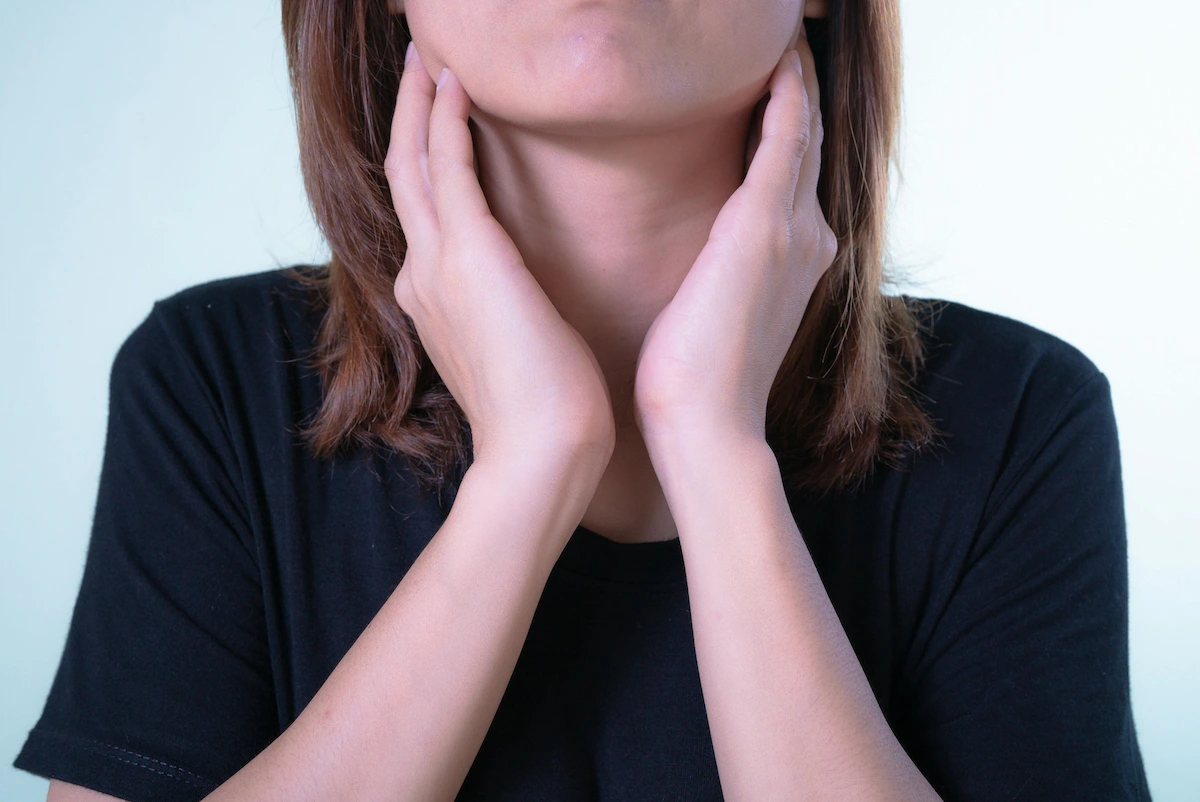
Close-up of a person with hands on their neck, wearing a black t-shirt.
The jaw that clicks every time you open your mouth. The ache spreading into the ear, temple, and behind the eye. The morning pain from clenching. The headaches tracking along the side of the face. If that sounds familiar, you’ve likely been through the standard cycle: mouth guard, Botox, physical therapy, and temporary relief that keeps requiring re-treatment.
That cycle repeats because each approach treats the jaw as an isolated structure. It isn’t. The TMJ is where the mandible connects to the temporal bone, part of the skull. The skull connects to the cervical spine. The cervical spine connects to the pelvis through the meninges. Every one of those structures influences the TMJ, and treating only the jaw joint leaves the other contributing factors intact.

Dr. Sojitra demonstrates this on exam. When he places SOT pelvic blocks under a TMJ patient and has them open their jaw, the change in mobility is usually immediate and for most patients completely unexpected. They came in for a jaw problem and felt it open more easily because someone addressed their pelvis. That is not a trick. It is anatomy.

Icon of a person's head silhouette with a target symbol on the side.

Jaw pain, clicking, or popping with opening or closing the mouth

White outline icon of an ear with sound waves on a black background.

Aching that radiates into the ear, temple, or behind the eye

A white pixelated outline of a tooth with a sparkle on its surface against a black background.

Morning jaw soreness or stiffness from nighttime clenching or grinding

White pictogram of a person eating at a table on a black background.

Headaches originating around the jaw, temple, or side of the head

Icon of a head wearing headphones with sound waves emanating from it.

Difficulty opening the mouth fully or eating hard foods

A white, cracked tooth icon on a black background.

A sensation that the jaw catches or locks in certain positions

The Full Picture of TMJ Dysfunction

The Manish Method is not for everyone, and Dr. Sojitra is straightforward about that. 

The temporal bone

The temporal bone houses the TMJ on both sides. When the cranial sutures surrounding it are restricted from birth trauma, head injury, concussion, dental procedures, or chronic clenching the temporal bone’s position is affected and TMJ mechanics are compromised. No mouth guard or Botox changes the position of a cranial bone.

The cervical spine

The upper cervical vertebrae, jaw muscles, and neck and shoulder muscles share nerve pathways and fascial connections. Cervical dysfunction restricted joints, disc problems, forward head posture directly affects the tension pattern in the muscles moving the jaw. Treating the jaw without addressing the cervical component leaves a major driver intact.

The pelvic floor

The meninges membranes surrounding the brain and spinal cord attach at both the occiput and the sacrum, creating a tensional link between the skull and the pelvis. When the sacrum is tilted or the pelvic floor is tight, that tension transmits all the way to the cranial base and affects TMJ mechanics. SOT pelvic blocks address this connection directly, and the jaw response is often immediate.

The neurological component

Zone Technique analysis regularly identifies stressed neurological systems in TMJ patients particularly zone two (eliminative) and zone five (nervous) that contribute to the overall tension pattern driving the dysfunction.

Dr. Sojitra's TMJ Protocol in Skillman NJ

The TMJ protocol at this practice addresses every structural and neurological layer contributing to TMJ dysfunction simultaneously making it one of the most complete available in New Jersey.

01

Zone Technique Chiropractic Adjustments

Zone Technique analysis identifies which systems are under neurological stress. For TMJ patients, the upper cervical region particularly C1 and C2 is almost always part of the picture. Cervical adjustments that reduce upper cervical nerve and muscle tension directly reduce the load on the TMJ.Learn more about chiropractic care and Zone Technique.

02

Specific TMJ Joint Adjustments

Dr. Sojitra performs direct adjustments to the TMJ joint itself a technique most chiropractors don’t perform. The adjustment restores normal joint mechanics, reducing the restriction and inflammation driving clicking, pain, and limited opening.

03

Intraoral Cranial Work

Manual work performed inside the mouth on the pterygoid muscles, palatine processes, and intraoral cranial structures the approach that most directly affects the joint capsule and surrounding cranial bones. This requires specific training and cannot be replicated with external massage or stretching.

04

Cranial Suture Mobilization

External cranial work to mobilize the sphenoid, temporal, parietal, and frontal bones whose position affects TMJ mechanics. The sphenoid sits at the center of the skull with the temporal bone on each side, and its position directly influences the space available for the TMJ to function.

05

SOT Pelvic Blocks

Triangular blocks placed under the pelvis to address the sacro-cranial meningeal connection. For patients where pelvic floor tension is contributing to the TMJ pattern, the improvement in jaw opening when the blocks are in place demonstrates the connection clearly and guides the treatment approach.

06

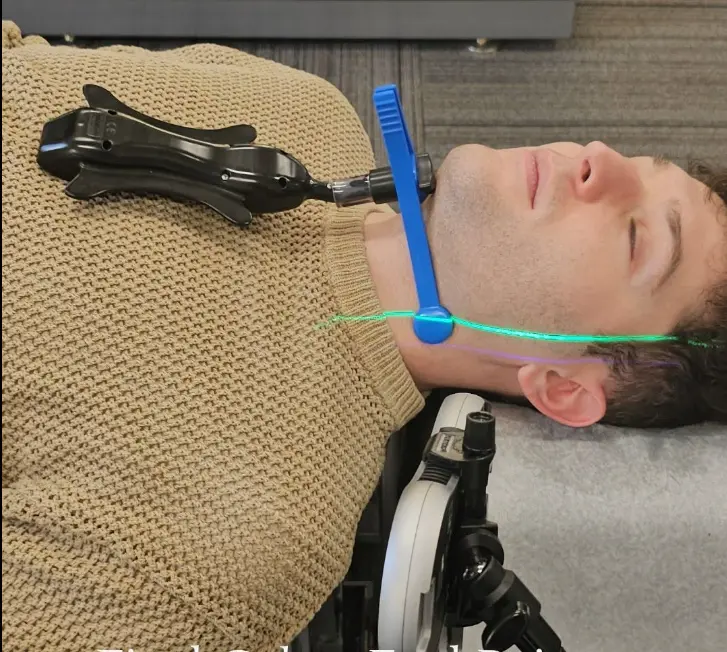
Cold Laser Therapy

Laser therapy applied to the TMJ joint capsule and surrounding soft tissue reduces the cellular inflammation driving pain, clicking, and restricted opening accelerating the reduction of the inflammatory response most TMJ patients have been managing with anti-inflammatories. Learn more about cold laser therapy.

07

NMS-460 Stimpod

For patients with significant occipital neuralgia or nerve-mediated headache patterns as part of their TMJ presentation, the Stimpod targets the occipital nerves for nerve strengthening and pain reduction.
A man lies on his back with a blue jaw support and a device on his chest, showing green and purple laser lines across his neck.

How This Protocol Works Alongside Dental Care

Dr. Sojitra regularly coordinates with dentists and dental specialists treating TMJ patients. Most patients have already been through the standard dental approach: a mouth guard, possibly Botox, and instructions to avoid hard foods. Those interventions aren’t wrong, and a properly fitted appliance can provide meaningful relief. But they work better after the joint mechanics and the cranial, cervical, and pelvic contributions have been addressed.
Think of it as a flat tire and a wheel alignment. You can align the wheels, but if the tire is flat, the alignment won’t hold. Fitting an appliance to a jaw whose structural contributors haven’t been corrected means adapting to a dysfunctional baseline. Correct those contributors first and the appliance fits a jaw that’s actually working properly. Results last longer, the appliance needs less adjustment, and some patients find they no longer need it at all.
Dr. Sojitra is happy to communicate with a patient’s dentist or specialist throughout care and can coordinate documentation as needed.

Your First TMJ Evaluation at Princeton Spine Disc and Chiropractic

The TMJ evaluation here is more thorough than most patients expect, because TMJ requires it.
Most patients begin noticing improvement within the first few visits as the multi-layer approach reduces the inputs driving the dysfunction. Full resolution of longstanding TMJ often requires several weeks to months of consistent care.
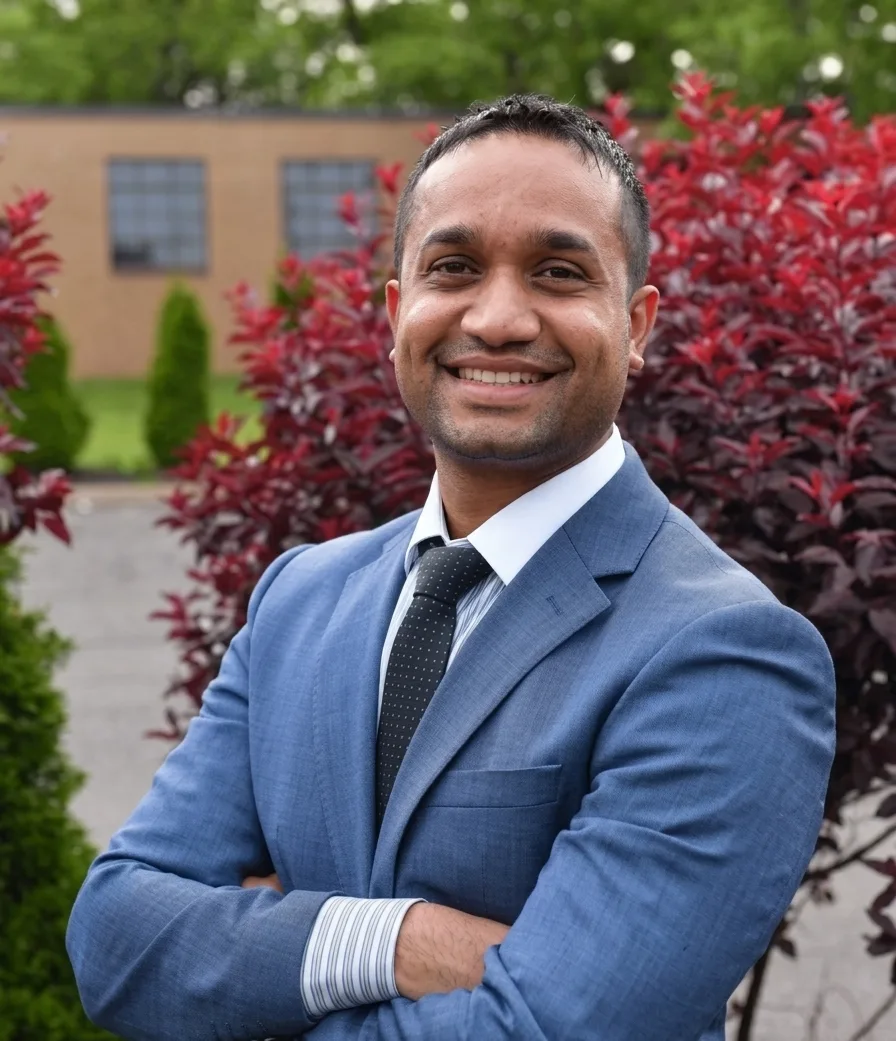
A man in a blue suit and tie, with arms crossed, smiling at the camera against a blurred background of red bushes and a building.

Frequently Asked Questions About TMJ

Why haven't other treatments worked for my TMJ?
Because they addressed the jaw without addressing what is driving it. A mouth guard prevents clenching damage but does not correct the cranial, cervical, or pelvic mechanics pulling the TMJ into dysfunction. Botox relaxes the masseter but does not change the structural forces on the joint. Physical therapy strengthens jaw muscles but does not address cranial suture restrictions or upper cervical dysfunction. Dr. Sojitra’s protocol addresses all of those layers simultaneously, which is what produces lasting change.
What does the pelvis have to do with my jaw?
The meninges, the membranes surrounding the brain and spinal cord, attach at both the base of the skull and the sacrum, transmitting tension in both directions. When the sacrum is restricted, that tension travels up through the cranial base, temporal bones, and into the TMJ. Dr. Sojitra demonstrates this on exam: when pelvic blocks are placed and the jaw is re-tested, most patients notice an immediate improvement in opening.
Can chiropractic help if I've had Botox injections for TMJ?
Yes. Botox provides temporary relief by relaxing the masseter but wears off because the underlying structural drivers remain. Chiropractic, cranial work, and pelvic correction address those drivers. Many patients find that after completing care here, they no longer need Botox injections.
Will I still need my mouth guard?
Possibly, depending on the severity of your clenching pattern. Many patients find their existing appliance fits and functions better after care because the jaw mechanics have been corrected. Appliance recommendations remain your dentist’s domain.
How long does TMJ treatment take?
Mild to moderate TMJ with a primarily mechanical cause often shows meaningful improvement within several weeks. Long-standing TMJ with significant cranial involvement or multiple contributing layers requires a more extended protocol. Dr. Sojitra outlines honest timelines at the Day 2 visit based on what the evaluation found.
Have questions about whether your TMJ presentation fits what we treat here?

Ready to Address Your TMJ at the Source in Skillman?

If you have been managing your jaw pain without lasting results, the evaluation at this practice will show you a different picture of what is driving it.