
Shockwave Therapy (E-PAT) in Princeton NJ
For tendon and soft tissue conditions where radial pulse therapy is the right fit, Princeton Spine Disc and Chiropractic offers E-PAT shockwave by Storz and Dr. Sojitra knows exactly when to use it versus SoftWave.
Radial Pulse Therapy for Chronic Tendon and Soft Tissue Conditions
Chronic tendon pain, surface calcifications, and superficial muscle trigger points respond best to mechanical pressure delivered across a broad surface area rather than deep tissue penetration. For these cases, Dr. Sojitra utilizes E-PAT (Extracorporeal Pulse Activation Technology) by Storz, which delivers pneumatic pressure waves to stimulate blood flow, break down adhesions, and restart the cellular repair response.
While SoftWave targets deeper structures, E-PAT is specifically calibrated for target tissue close to the surface, such as superficial tendons, bursae, and muscle trigger points. Offering both distinct technologies ensures patients receive an honest, clinical assessment regarding which specific device matches their pathology rather than a one-size-fits-all treatment approach.
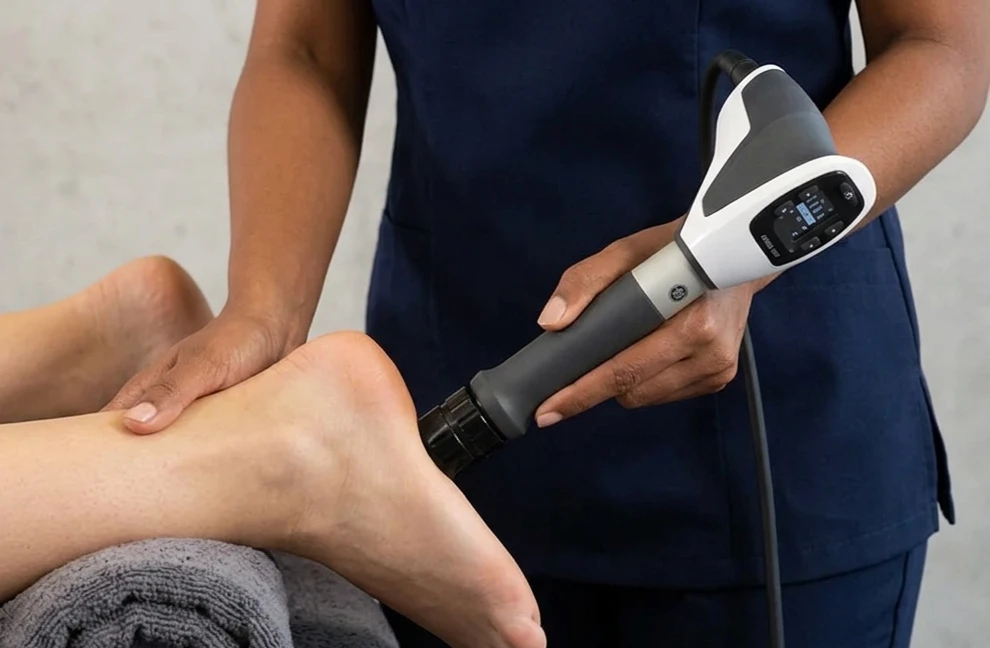
- Radial pressure waves stimulate blood flow and restart repair in chronic soft tissue
- Effective for tendons, bursae, and muscle trigger points close to the surface
- Breaks down calcifications and scar tissue preventing full healing
- No surgery, no injections, no downtime between sessions
- Storz is one of the most established names in shockwave technology
What to Expect During an E-PAT Session
Treatment zone identification
Positioning
You remain fully clothed or the area is minimally exposed. Gel is applied for acoustic coupling.
The session
Post-session:
Protocol
Conditions E-PAT Shockwave Therapy Addresses in Princeton NJ
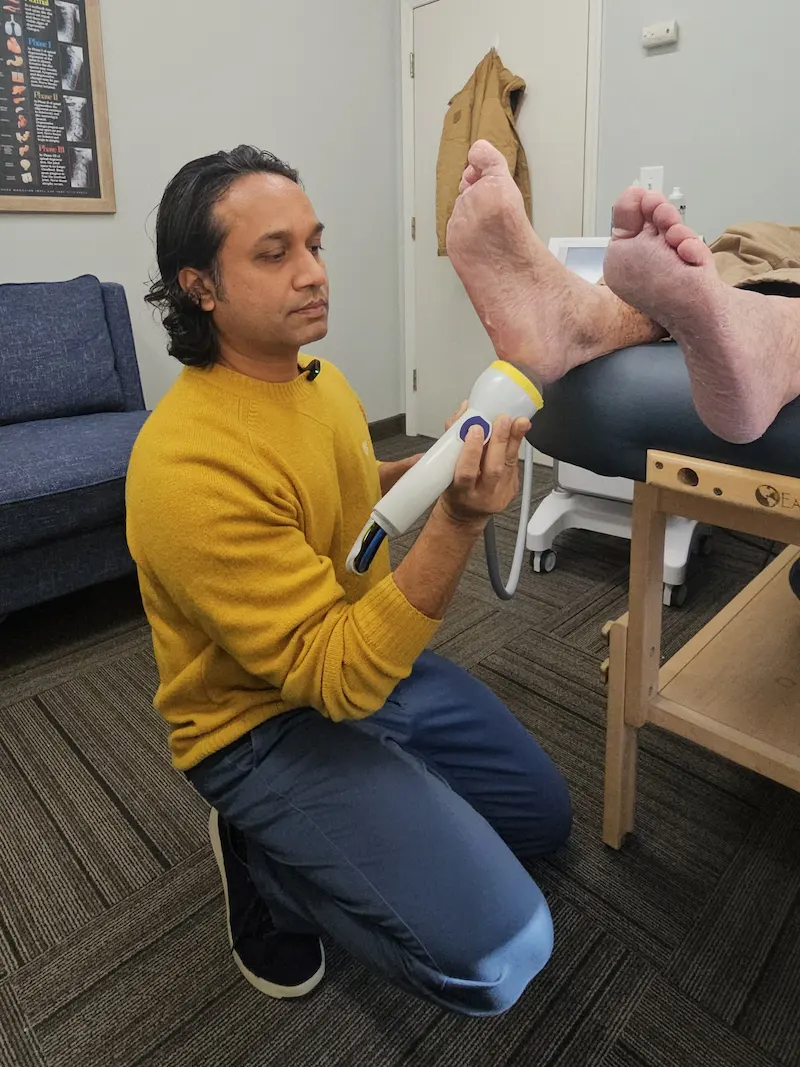
- Plantar Fasciitis & Heel Pain: Chronic cases unresponsive to stretching, orthotics, or rest improve consistently through E-PAT mechanical stimulation.
- Achilles Tendinopathy: Mid-substance Achilles pain responds directly to radial pulse waves that stimulate collagen remodeling.
- Tennis & Golfer’s Elbow: Targets lateral and medial epicondylitis driven by chronic tendon degeneration rather than acute inflammation.
- Calcific Shoulder & Rotator Cuff Tendinopathy: Breaks down superficial calcific deposits; deeper rotator cuff involvement may require SoftWave instead.
- Patellar Tendinopathy: Resolves jumper's knee and chronic patellar tendon pain in active patients.
- IT Band Syndrome: Relieves chronic lateral knee and hip pain caused by tight IT bands and trigger points.
- Myofascial Trigger Points: Deactivates deep muscle belly trigger points in the trapezius, glutes, and calves.
- Chronic Back & Neck Pain : Clear out paraspinal guarding and soft tissue restrictions that contribute to underlying structural pain.
E-PAT as Part of Your Care Plan
E-PAT and Zone Technique chiropractic
Adjustments address the spinal contribution particularly for elbow conditions with cervical nerve involvement and plantar fasciitis cases where lumbar dysfunction affects the nerve supply to the foot.
E-PAT and cold laser
Laser reduces cellular inflammation and accelerates the repair E-PAT stimulates producing faster, more complete recovery than either delivers alone.
E-PAT and SoftWave
For conditions with both surface tendon involvement and deeper tissue damage, both devices may be used in the same protocol targeting different tissue layers.
E-PAT and EMTT
For conditions with a significant degenerative component, EMTT adds cellular-level regeneration that compounds the E-PAT response.
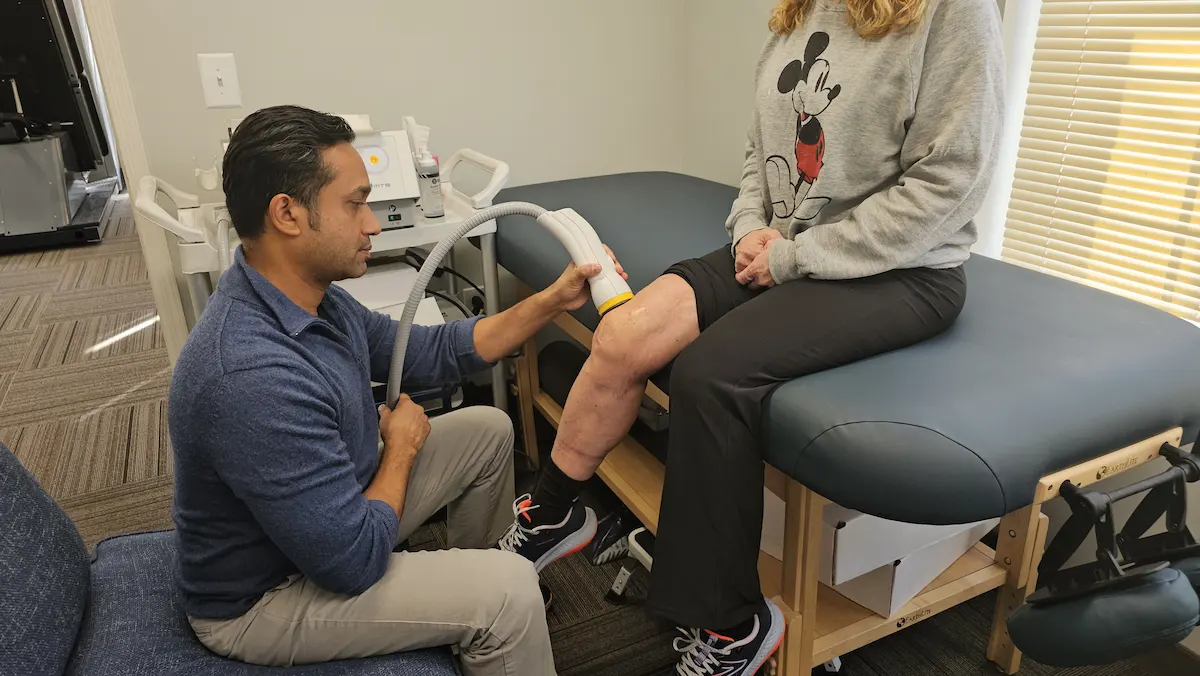
Who Is a Good Candidate for E-PAT Shockwave Therapy?
- Plantar fasciitis lasting more than three months despite stretching, orthotics, or physical therapy
- Achilles, patellar, or rotator cuff tendinopathy confirmed by exam or imagin
- Calcific deposits in the shoulder or heel confirmed by X-ray
- Tennis elbow or golfer's elbow that keeps returning with activity
- IT band syndrome or chronic hip tendon pain in runners or active patients
- Patients wanting to avoid cortisone injections or surgery for tendon conditions
- Athletes with chronic overuse injuries that have not responded to standard sports therapy
Safety note:
Frequently Asked Questions About E-PAT Shockwave Therapy
What is the difference between E-PAT and SoftWave?
E-PAT is radial pulse therapy, best for tendons and soft tissue close to the skin. SoftWave is electrohydraulic, penetrating deeper, working safely on bone and near organs, and producing a stem cell activation response E-PAT does not. Dr. Sojitra uses both and chooses based on what the condition requires.
Does E-PAT hurt?
How many sessions will I need?
How soon will I feel results?
Is E-PAT covered by insurance?
Princeton Spine Disc and Chiropractic is out-of-network and E-PAT is not covered by standard insurance plans. Patients with PPO coverage may be eligible to submit claims for partial reimbursement. Payment options and financial details are reviewed in full at the Day 2 visit.