Headache and Migraine Treatment in Skillman NJ

Headaches have more potential sources than most patients realize – and the one being overlooked most often is the neck and upper cervical spine. Dr. Sojitra evaluates all of them before deciding how to proceed.

Constant Headache Relief in Princeton NJ
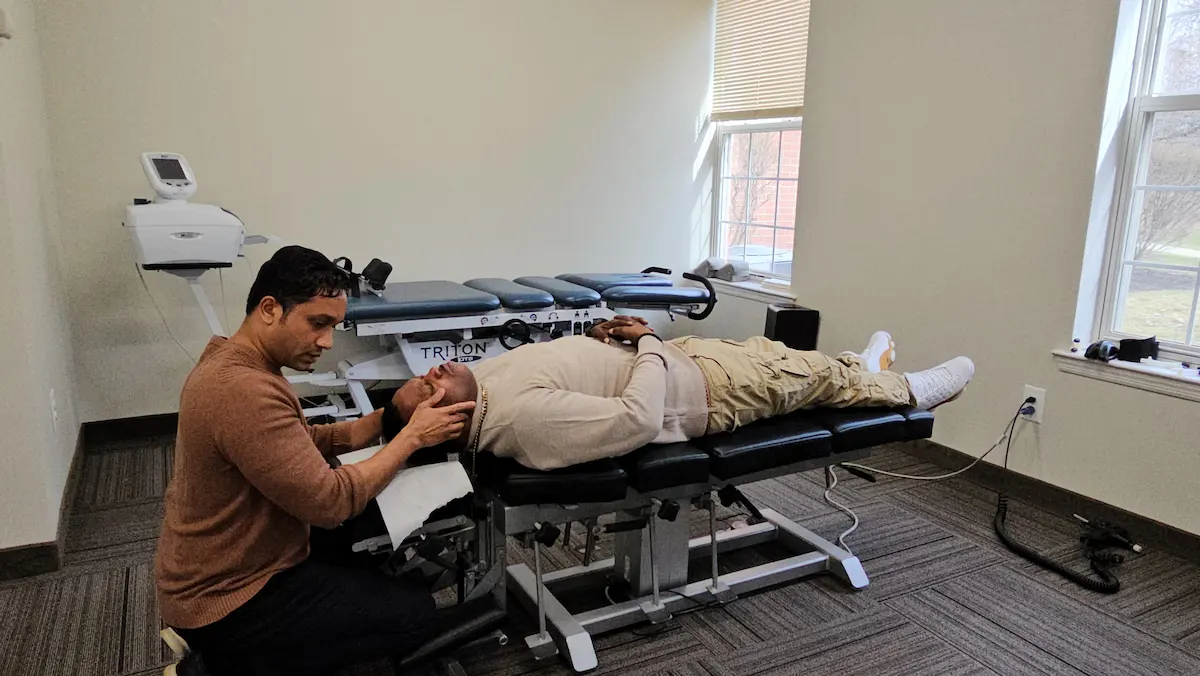
A chiropractor adjusts a patient's neck on a black treatment table in a room with windows.
The cancelled plans. The days spent waiting it out with the blinds closed. The medication that stops working as well as it used to. If that’s your experience, the most important question you probably haven’t been asked is: what does the back of your neck feel like?
For a significant percentage of chronic headache sufferers, the actual source is the cervical spine, not the head. The upper cervical nerve roots at C1, C2, and C3 connect directly to the trigeminal nerve system and refer pain into the head through well-mapped pathways. When those joints are restricted or surrounding muscles are chronically overloaded, they generate pain signals that feel exactly like headaches originating in the head. Many patients who have been treating headaches as a primary neurological condition for years are actually dealing with a cervical spine problem that has never been properly examined.

This doesn’t mean all headaches come from the neck. Migraines are neurological events with multiple potential triggers. Sinus headaches originate from nasal inflammation. Occipital neuralgia involves a specific nerve pathway at the back of the skull. Each type has a different source and responds to different treatment. Dr. Sojitra evaluates all of them before recommending anything.

White outline of a flexing arm with a lightning bolt on a black background.

Dull pressure or throbbing that builds through the day, often starting in the afternoon

Line drawing of a lower leg and foot with concentric circles and irregular shapes on the ankle, indicating pain or injury.

Headaches that begin at the base of the skull and wrap forward toward the forehead or temples

White symmetrical symbol with a central spiral and eight radiating, branching arms on a black background.

Pain behind one or both eyes

White abstract silhouette resembling a squatting human figure on a black background.

Headaches that correlate with neck stiffness or extended screen time

White outline icon of a human head in profile with a signal or gear symbol inside, on a black background.

Sensitivity to light or sound during more severe episodes

Icon of a person sitting on a bed with their head in their hands, next to a window.

Headaches that are present most mornings upon waking

Why Your Headaches May Be Coming From Your Neck

The upper cervical spine, particularly C1, C2, and C3, connects directly to the nerves supplying sensation to the head, face, and scalp. When these joints are restricted or the suboccipital muscles are chronically tight, they generate referred pain felt inside the head, a pattern known as cervicogenic headache.
Beyond cervicogenic headaches, cervical dysfunction appears to lower the migraine threshold in susceptible individuals. Patients with diagnosed migraines who also have cervical dysfunction often notice that addressing the cervical component reduces episode frequency and intensity, not because chiropractic treats the migraine’s neurological mechanism, but because a contributing trigger is being removed.

Common patterns that suggest cervical involvement in your headaches:

Learn more about neck pain treatment.

Headache Types We See at Princeton Spine Disc and Chiropractic

Not all headaches are the same and the approach varies based on what’s driving the pattern. Dr. Sojitra identifies the type and source before recommending care.

01

Tension Headaches

A band of pressure around the head that builds through the day, almost always with a cervical component. Zone Technique upper cervical adjustments and soft tissue work are highly effective for tension headache patterns with a cervical source.

02

Cervicogenic Headaches

Headaches originating directly from specific joints or muscles in the cervical spine usually one-sided, felt from the back of the skull forward. One of the clearest candidates for chiropractic care. These respond to cervical adjustments faster than any other approach.

03

Migraines With Cervical Component

Migraines are complex neurological events with multiple potential triggers. Chiropractic doesn’t claim to cure all migraines but for patients whose migraines have a cervical component, addressing it often reduces frequency and intensity. Chiropractic is always complementary to, not a replacement for, appropriate medical migraine management.

04

Sinus and Allergy Headaches

Headaches driven by nasal inflammation or structural restriction respond to cold laser therapy applied to the sinus regions. For significant structural nasal restriction, Cranial Facial Release may be the most effective intervention available.

05

Occipital Neuralgia

Sharp, shooting pain at the back of the skull from the occipital nerve often mistaken for migraine or tension headache. The NMS-460 Stimpod targets the occipital nerve for strengthening and pain reduction. Zone Technique adjustments address the structural contributors.

06

Stress and Posture-Related Headaches

Forward head posture from prolonged screen use creates chronic upper cervical strain that feeds directly into headache patterns. Zone Technique adjustments, extension traction for cervical curve correction, and postural correction are all part of the approach.

Dr. Sojitra's Headache Protocol in Skillman NJ

Zone Technique Chiropractic Adjustments

Upper cervical adjustments at C1, C2, and C3 are the primary treatment for cervicogenic headache and the cervical component of tension and migraine headaches. Zone Technique analysis identifies which systems are under stress and which levels need correction typically gentler and more precisely targeted than standard lumbar adjusting. Learn more about chiropractic care and Zone Technique.

Cold Laser Therapy

For headaches with a significant inflammatory or soft tissue component including sinus headaches and suboccipital muscle tension cold laser reduces cellular inflammation and improves circulation. The Euchronia GVL system is safe to use on cranial tissue, sinus regions, and the posterior skull. Learn more about cold laser therapy.

NMS-460 Stimpod

For occipital neuralgia and headache patterns with significant nerve involvement, the Stimpod targets the occipital nerves for nerve strengthening and pain signal reduction.

Cranial Facial Release

For chronic headaches with a significant cranial structural component post-concussion headaches, sinus-based headaches, or headaches connected to nasal restriction CFR addresses the cranial bones, sutures, and sphenoid that standard spinal adjusting cannot reach. Not indicated for every headache patient, but transformative for those with a cranial origin. Learn more about Cranial Facial Release.

Your First Headache Evaluation at Princeton Spine Disc and Chiropractic

Day 1 is focused entirely on identifying what type of headache you have and what is driving it.
One important note on medication: Dr. Sojitra will never advise stopping headache medications. Care here works alongside medical management, not instead of it. If you are seeing a neurologist for migraines, that relationship continues.
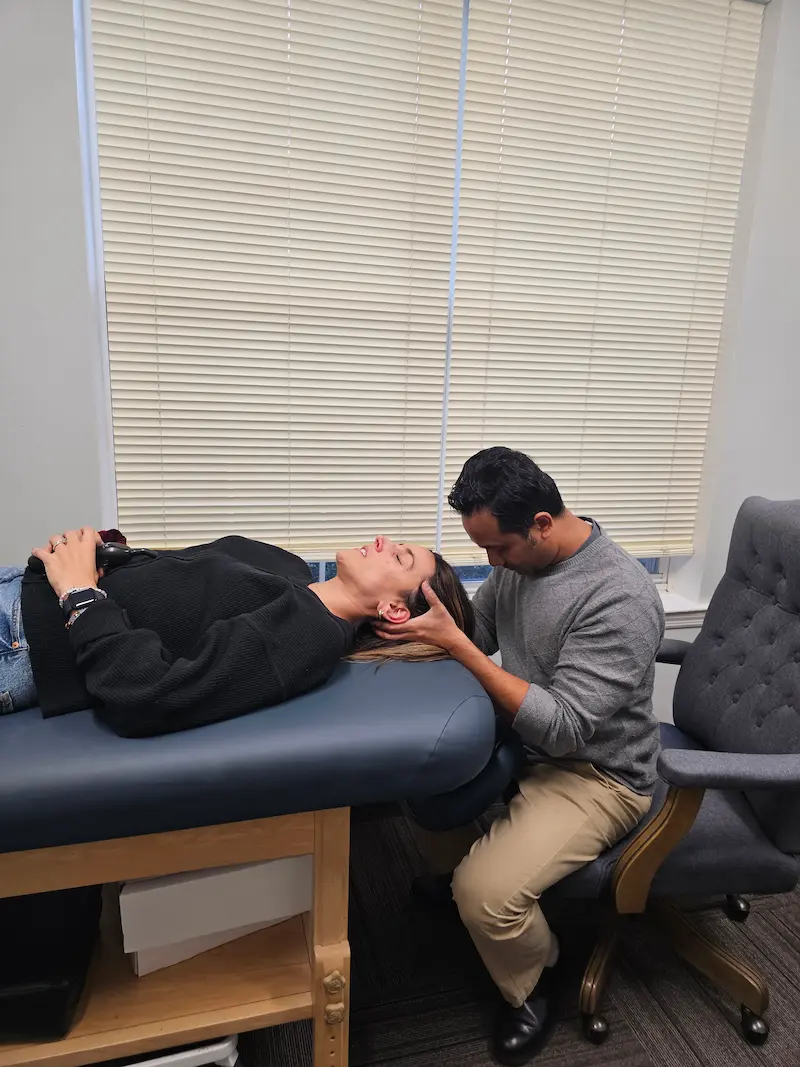
A man performing a manual therapy technique on a woman's head as she lies on an examination table.
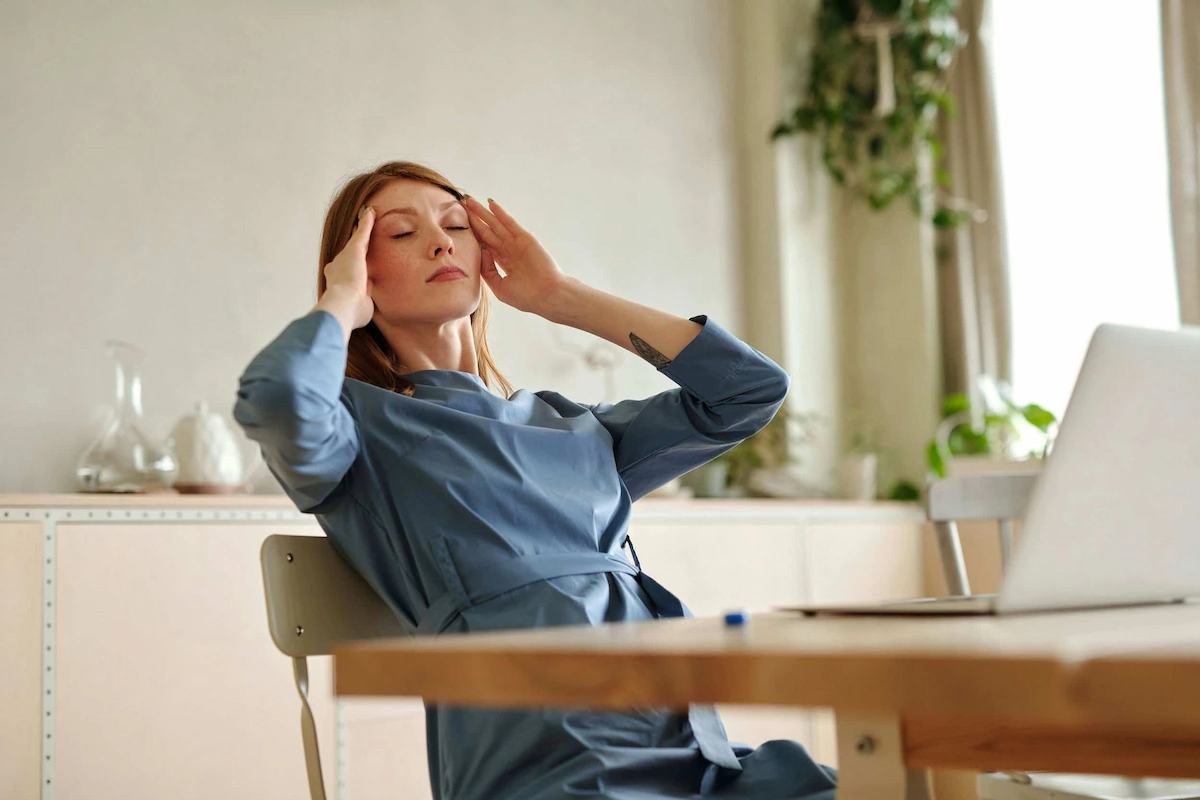
A woman in a blue dress with closed eyes presses her temples, appearing to have a headache, at a desk with a laptop.

Building a Life With Fewer Headaches

In-office care addresses the structural and neurological source. Home habits determine how quickly it recurs.

Frequently Asked Questions About Headaches and Migraines

Can chiropractic actually help with migraines, or just tension headaches?
Both, with appropriate nuance. Tension and cervicogenic headaches have a clear mechanical source that chiropractic addresses directly, and results are often fast. Migraines are more complex, but for patients whose migraines have a cervical contributing factor, addressing it reduces frequency and intensity for many. Chiropractic does not cure all migraines; it removes a contributing trigger and is always used alongside, not instead of, appropriate medical management.
How many visits before I notice a difference?
For tension and cervicogenic headaches, many patients notice reduced frequency or intensity within the first few weeks. Chronic patterns present for years take longer to shift. Dr. Sojitra sets specific expectations at the Day 2 visit based on headache type, severity of cervical findings, and duration of the pattern.
Is it safe to get adjusted when I have a headache?
In most cases, yes. Upper cervical adjustments during an active headache often provide immediate relief for cervicogenic patterns. For severe migraine episodes with nausea and significant neurological symptoms, Dr. Sojitra may choose a gentler technique or defer the adjustment until the acute episode passes.
Are there warning signs that mean my headache needs immediate medical attention?
Yes. Sudden onset of the worst headache of your life, headache with fever and neck stiffness, headache following head trauma, progressive worsening over days, and headaches accompanied by confusion, vision changes, or neurological symptoms all require immediate medical evaluation, not chiropractic care. Dr. Sojitra screens for these during the evaluation and coordinates referral when warranted.
Still have questions? We are happy to help. Have questions about your specific neuropathy situation? We are happy to help.

Ready to Find Real Relief from Headaches and Migraines in Skillman?

If you have been managing headaches rather than understanding them, the evaluation at this practice starts with the questions that should have been asked from the beginning.