The Manish Method: Why This Practice Works Differently
Dr. Sojitra has spent over 15 years studying every major chiropractic technique, attending advanced seminars, and working through his own serious disc injury and what emerged from all of that is an approach he calls the Manish Method.
Why Most Chiropractic Approaches Only Get Part of the Answer
Most chiropractic techniques work because they identify a real piece of the problem, but they often approach the same patient from completely different angles. One technique may focus on spinal structure, another on joint motion, another on neurological function. Dr. Sojitra spent years studying these systems not to choose one side, but to understand what each method explained that the others did not.
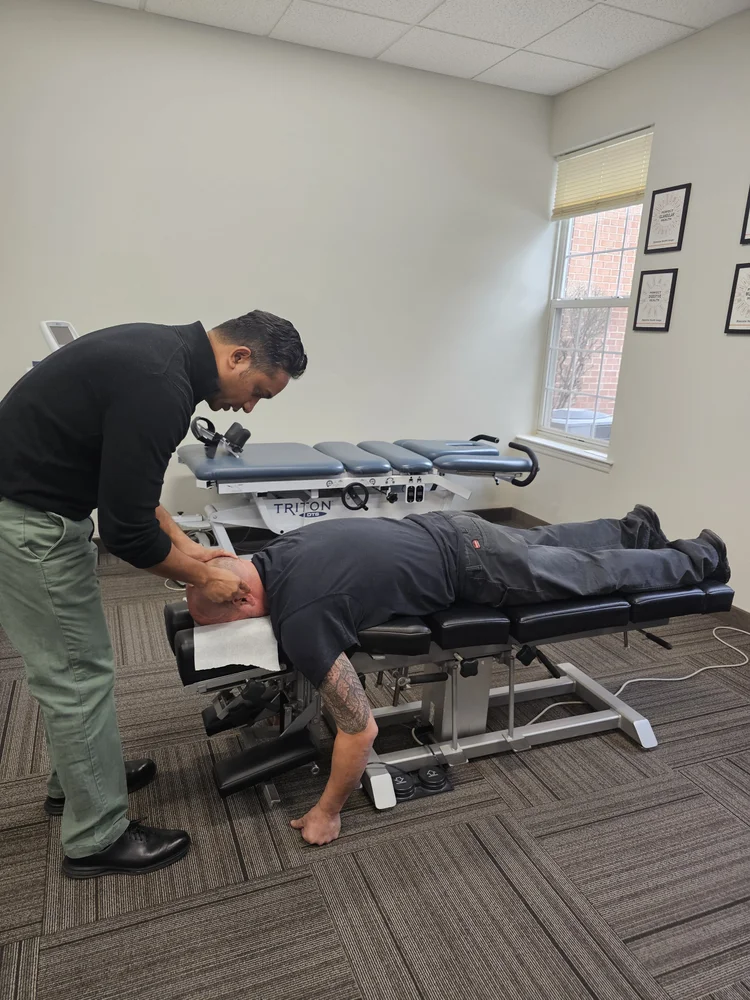
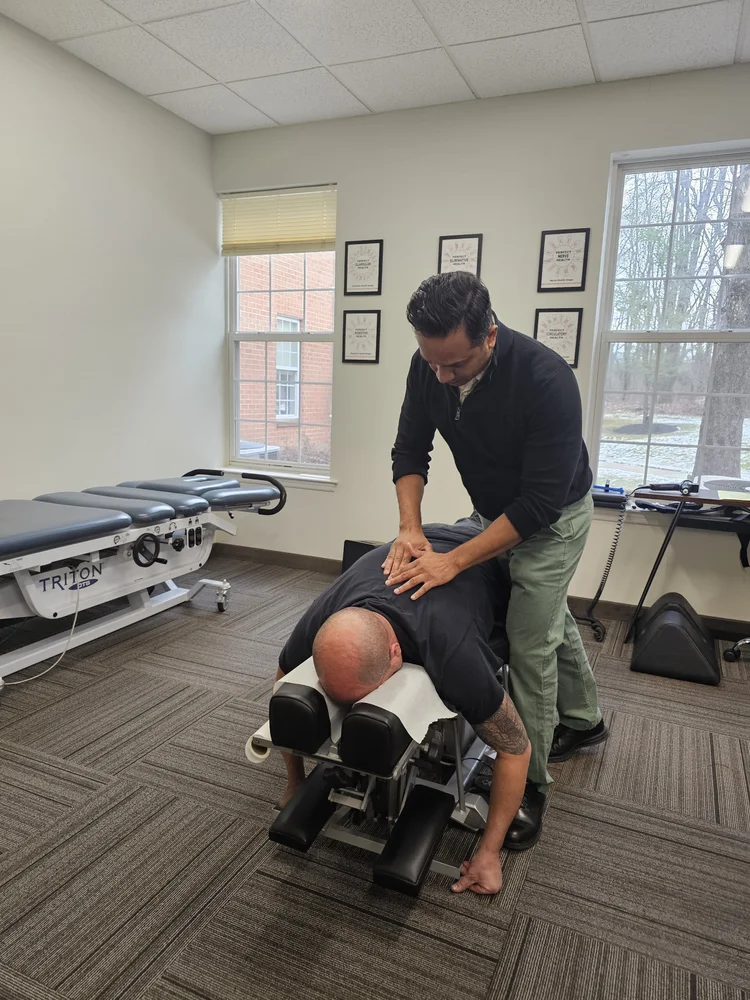
What emerged from that process was the recognition that lasting results often require both structural and neurological thinking. The Manish Method combines those perspectives, using mechanical correction to reduce physical stress on the body while addressing the nervous system patterns influencing how that stress develops and persists.
Why Zone Technique Is at the Center of Everything
Zone Technique sits at the center of Dr. Sojitra’s approach because it begins with a question many chiropractic methods overlook: what is the brain and nervous system doing right now, and which body systems are under the most stress? The body operates through six major systems including glandular, eliminative, nervous, digestive, muscular, and circulatory, each regulated by specific areas of the brain. When physical, chemical, or emotional stress disrupts those signals, dysfunction can appear not only as pain, but also as fatigue, digestive issues, hormonal imbalance, or chronic health complaints.
How Advanced Technology Accelerates What Zone Technique Starts
DRX9000 Spinal Decompression
Creates precise negative pressure at specific disc levels reducing intradiscal pressure, encouraging herniated material to retract, and restoring the fluid exchange discs need to heal. Dr. Sojitra has used decompression since the start of his career and recovered from an 11.5mm herniation using it himself.
SoftWave Therapy
The original electrohydraulic shockwave technology acoustic waves that stimulate blood flow, break down scar tissue and calcifications, activate stem cell recruitment, and restart a stalled healing response. Dr. Sojitra was among the first providers in New Jersey when SoftWave launched.
EMTT - Magnetolith
Delivers a magnetic pulse that works from inside the cell outward - charging cellular energy production, activating stem cells, and driving regeneration where surface-level treatment has stopped working. Combined with SoftWave, the two create a layered regenerative effect for disc conditions, arthritis, complex joint cases, and fracture healing.
Cold Laser Therapy
Using the Erchonia GVL and Avant systems together, Dr. Sojitra targets all four mitochondrial complexes involved in cellular energy production - not just the single complex standard cold laser reaches - for a deeper photobiomodulation response.
NeuFit Therapy
A direct current system that mirrors the nervous system's own signaling. Where standard e-stim blocks pain with alternating current, NeuFit moves the brain from protection mode into functional mode - rebuilding neuromuscular pathways that injury disrupts.
Cranial Facial Release
Balloon-assisted mobilization of the cranial bones and sutures through the nasal passages, paired with intraoral cranial work and SOT technique. CFR accesses up to 80% of the nervous system that spinal adjusting alone cannot reach. Dr. Sojitra is New Jersey's only CFR provider.
Hyperbaric Oxygen Therapy
Delivers oxygen at increased atmospheric pressure to tissues normal circulation cannot fully supply - compounding the regenerative effect of everything else, particularly for neurological conditions, post-concussion recovery, and chronic inflammation.
What the Manish Method Looks Like in Practice
DAY 1
Day 1 is entirely assessment. Dr. Sojitra conducts a Zone Technique analysis, a gravity-based neurological exam, orthopedic and palpation testing, digital motion analysis X-rays where indicated, medical-grade thermography, and a Nerve Express autonomic nervous system assessment. By the end of Day 1 he has a picture of what the nervous system is doing, where the structural problems are, what the physiology looks like, and which tools are most likely to produce results for this specific patient.
DAY 2
Day 2 is when everything comes together. Dr. Sojitra reviews every finding from Day 1, explains what he found in plain terms, and presents his full recommendations: which services, how often, for how long, and what the financial structure looks like. You decide what you want to do. If you are ready to proceed, care begins that day.
The Patients Who Benefit Most From This Approach
The Manish Method is not for everyone, and Dr. Sojitra is straightforward about that.
Have been through standard chiropractic, physical therapy, or pain management and are still dealing with recurring or unresolved symptoms
Are motivated to understand what is driving their problem, not just get temporary relief
Have complex or multi-system presentations – disc problems combined with nerve involvement, joint pain combined with systemic symptoms, or conditions that multiple providers have struggled to explain
Ready to Find Out What the Manish Method Can Do for You in Princeton?
If your situation is complicated, if other approaches have not worked, or if you just want someone to actually figure out what is going on – that is exactly what Day 1 is for.