Neuropathy Treatment in Skillman NJ

Most neuropathy treatment in chiropractic is protocol-driven and generic. Dr. Sojitra starts with a Sudoscan assessment to identify whether large or small nerve fibers are involved because the answer changes the treatment plan entirely.

Understanding Neuropathy

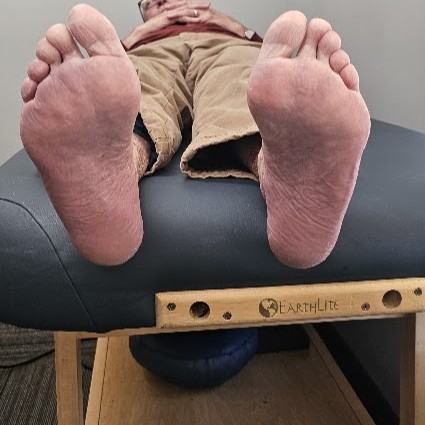
A person's bare feet, soles facing up, resting on a dark blue examination table with a wooden frame.

The burning in both feet that makes it hard to sleep. The tingling you’ve stopped noticing. The gradual loss of sensation in the toes that now affects how you walk. Neuropathy, damage or dysfunction in the peripheral nerves, produces symptoms ranging from mildly uncomfortable to profoundly disabling, and most treatments offered rarely do more than manage them.

What most neuropathy care misses is that large-fiber and small-fiber neuropathy involve different nerve populations, present differently, and respond to different treatments. Large fibers control motor function and vibration sensation. Small fibers govern pain, temperature, and autonomic function. A patient with large-fiber neuropathy from lumbar disc compression responds to spinal decompression. A patient with small-fiber diabetic neuropathy needs a completely different approach. Treating both with the same protocol, which is what most neuropathy clinics do, produces incomplete results for both.

Dr. Sojitra uses diagnostic assessment to identify which type of nerve damage is present before designing any care plan. That distinction is why outcomes here differ from generic neuropathy programs.

White outline of a flexing arm with a lightning bolt on a black background.

Burning, tingling, or electric-shock sensations in the feet, legs, hands, or arms

Line drawing of a lower leg and foot with concentric circles and irregular shapes on the ankle, indicating pain or injury.

Numbness or reduced sensation particularly in the feet and toes

White symmetrical symbol with a central spiral and eight radiating, branching arms on a black background.

Sensitivity to touch even light contact with sheets or clothing is painful

White abstract silhouette resembling a squatting human figure on a black background.

Muscle weakness in the affected limbs difficulty with balance or fine motor control

Icon of a person sitting on a bed with their head in their hands, next to a window.

Symptoms that are often worse at night, disrupting sleep
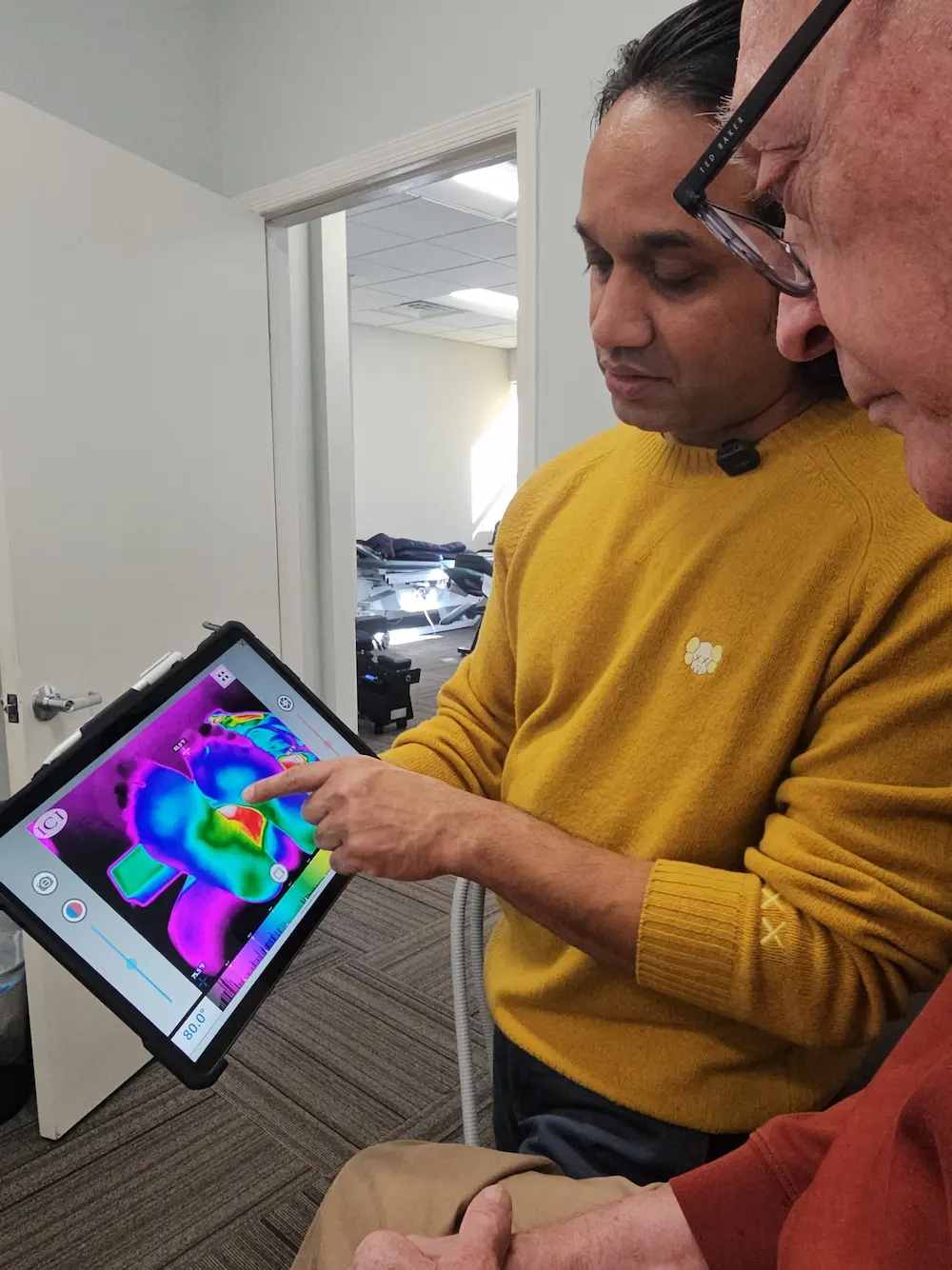
Two men looking at a tablet displaying a thermal image. One man points to the screen.

Why Proper Diagnosis Changes Everything

The Sudoscan differentiates large-fiber from small-fiber neuropathy through non-invasive skin conductance assessment, providing an objective picture of nerve involvement type and severity without needles or invasive testing.
Large-fiber neuropathy often originates from spinal compression. A disc at L4-L5 or L5-S1 compressing lumbar nerve roots makes the neuropathy a spinal problem that decompression can resolve. One of Dr. Sojitra’s patients carried a diabetic neuropathy diagnosis with bilateral foot neuropathy. Sudoscan showed normal small fibers and lumbar disc compression at L4-L5. Spinal decompression resolved it because the source was never the diabetes.
Small-fiber neuropathy from diabetes, chemotherapy, or idiopathic causes responds to SoftWave, cold laser, and the NMS-460 Stimpod rather than decompression.
Knowing which type is present before starting treatment is what produces results.

The Neuropathy Protocol at Princeton

Spine Disc and Chiropractic in Skillman NJ Every neuropathy care plan starts with the Sudoscan assessment. What it finds determines what happens next. 

For large-fiber neuropathy with spinal origin:

DRX9000 Spinal Decompression

Zone Technique analysis identifies the neurological stress driving cervical dysfunction. Adjustments are directed to specific segments using Gonstead seated cervical technique allowing precise contact without requiring rotation or extension. ArthroStim instrument adjusting is available for acute or sensitized presentations. Vagus nerve technique targets C1 when upper cervical dysfunction is contributing to broader neurological symptoms. Learn more about chiropractic care and Zone Technique.

For small-fiber neuropathy:

01

SoftWave Therapy

SoftWave stimulates blood flow and activates stem cell recruitment in peripheral nerve tissue addressing the vascular and regenerative deficit driving small-fiber neuropathy progression. Improved blood flow to progressively oxygen-deprived nerve tissue is one of the most direct interventions available for diabetic and idiopathic peripheral neuropathy. Learn more about SoftWave therapy

02

Cold Laser Therapy

Cold laser targets mitochondrial function in damaged nerve cells, stimulating cellular energy production and reducing the inflammatory environment that accelerates nerve damage. The Euchronia GVL system’s multi-wavelength output reaches all four mitochondrial complexes for a more complete cellular response than single-wavelength laser. Learn more about cold laser therapy

03

NMS-460 Stimpod

The Stimpod uses radiofrequency energy to strengthen nerve fibers rather than block them recruiting more nerve fiber activity and rebuilding the neuromuscular connection between the damaged nerve and the structures it supplies. For patients with neuropathic weakness or sensory loss, it provides a different mechanism of nerve support than laser or SoftWave alone.

Your Neuropathy Evaluation at Princeton Spine Disc and Chiropractic

Day 1 for neuropathy patients includes:
The findings determine the care plan. Dr. Sojitra presents the full plan on Day 2, covering which fibers are involved, what is likely driving the damage, which tools are most appropriate, and what realistic improvement looks like for this specific presentation.
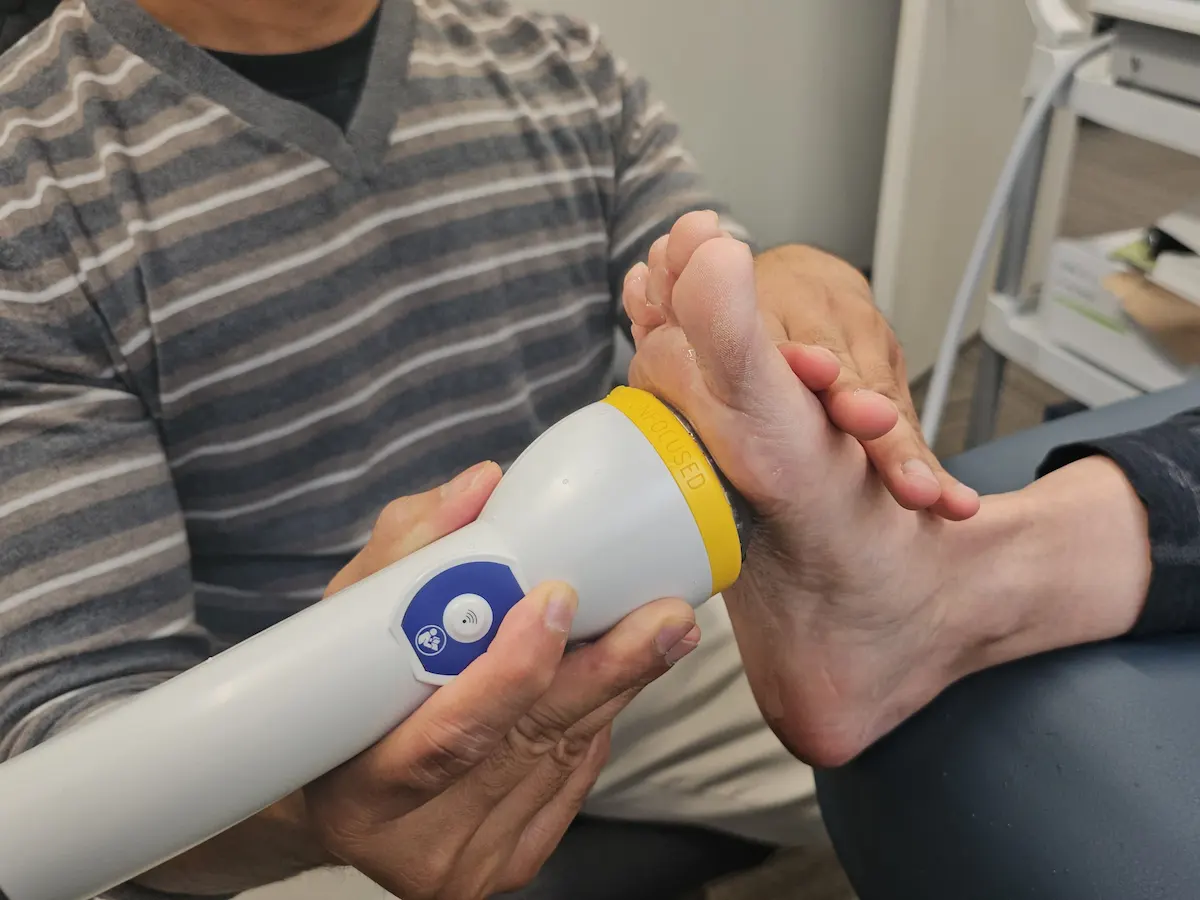
A person applies a white and yellow handheld device to another person's bare foot, likely for a medical or therapeutic treatment.

Frequently Asked Questions About Neuropathy

Can chiropractic actually help neuropathy?

It depends on the type and source. Large-fiber neuropathy from lumbar disc compression responds well to spinal decompression, as removing the structural cause resolves the neuropathy in many cases. Small-fiber peripheral neuropathy from diabetes, chemotherapy, or idiopathic causes responds to SoftWave, cold laser, and nerve stimulation. The Sudoscan assessment identifies which type is present so the right tools are applied.

What is the Sudoscan and why does it matter?
The Sudoscan is a non-invasive diagnostic device that measures skin conductance to differentiate large-fiber from small-fiber neuropathy, providing objective data on which nerve fiber types are affected without needles or biopsy. This matters because large-fiber and small-fiber neuropathy respond to entirely different treatments, and treating both the same way is the most common reason neuropathy treatment fails.
I've been told I have diabetic neuropathy. Is that definitely small-fiber neuropathy?
Not necessarily. Diabetes predominantly damages small fibers, but patients with diabetes can also have a concurrent lumbar disc condition producing large-fiber symptoms in the legs. If the Sudoscan shows normal small-fiber function despite foot neuropathy symptoms, it strongly suggests a spinal source regardless of the diabetes diagnosis, fundamentally changing the treatment approach.
How long before neuropathy treatment shows results?
For large-fiber neuropathy with a spinal origin, improvement often begins within the first several decompression sessions. For small-fiber neuropathy, results from SoftWave and laser build over several weeks. Dr. Sojitra outlines honest timelines at the Day 2 visit.
Can neuropathy be reversed?
In some cases, yes, particularly large-fiber neuropathy from spinal compression, where removing the compression allows nerve function to recover over time. Small-fiber neuropathy from chronic metabolic damage is more complex, with meaningful symptom improvement being the realistic goal rather than complete reversal in most cases. Dr. Sojitra presents honest expectations based on Sudoscan findings and the clinical picture.
Have questions about your specific neuropathy situation? We are happy to help.

Ready to Find Out What Type of Neuropathy You Actually Have in Skillman?

The Sudoscan assessment is the starting point. Everything about the care plan follows from what it finds.