
Sciatica Treatment in Princeton NJ
What Sciatica Actually Feels Like

The burning, electric-shock sensation traveling from the low back through the buttock and down the leg. The flare-up from sitting in a car or at a desk. The numbness in the calf or foot that comes and goes. If that sounds familiar, you’re dealing with sciatic nerve involvement but knowing that tells you less than most patients think.
Sciatica is a symptom, not a diagnosis. It tells you a nerve is being compressed somewhere along its path from the lumbar spine through the pelvis and into the leg but not where. Disc herniation at L4-L5 or L5-S1 gets treated differently from sacroiliac dysfunction, lumbar joint restriction, or piriformis syndrome. Most patients whose sciatica wasn’t resolved were treated for the nerve, not the source of the compression.

Sharp, burning, or electric-shock pain traveling from the lower back or buttock down one leg

Numbness or tingling in the leg, calf, or foot, often worse with sitting

Muscle weakness in the affected leg, difficulty lifting the foot or controlling movement

Pain that worsens with prolonged sitting, standing from seated, coughing, or sneezing

Symptoms typically on one side at a time
The Real Sources of Sciatic Nerve Compression
Identifying the specific cause is the first step in effective treatment. Different sources require different approaches which is why the same treatment fails across patients with different underlying causes.
01
Lumbar Disc Herniation
02
Lumbar Joint Restriction and Facet Dysfunction
03
Sacroiliac Joint Dysfunction
04
Piriformis Syndrome
Dr. Sojitra's Approach to Sciatica in Princeton NJ
Zone Technique Chiropractic Adjustments
DRX9000 Spinal Decompression
NMS-460 Stimpod
Cold Laser Therapy
SoftWave Therapy
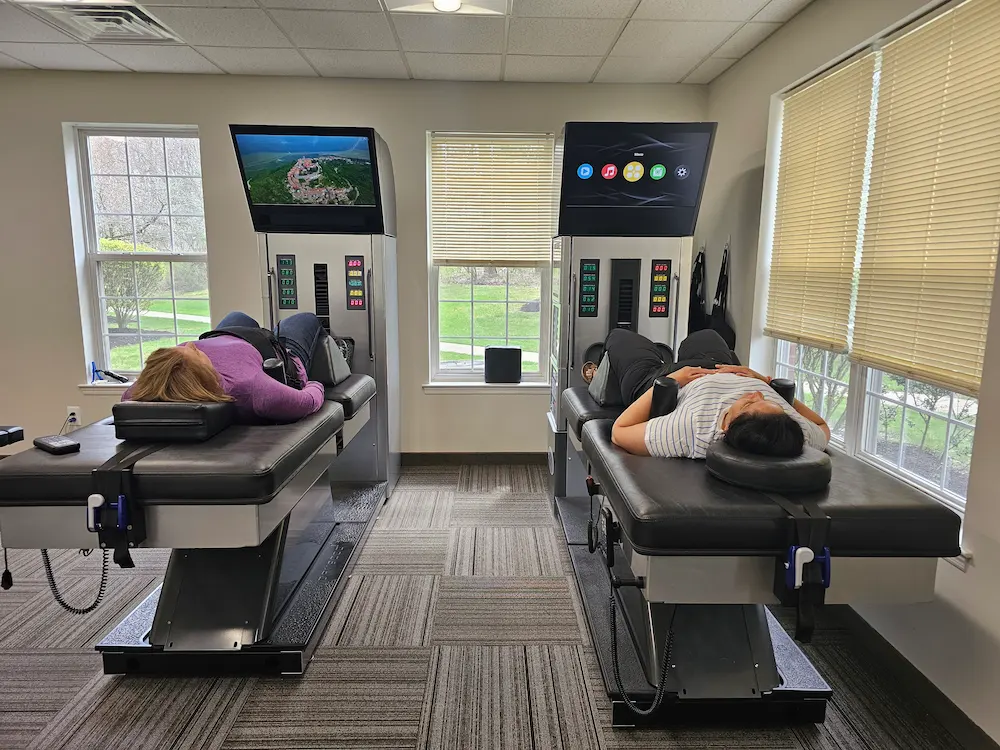
When Sciatica Is Coming from a Disc Problem
Why Sciatica Comes Back and How to Prevent It
Sciatica has a well-known tendency to recur when the underlying mechanical cause was never fully corrected. The pain resolves, the patient stops treatment, the disc or joint dysfunction remains, and eventually the nerve gets compressed again.
- Posture and ergonomics - avoiding prolonged sitting in flexed positions, using lumbar support, taking movement breaks every 45-60 minutes during desk work
- Core stability - weak core muscles increase the load on discs and lumbar joints, raising the risk of both initial injury and recurrence
- Hip flexibility - tight hip flexors and piriformis muscles are common contributors to both disc pressure and piriformis-related sciatica recurrence
- Proper lifting mechanics - keeping the spine neutral and using the legs rather than bending through the lumbar spine
- Periodic maintenance care to identify and correct minor dysfunction before it accumulates to the point of nerve compression
- Sleep position - side sleeping with a pillow between the knees keeps the pelvis neutral and reduces lumbar disc pressure overnight
Your First Sciatica Evaluation at Princeton Spine Disc and Chiropractic
Sciatica has multiple possible sources, and identifying the right one is the foundation of effective care. Day 1 is built around that identification.
- Zone Technique analysis to assess nervous system status and stressed systems
- Detailed history of leg symptoms, including onset, location, aggravating and relieving factors, and presence or absence of back pain
- Orthopedic testing specific to the lumbar spine and pelvis, including range of motion, facet loading, SIJ provocation, and neurological screening for disc involvement
- Assessment of whether symptoms are disc-related, joint-related, or piriformis-based based on exam findings
- Digital motion analysis X-rays to evaluate lumbar disc levels and vertebral positioning
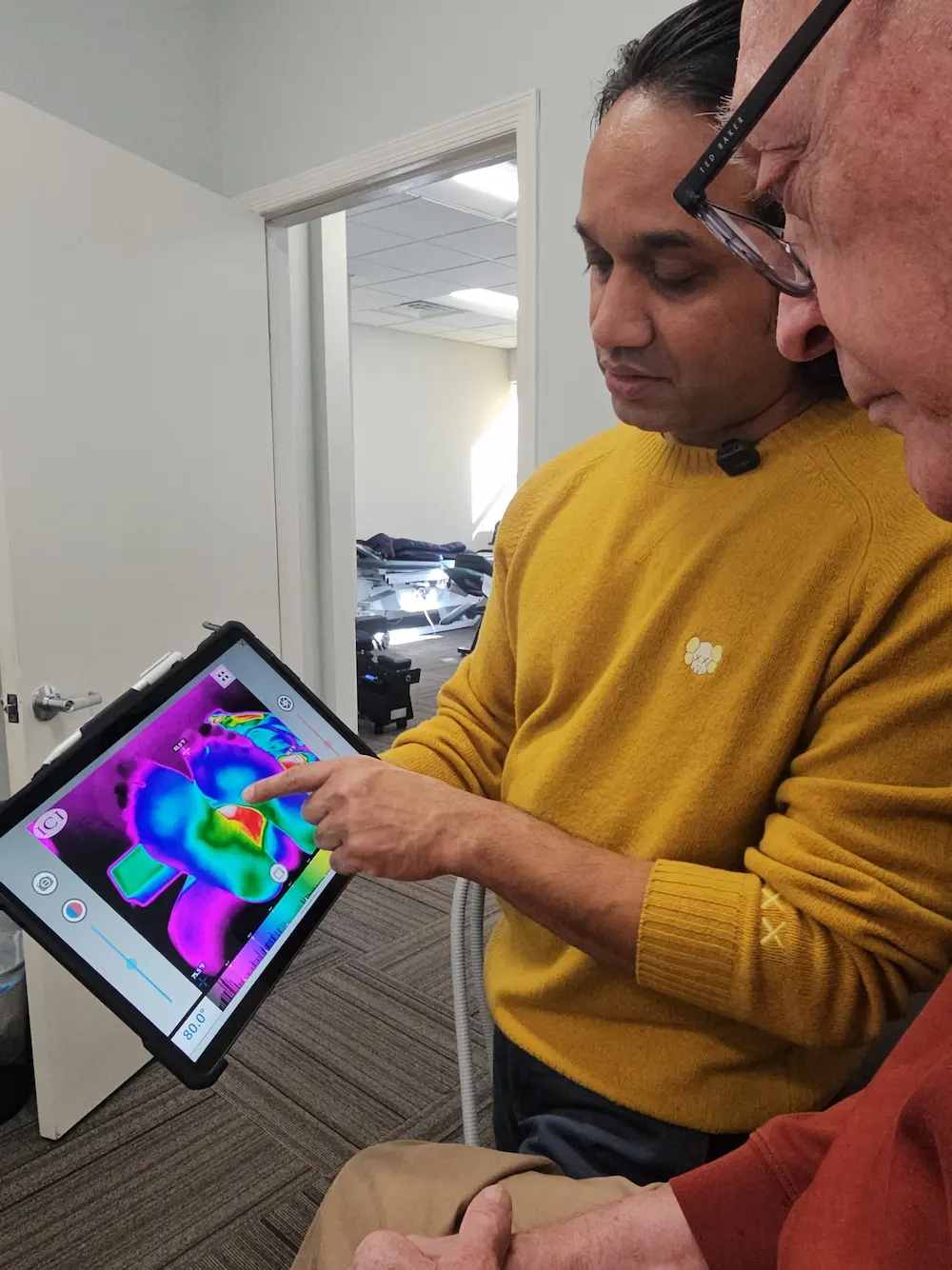
- Thermography where indicated for physiological assessment
Frequently Asked Questions About Sciatica
How do I know if my leg pain is actually sciatica?
Can sciatica heal on its own without treatment?
Is it safe to get adjusted when I have sciatica?
How long does it take for sciatica to get better?
Most patients notice meaningful improvement in leg symptoms within the first several visits. Disc-related sciatica treated with decompression often shows faster improvement in leg symptoms than back pain. Full recovery typically takes several weeks to months depending on severity. Dr. Sojitra outlines honest timelines at the Day 2 visit.