SoftWave Therapy in Princeton NJ
SoftWave is not shockwave as most people know it. It’s the original electrohydraulic technology that shockwave was derived from, and Dr. Sojitra was among the first providers in New Jersey to offer it.
SoftWave Therapy in Princeton, NJ
SoftWave Therapy offers a non-invasive way to relieve chronic joint and tissue pain, including stubborn knee pain and arthritis. Using advanced regenerative technology, this treatment helps your body heal itself without drugs, injections, or surgery. Contact us to see if SoftWave is the right fit for you.
What SoftWave Therapy Actually Does
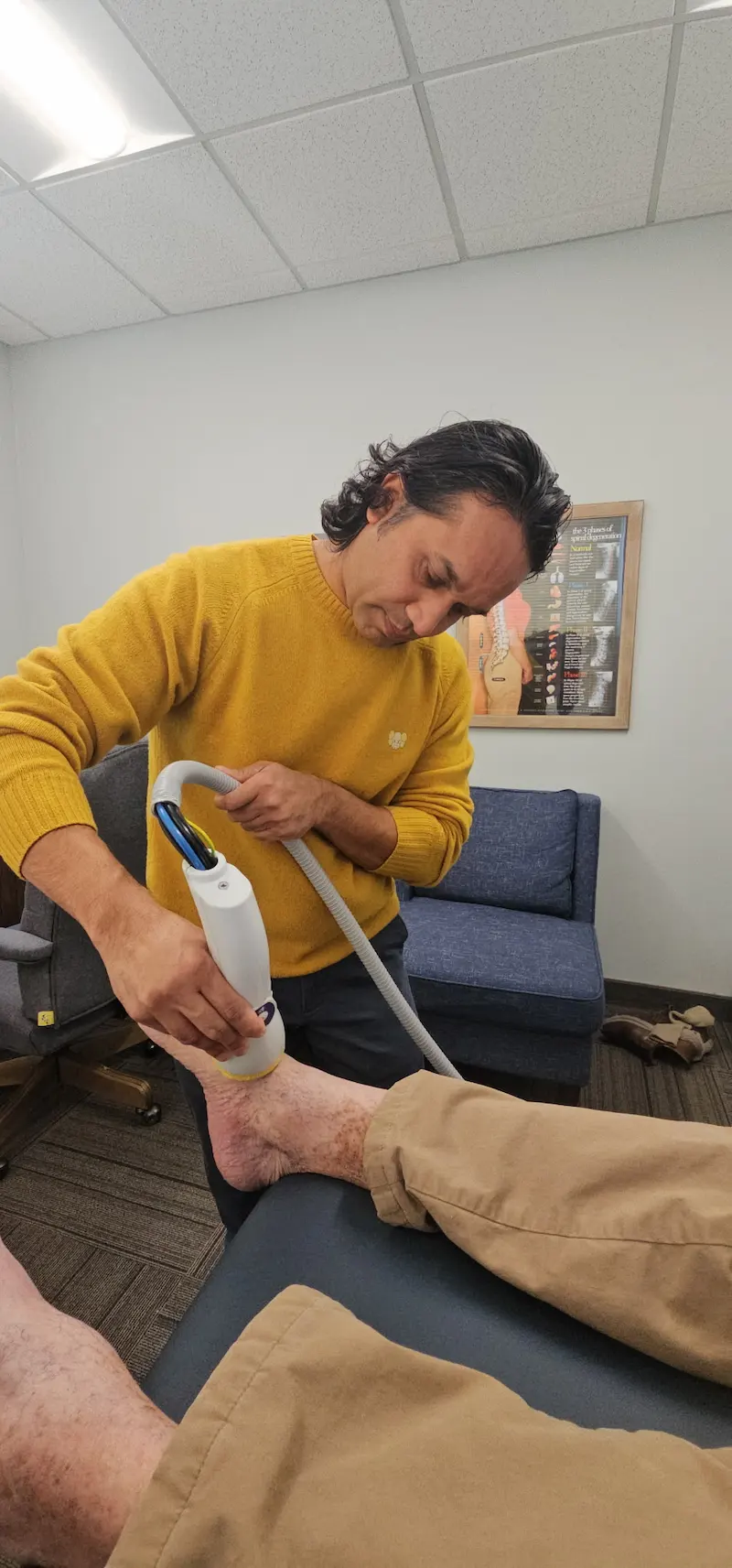
Most patients turn to SoftWave after standard options like rest, physical therapy, cortisone injections, and anti-inflammatories fail, as these approaches merely manage symptoms without treating the underlying tissue. SoftWave delivers low-intensity electrohydraulic acoustic waves into affected areas the same technology used in hospital lithotripsy, calibrated for tissue regeneration.
These waves trigger a cellular response that increases blood flow, activates cells, breaks down scar tissue and calcifications, and stimulates growth factors to restart stalled healing. The resulting pain reduction occurs because the tissue is actually repairing rather than having its pain signals masked. Dr. Sojitra was among the first 100 nationwide providers to adopt SoftWave and has spent years refining its specific clinical application.
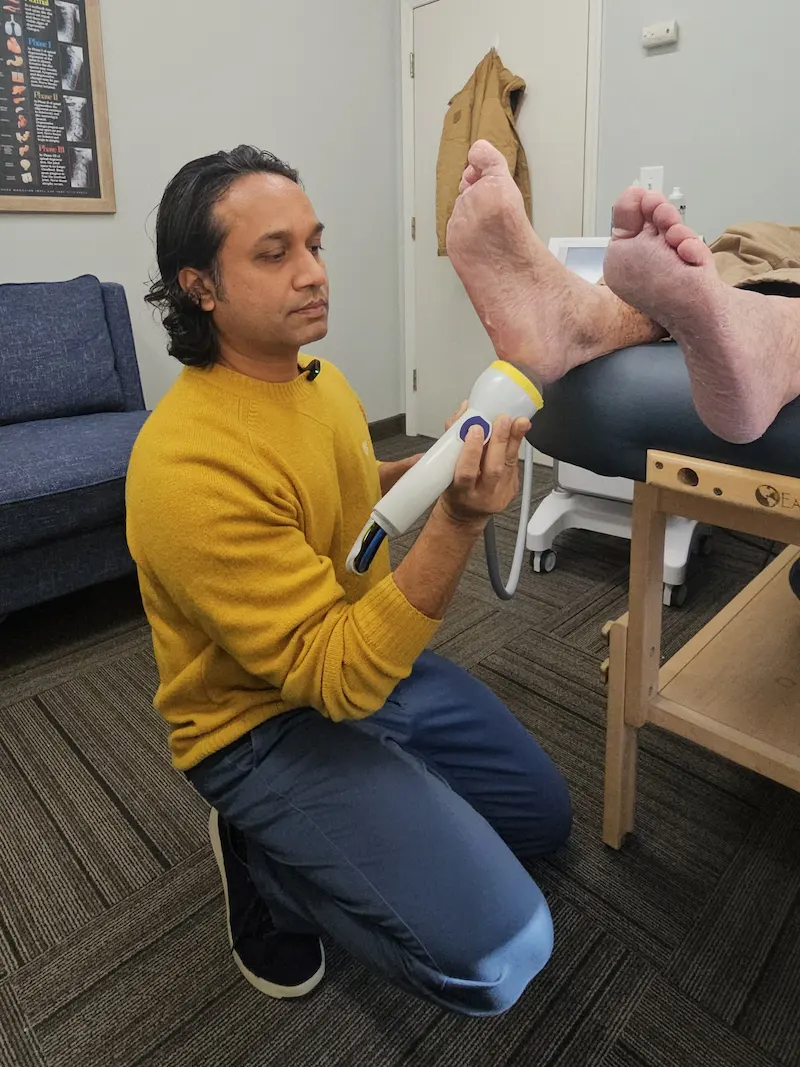
- Electrohydraulic acoustic waves penetrate deep into joints, tendons, bone, and subsurface structures
- Activates stem cell recruitment and growth factors for genuine tissue regeneration
- Breaks down scar tissue and calcifications preventing healing
- Safe on bone, near organs, on the face, and with pacemakers
- No surgery, no needles, no recovery time between sessions
What to Expect During a SoftWave Session
Treatment zone identification
Positioning
The session
Post-session
Protocol and frequency
Conditions SoftWave Therapy Addresses in Princeton NJ
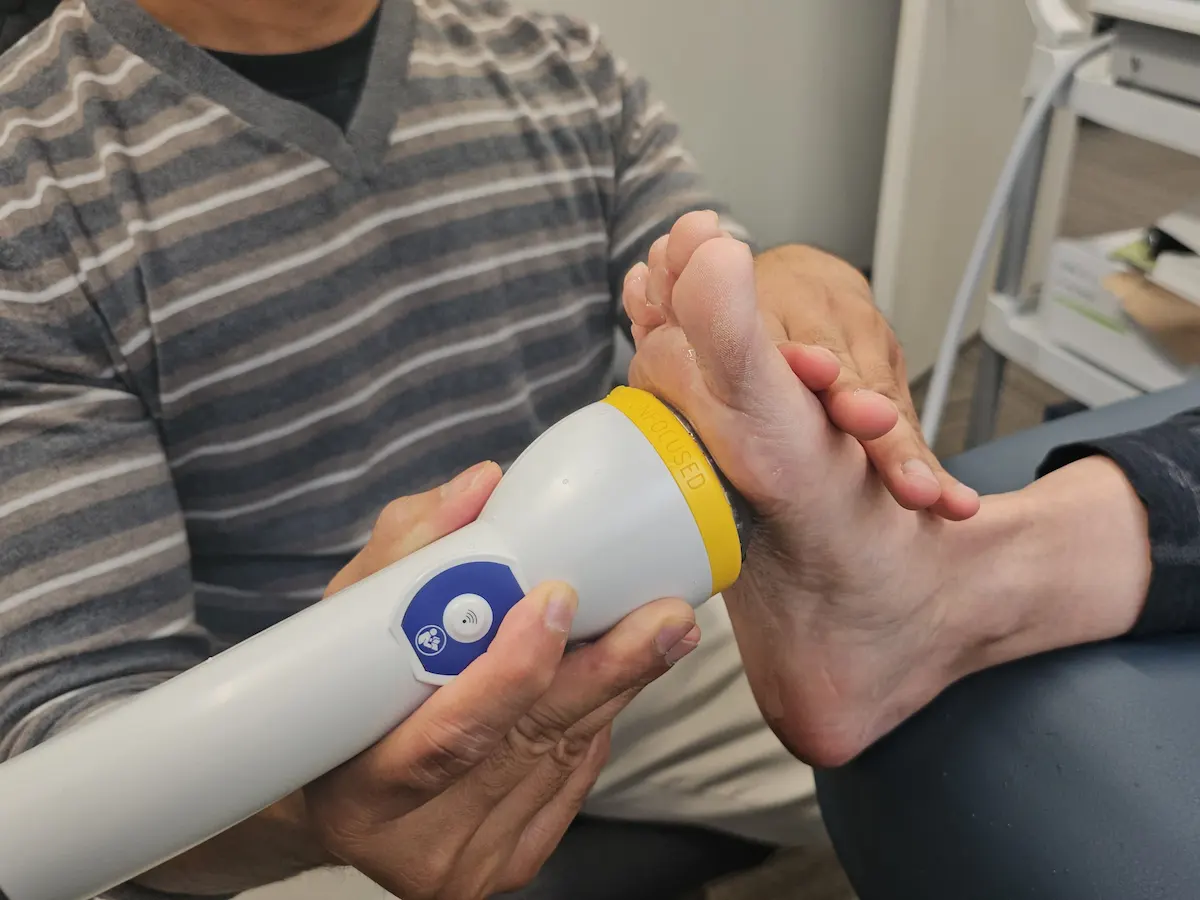
- Knee pain: Treats osteoarthritis, meniscus tears, bone-on-bone degeneration, and post-surgical stiffness. Dr. Sojitra combines SoftWave with knee decompression and EMTT for a complete knee protocol.
- Disc pain and back conditions: Targets the inflammatory soft tissue layer that spinal decompression does not directly reach.
- Shoulder pain: Resolves rotator cuff tendinopathy and calcific deposits. Dr. Sojitra pairs SoftWave with EMTT, NeuFit, and chiropractic adjustments for an optimized shoulder protocol.
- Neuropathy: Stimulates blood flow and cellular activity in peripheral nerve pathways for small-fiber neuropathy where damage is in the tissue rather than the spinal root.
- Plantar fasciitis and heel pain: Reaches the deep plantar fascia insertion more effectively than surface devices, famously resolving career-threatening heel pain for a Princeton University pole vaulter.
- Extremity and joint pain: Treats deep tissue and joint involvement in hip degeneration, ankle injuries, elbow conditions, and wrist problems.
- Fracture Healing: Combined with EMTT to accelerate healing in slow-healing and non-union fractures.
- Post-Concussion & Neurological Conditions: Applied safely at low intensities near the head, combining with CFR protocols to aid post-concussion recovery.
SoftWave as Part of a Complete Care Plan
SoftWave produces its strongest results when the tissue regeneration it initiates is supported by the other layers of care that address what SoftWave cannot reach alone.
SoftWave and EMTT:
The combination of electrohydraulic acoustic waves from outside the cell and electromagnetic transduction from within creates a layered regenerative effect that neither produces alone. Dr. Sojitra uses this combination routinely for knee degeneration, disc conditions, arthritis, and fracture healing. These are the two most powerful regenerative tools in the practice and they are specifically designed to work together.
SoftWave and knee decompression
SoftWave drives tissue regeneration in the knee joint. Knee decompression restores the joint space that allows that regenerated tissue to function. Doing one without the other leaves part of the problem unaddressed - which is why Dr. Sojitra almost always uses both for bone-on-bone and moderate-to-severe knee degeneration cases.
SoftWave and Zone Technique chiropractic
Zone Technique adjustments address any neurological or spinal contribution to the condition being treated with SoftWave - particularly relevant for knee cases where lumbar nerve root involvement is affecting the knee's nerve supply, and for shoulder cases where cervical dysfunction is contributing to the pain pattern.
SoftWave and cold laser
Laser therapy addresses the cellular inflammation component while SoftWave works on the structural tissue damage. Combined, they accelerate the overall healing environment more completely than either does alone.
Who Is a Good Candidate for SoftWave Therapy?
- Chronic joint pain - Knee, hip, shoulder, or ankle conditions with confirmed degeneration or cartilage involvement.
- Tendon conditions - Problems persisting beyond three months despite rest or standard treatment.
- Calcific deposits - Imaging-confirmed deposits in the shoulder, heel, or other joints.
- Meniscus or soft tissue tears - Cases where the clinical goal is tissue regeneration rather than surgical repair.
- Neuropathy - Nerve conditions involving peripheral nerve pathways.
- Prior cortisone failure - Injections that provided temporary relief but no structural resolution.
- Chronic management status - Conditions a provider has described as something you need to "just manage."
Safety screening
SoftWave is most appropriate for patients with conditions involving genuine tissue damage, joint degeneration, or chronic inflammation that has not responded fully to other approaches. The ideal candidate has typically been dealing with their condition for months or years rather than days.
Frequently Asked Questions About SoftWave Therapy
Is SoftWave the same as the shockwave therapy advertised elsewhere?
Does SoftWave hurt?
When will I feel results?
Can SoftWave be used if I have a pacemaker?
Yes. SoftWave’s low-intensity electrohydraulic mechanism is safe for patients with pacemakers, a specific advantage over other shockwave devices that carry this as a contraindication. Always inform Dr. Manish of your specific health situation to check.
Can SoftWave help bone-on-bone knee pain?
Yes. Stem cell activation, increased blood flow, and tissue regeneration can meaningfully reduce pain and improve function even with significant cartilage loss. It is almost always combined with knee decompression and EMTT. Many patients told replacement was their only option have avoided surgery through this combined protocol.