The vagus nerve is the main line of communication between your brain and many of your organs, and when it is not working well, the effects can show up as anxiety, brain fog, digestive trouble, and an irregular heart rate. Vagus nerve dysfunction is easy to overlook because these symptoms usually get treated separately instead of as one connected pattern. In Princeton, NJ, Dr. Sojitra works on the nervous system directly, using tools like NeuFit and upper cervical care to help the body shift out of a constant stress state. This care is meant to support your nervous system alongside your medical treatment, not to replace it.
What Does the Vagus Nerve Do?
The vagus nerve is the longest of the cranial nerves, running from the brainstem down through the neck and into the chest and abdomen. It is the backbone of your parasympathetic nervous system, the side responsible for rest, digestion, and recovery.
When it is functioning well, it helps your heart rate settle, your digestion run smoothly, and your body calm down after stress. When it is not, the body can get stuck in a low-grade fight-or-flight mode, and that shows up in a lot of different ways.
Signs Your Vagus Nerve May Be Struggling
Because the vagus nerve touches so many systems, its symptoms can look scattered and unrelated. Some of the more common ones include:
- Ongoing anxiety or a sense of being constantly on edge
- Brain fog and trouble concentrating
- Digestive issues like bloating, reflux, or irregularity
- An irregular or racing heart rate
- Poor sleep and slow recovery from stress
- Lingering symptoms after a concussion
Any one of these has plenty of possible causes. But when several appear together, a struggling vagus nerve is worth considering as a common thread.
Why These Symptoms Get Missed
The usual approach is to treat each symptom on its own. The digestion goes to one specialist, the anxiety to another, the heart rate to a third. Each may be handled well in isolation, yet the underlying pattern connecting them goes unnoticed.
That is what makes vagus nerve dysfunction such an easy thing to overlook. It rarely gets named as the shared driver, so people can spend years managing pieces of the problem without anyone asking whether the nervous system itself needs attention.
What Can Cause Vagus Nerve Dysfunction?
Several things can throw the vagus nerve off, and often it is a combination rather than a single cause.
- Upper cervical restriction: the top of the neck, especially the C1 area, sits close to where the vagus nerve exits, so tension or misalignment there can affect it.
- Concussion or head trauma: a neck or head injury can disrupt how the nerve signals.
- Chronic stress: long stretches of stress keep the nervous system in overdrive and make it harder for the calming side to take over.
- Physical trauma: accidents and injuries can leave the nervous system stuck in a protective pattern.
How Dr. Sojitra Approaches It
The focus here is on the nervous system itself, not just chasing individual symptoms. Dr. Sojitra uses a few tools together depending on what the evaluation shows.
NeuFit Therapy
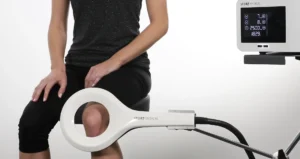
NeuFit uses direct current stimulation that mirrors the body’s own nervous system signaling. The aim is to help move the body out of protection mode and back toward normal function, which can support a calmer, better-regulated state.
Upper Cervical Care
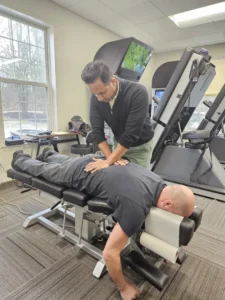
Because the C1 area is so close to the vagus nerve, gentle chiropractic care focused on the upper neck is often part of the plan. Relieving tension in that region can take pressure off the nerve pathways nearby.
Cranial Facial Release
For some patients, Cranial Facial Release is added to address the cranial side of nervous system function. Dr. Sojitra is the only Elite Level 3 certified provider of this technique in New Jersey. If it is new to you, this overview of what Cranial Facial Release is explains how it works.
A Complement to Medical Care, Not a Replacement
This is important, so it is worth saying plainly. Working on the vagus nerve is meant to work alongside your medical care, not instead of it. If you are being treated for anxiety, a digestive condition, or a heart issue, this care does not replace that treatment, and you should never stop a prescribed medication on your own.
The goal is to support your nervous system so it can do its job better, while your medical team continues to manage your health. The two approaches can work well together.
Frequently Asked Questions
Can chiropractic care fix my anxiety?
It is not a cure, and it does not replace mental health or medical care. What it can do is support a calmer, better-regulated nervous system, which some people find helps alongside their existing treatment.
How do I know if my vagus nerve is the problem?
You cannot know for certain on your own, which is why an evaluation matters. Dr. Sojitra looks at your symptoms, your history, and your upper cervical area to see whether nervous system support is likely to help.
Take a Closer Look at the Root Cause
If a cluster of symptoms has never quite been connected or explained, it may be worth looking at your nervous system. Call the practice at (609) 228-9996 or reach out through our contact page to schedule an evaluation in Princeton, NJ.