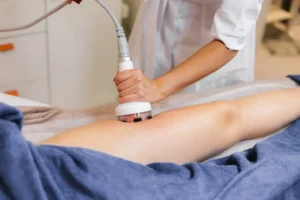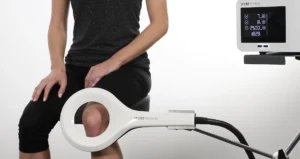
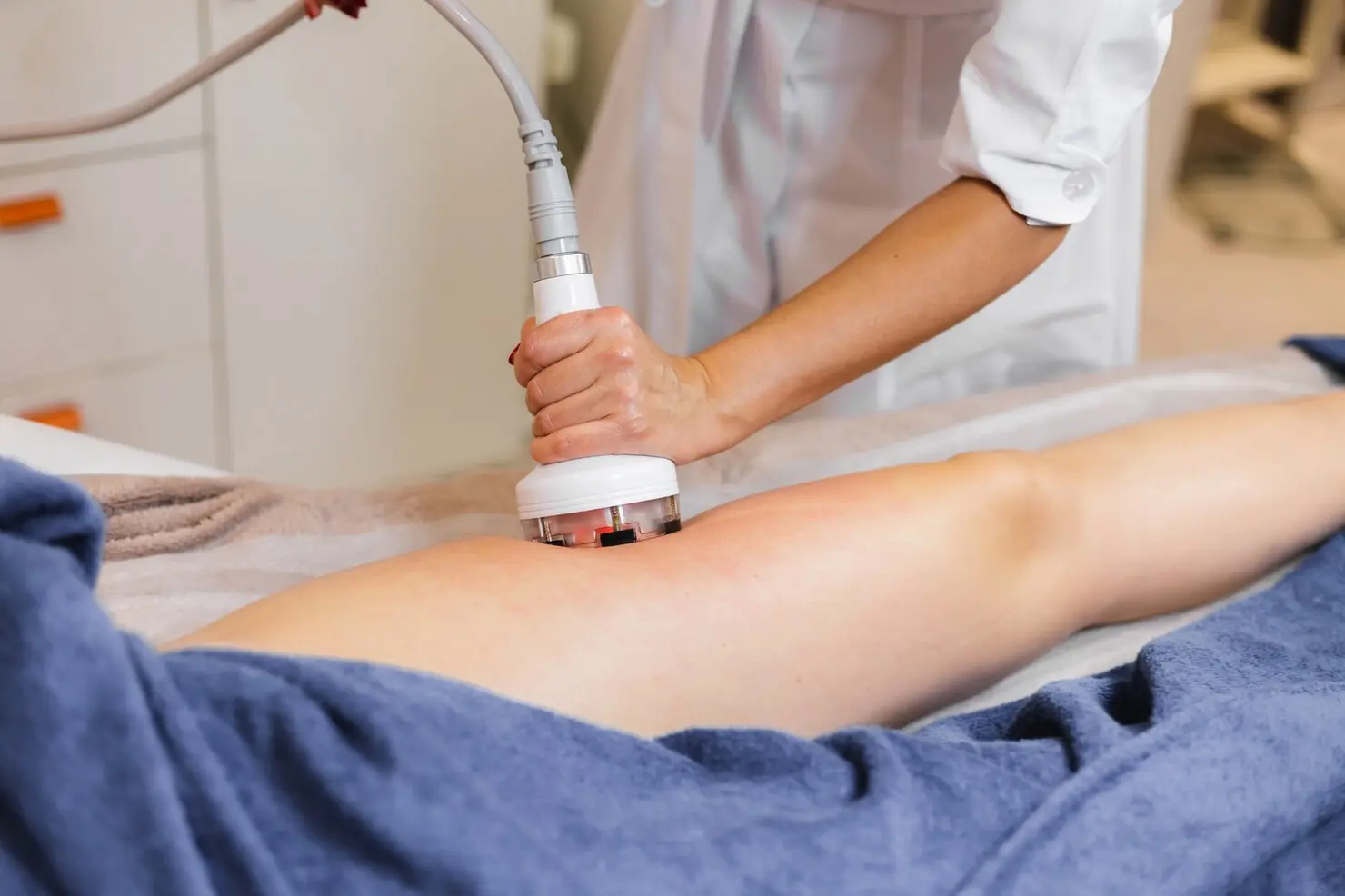
Cold laser therapy uses focused light to reach deep into tissue and support the body’s own repair process, with no heat, needles, or downtime. At Princeton Spine Disc and Chiropractic in Skillman, NJ, Dr. Sojitra pairs two separate laser systems so more of your cells respond at once. It shows up across a wide range of conditions, from neck and knee pain to nerve issues, usually as one part of a larger treatment plan rather than a standalone fix.
How cold laser therapy actually works
The word “cold” in cold laser matters. Unlike a surgical laser, it does not generate heat or cut anything. Specific wavelengths of light simply pass through the skin and get absorbed by structures inside your cells called mitochondria, the parts responsible for producing energy.
When those mitochondria receive more light energy to work with, they can produce more of the fuel cells use to repair themselves. Researchers call this photobiomodulation, which is a technical way of saying “using light to change how cells behave.”
The practical result is often less inflammation, improved circulation to the treated area, and tissue that recovers a little faster than it would on its own. Because there is no heat involved, it is gentle enough to use over the spine, joints, and even cranial structures.
Why two laser systems instead of one
Here is where the setup in Skillman differs from a typical cold laser room. Most clinics run a single device on one or two wavelengths, which means it only reaches part of the cellular machinery involved in healing.
Dr. Sojitra uses two systems side by side. The Euchronia GVL delivers green, violet, and laser wavelengths, while the Avant adds red and violet light. Together they target all four mitochondrial complexes, rather than the single complex most single-wavelength devices reach.
So why should that matter to you? More of the cell’s energy pathway gets stimulated in one sitting, which can mean broader support for whatever tissue is being treated. It is a small detail that reflects the practice’s habit of picking tools based on what the body actually needs.
What cold laser therapy can help with
Because it works at the cellular level rather than on one specific structure, cold laser is useful across a surprising number of conditions. Dr. Sojitra folds it into care for problems like:
- Disc irritation and neck pain, where inflamed tissue needs support to settle down
- Knee and joint pain, often alongside other regenerative tools
- Neuropathy and nerve irritation
- Headaches, TMJ discomfort, and sinus-related issues
- Post-concussion recovery, where its safety over the head and brain is a real advantage
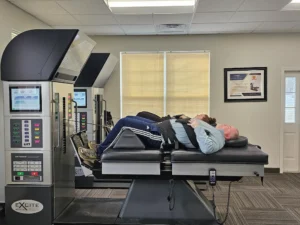
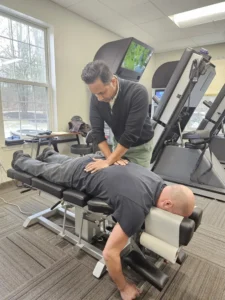
It is rarely the only thing being done. More often it supports the deeper corrective work, whether that is an adjustment, decompression, or a session on another device.
What a session actually feels like
Short and uneventful, which is the whole point. A single treatment zone usually takes five to fifteen minutes, and most people feel nothing more than a mild warmth, if they feel anything at all.
There is no recovery time and nothing to plan around. You can go straight back to your day afterward, which is part of why laser fits so easily into a regular visit during an active phase of care.
Some patients notice a change over the first several sessions, while deeper or longer-standing issues take more time. As with most things at this practice, the response guides the plan rather than a fixed script.
How it fits into the bigger picture
No single device is the answer on its own here. Cold laser is one tool chosen based on what your evaluation reveals, not a box that every patient gets checked into by default.
Dr. Sojitra often combines it with SoftWave therapy, chiropractic adjustments, or decompression, layering treatments so they reinforce each other. For a stubborn knee, for example, laser might calm the surrounding soft tissue while other therapies work on the joint itself.
That layered thinking runs through the practice’s whole approach to chiropractic care in Princeton and the surrounding central New Jersey area. The goal is always to address what is driving the problem, not just quiet the symptom for a day.
Common questions about cold laser therapy
Is cold laser therapy safe?
For most people, yes. It is non-invasive and produces no heat, which makes it safe to use over the spine, joints, and cranial areas. Dr. Sojitra reviews your history first to confirm it is appropriate for your situation.
How many sessions will I need?
It depends on the condition and how your body responds. During an active care phase, laser is often included in most visits rather than booked as a separate treatment, so the number varies with your overall plan.
Does it hurt?
No. The most anyone typically notices is a faint warmth on the skin. There are no needles, no pressure, and nothing to recover from.
Curious whether cold laser therapy could support what you are dealing with? Reach out to Princeton Spine Disc and Chiropractic or call (609) 228-9996, and we are happy to talk it through.