NeuFit and traditional e-stim units like TENS both send electrical signals into the body, but they do very different jobs. Standard TENS and EMS devices use alternating current, which mainly blocks the sensation of pain without changing what is causing it. NeuFit uses direct current that more closely mirrors the body’s own nervous system signaling, which can help retrain muscles and move the body out of a protective, guarded state. At Princeton Spine Disc and Chiropractic in Princeton, NJ, Dr. Sojitra uses NeuFit specifically for cases where pain improved but function never fully returned.
Why Not All Electrical Stimulation Is the Same
If you have ever had physical therapy, you have probably felt those little sticky pads buzzing on a sore muscle. That is e-stim, and for a lot of people it is the only kind they know.
But the type of electrical current matters more than most people realize. The current a device uses shapes whether it simply masks pain for an hour or actually influences how the nervous system behaves.
How Traditional E-Stim (TENS and EMS) Works
Standard units like TENS, which stands for transcutaneous electrical nerve stimulation, and EMS, electrical muscle stimulation, run on alternating current. That current is good at one thing in particular: interrupting pain signals so you feel relief while the machine is running.
The catch is that it tends to be temporary. Once the session ends, the underlying dysfunction is usually still there, because alternating current does not do much to change how the muscle and nerve are actually functioning. It is comfort, not correction.
None of that makes TENS useless. For short-term pain relief it can be a reasonable tool, and plenty of people keep a unit at home for exactly that. The limitation only becomes a problem when temporary relief gets mistaken for a fix, and the real dysfunction never gets addressed.
How NeuFit Is Different
NeuFit therapy uses direct current instead. Direct current more closely resembles the steady signaling your own nervous system uses, which is what lets it do more than block pain.
The goal is to shift the body out of what could be called “protection mode,” where muscles stay guarded and shut down after an injury or surgery, and back toward normal function. Rather than covering up the symptom, it works on the pattern driving it.
Think of it as the difference between turning down a fire alarm and putting out the fire. TENS quiets the alarm so you feel better for a while. NeuFit is aimed at the fire itself, the faulty signaling and guarding that keep the problem going.
NeuFit vs. Traditional E-Stim: The Key Differences
- Type of current: alternating current in TENS and EMS, direct current in NeuFit.
- Main effect: temporary pain blocking versus retraining muscle and nerve function.
- What lasts: relief usually fades after TENS, while NeuFit aims for a lasting change in function.
- Best use: short-term comfort versus rehab, guarding, and stalled recovery.
What NeuFit Is Used For
NeuFit tends to earn its place in the harder cases, the ones where standard approaches have plateaued.
Across these uses, the through-line is function. Pain relief is welcome, but the real target is restoring how a muscle fires, how a joint moves, and how the nervous system regulates itself.
Post-Surgical Rehabilitation
After a knee, shoulder, hip, or spinal surgery, muscles often stay weak and switched off even once the pain settles. NeuFit is used to help wake those muscles back up and rebuild function. Dr. Sojitra has described it as the single biggest improvement to his shoulder rehab outcomes.
This matters because a joint that looks healed on paper can still be held back by muscles that never fully switched back on. Waking them up is often what separates a decent recovery from a complete one.
Chronic Pain With Muscle Guarding
When the body has been protecting an area for months or years, the guarding itself becomes part of the problem. NeuFit can help release that pattern so the area can move and load normally again. This often pairs with chiropractic care to address the joint and nervous system together.
Neurological Conditions and Muscle Weakness
NeuFit is also used to support people dealing with muscle atrophy, weakness, and certain neurological conditions like MS, where the connection between nerve and muscle needs help staying active. It will not reverse a neurological disease, but it can be a tool for maintaining function and slowing the decline of unused muscle.
Vagus Nerve and Nervous System Regulation
NeuFit is also part of how the practice approaches vagus nerve dysfunction, using it to help calm a nervous system stuck in overdrive. If that connects with what you are dealing with, this piece on vagus nerve dysfunction and symptoms like anxiety and brain fog goes deeper.
What to Expect With NeuFit
Like every new patient here, you start with an evaluation before any treatment begins. Day one is assessment only, and day two is when the findings and a plan come together, so NeuFit is recommended only if it fits what is actually going on.
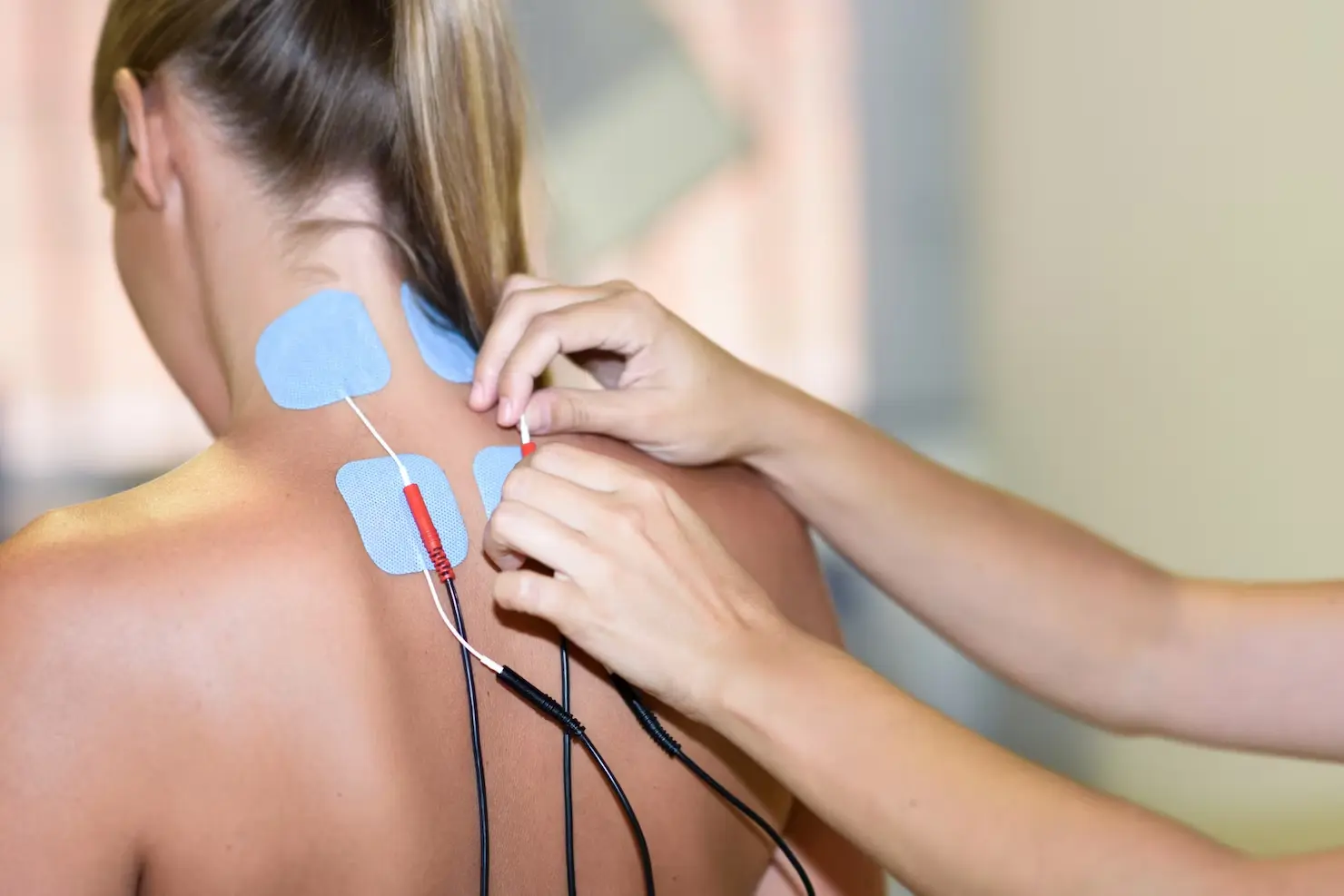
A session itself is straightforward. Pads are placed over the target muscles, and the direct current drives a strong, controlled contraction while you move or hold a position. Most sessions run fifteen to thirty minutes and are combined with other parts of your plan rather than done in isolation.
Why Dr. Sojitra Added NeuFit to the Practice
Dr. Sojitra pursued NeuFit certification for a specific reason. He kept seeing patients whose pain had resolved but whose function had not come back, and standard tools were not closing that gap.
That pattern, pain gone but strength and control still missing, is exactly what NeuFit is built to address. It reflects a theme that runs through the whole practice: get to what is actually driving the problem instead of settling for temporary relief. Patients across Princeton and the greater Princeton area come in for precisely this kind of stalled recovery.
Frequently Asked Questions
Does NeuFit hurt?
Most people feel a strong but tolerable muscle contraction rather than pain. Sessions usually run fifteen to thirty minutes and are typically combined with other care.
Is NeuFit the same as the TENS unit I bought online?
No. Home TENS units use alternating current for temporary pain relief. NeuFit uses direct current with a different goal, which is retraining function rather than just masking symptoms.
Can NeuFit help long after a surgery?
Often yes. Even when a surgery was months or years ago, lingering weakness and guarding can sometimes respond, which is why it is a common part of post-surgical rehab plans here.
How many NeuFit sessions will I need?
It varies with the goal, whether that is post-surgical strength, releasing chronic guarding, or nervous system support. Because it is usually part of a broader plan, the number is set at your evaluation rather than sold as a fixed package.
Ready to Address the Function, Not Just the Pain?
If your pain eased but your strength or movement never fully returned, NeuFit may be worth exploring. Call the practice at (609) 228-9996 or use our contact page to schedule an evaluation in Princeton, NJ.