One of the most common points of confusion for spine patients is the difference between a herniated disc and a bulging disc. A bulging disc pushes outward past its normal boundary while its tough outer wall stays intact. A herniated disc goes one step further, when that outer layer tears and some of the softer inner material leaks out. Neither is automatically worse, because a small herniation can be painless while a large bulge can press hard on a nerve. At Princeton Spine Disc and Chiropractic in Princeton, NJ, Dr. Sojitra looks at the exact disc level and what it is pressing on before recommending any care.
What Is a Bulging Disc?
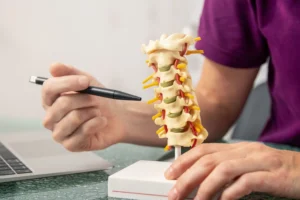
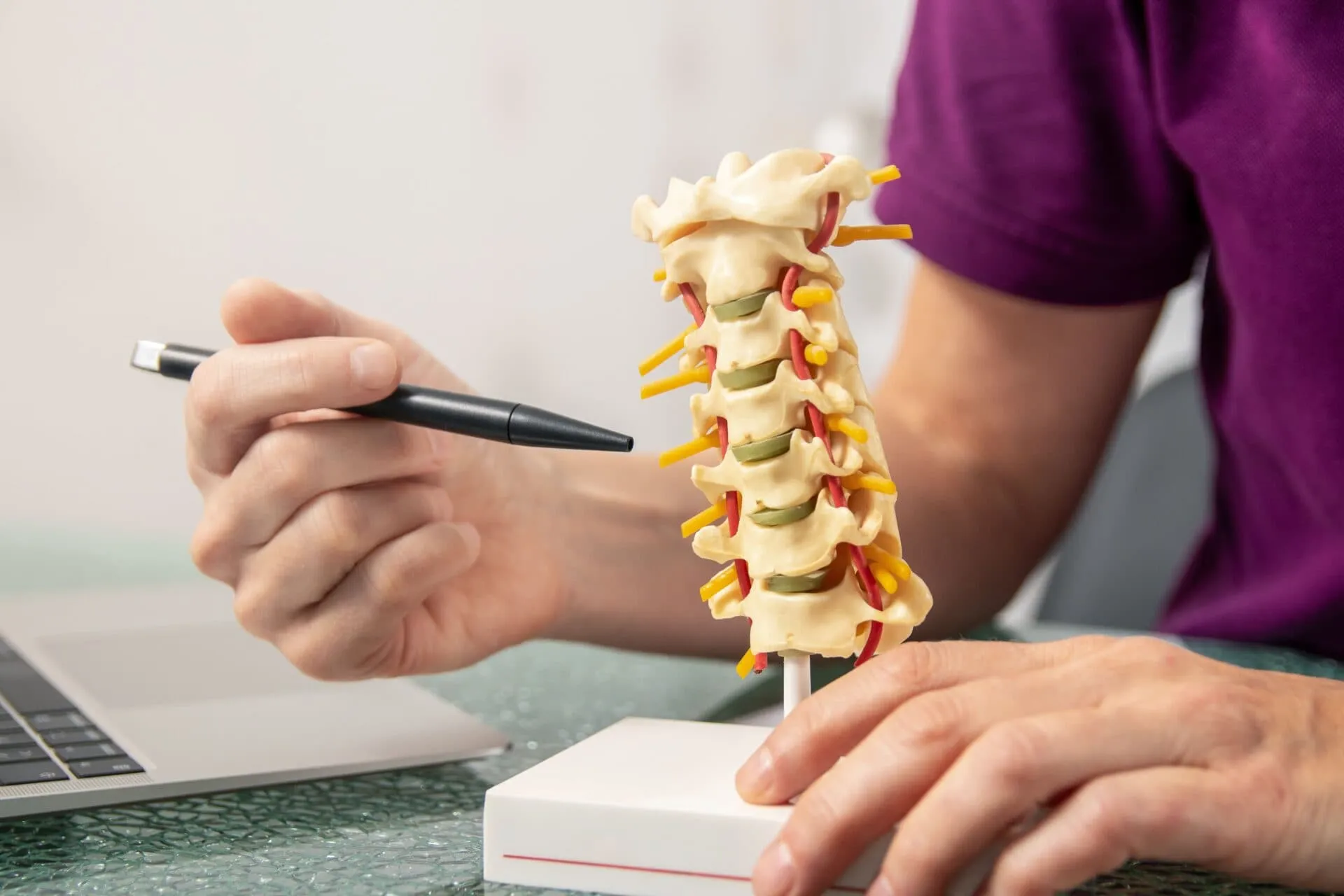
Your spine has soft, cushion-like discs sitting between each vertebra. A bulging disc is one that has flattened and pushed outward past where it should sit, a little like a tire that is low on air. The outer wall of the disc stays in one piece, so nothing has actually leaked out.
Bulging discs are extremely common, and plenty of people have them without any pain at all. The trouble starts only when the bulge presses against a nearby nerve or narrows the space that nerve travels through.
What Is a Herniated Disc?
A herniated disc is a step beyond a bulge. Here, the tough outer layer of the disc actually tears, and some of the soft, gel-like center pushes out through the opening. You may hear it called a slipped disc or a ruptured disc, though nothing truly slips out of place.
That leaked material can irritate nearby nerves in two ways: by pressing on them directly and by triggering inflammation. This is why a herniation often brings sharper, more specific pain than a bulge does. Both show up regularly in the kind of disc pain Dr. Sojitra treats week to week.
Herniated Disc vs. Bulging Disc: The Key Differences
The simplest way to picture it is this: a bulging disc is contained, and a herniated disc is not. Here is how the two tend to compare.
- The disc wall: intact with a bulge, torn with a herniation.
- The inner material: stays inside with a bulge, escapes with a herniation.
- Typical pain: a bulge may cause a dull ache or nothing at all, while a herniation more often causes sharp, radiating pain.
- Nerve symptoms: numbness, tingling, and weakness down an arm or leg are more common with a herniation.
What Causes Disc Problems in the First Place?
Discs change with age, drying out and becoming less flexible over the years. Add prolonged sitting, poor posture, repetitive bending or lifting, or an old injury the body has been quietly compensating for, and the pressure adds up.
Sometimes there is a clear trigger like a car accident or a heavy lift. Often, though, a disc simply reaches its limit after years of small stresses, which is why the pain can seem to appear out of nowhere.
Which One Is More Serious?
This is where people are often surprised. A herniated disc sounds worse, and in many cases it does cause more pain. But severity depends far less on the label and far more on what the disc is actually doing to the surrounding nerves.
A small herniation tucked away from any nerve can be completely painless. A large bulge sitting right on a nerve root can be miserable and can even send pain down the leg as sciatica. So the more useful question is not which type is worse in general, but what is happening at your specific disc level.
When You Should See a Doctor Right Away
Most disc problems are not emergencies and respond well to conservative care. A few symptoms, though, need urgent medical attention rather than a wait-and-see approach.
- Loss of bladder or bowel control
- Numbness around the groin or inner thighs
- Progressive weakness in a leg or foot, including foot drop
- Severe pain that rapidly worsens and does not ease in any position
If any of these appear, treat it as a medical emergency. For everything else, a proper evaluation is the right first step.
Non-Surgical Treatment Options in Princeton, NJ
The good news is that most herniated and bulging discs improve without surgery. At the practice, the goal is to take pressure off the disc and the nerve so the body can settle and heal on its own.
Spinal Decompression
Spinal decompression is one of the main tools for this. A computer-controlled table gently stretches the spine to create a light negative pressure at a targeted disc level, which can help draw bulging or herniated material back away from the nerve. If you want a closer look at how it works, this guide on spinal decompression in Princeton, NJ walks through the full process.
Supporting Care
Decompression is often combined with chiropractic adjustments and other therapies chosen based on what the evaluation shows. The point is to match the treatment to your specific disc rather than run everyone through the same routine. Many patients from Princeton and the wider Princeton area arrive after other approaches have not given lasting relief.
A Doctor Who Has Been There
Dr. Sojitra does not just treat disc injuries. He recovered from a serious one himself. Years into his career, he suffered an 11.5mm herniation at the L5-S1 level that left him temporarily unable to sleep well, dress himself, or pick up his young daughter.
Rather than opt for surgery, he chose spinal decompression and chiropractic care. Follow-up MRIs documented that herniation shrinking to roughly 3.5mm over time. You can read more about his recovery on the Meet Dr. Sojitra page.
Frequently Asked Questions
Can a bulging disc turn into a herniated disc?
Yes. A bulging disc that keeps taking stress can eventually tear, which lets the inner material escape and become a herniation. Addressing it early can help reduce that risk.
Do herniated discs heal on their own?
Many do improve over time as the body reabsorbs some of the leaked material and inflammation calms down. Care like decompression is aimed at supporting that process and easing symptoms along the way.
How do I know which one I have?
An exam and imaging are the only reliable way to tell them apart and, more importantly, to see whether a nerve is involved. That is exactly what the first-visit evaluation is built to figure out.
Talk With Dr. Sojitra
If disc pain is limiting your days, you do not have to guess your way through it. Call the practice at (609) 228-9996 or reach out through our contact page to set up an evaluation in Princeton, NJ.