
Shoulder pain that has not improved with rest and painkillers often has a specific cause that those measures were never going to fix. Between the rotator cuff, tendons, joints, and nerves, the shoulder is a complicated area, and lasting relief usually depends on identifying which structure is actually the problem. At Princeton Spine Disc and Chiropractic in Princeton, NJ, Dr. Sojitra offers non-surgical options aimed at the source of shoulder pain, not just the ache. For many people, that opens a path between doing nothing and considering surgery.
Why Shoulder Pain Is So Easy to Get Wrong
The shoulder has the widest range of motion of any joint in the body, and it pays for that mobility with complexity. Muscles, tendons, ligaments, bursa, the joint capsule, and nearby nerves all share the space, and any of them can be the source of pain.
That is why a generic “shoulder pain” label rarely leads anywhere useful. Rotator cuff irritation, a frozen shoulder, arthritis, and even a problem referred from the neck can all feel similar at first, yet they call for very different treatment.
Add to this the fact that the shoulder often refers pain elsewhere, and receives referred pain in return, and you can see the problem. Two people with nearly identical symptoms can need opposite treatments. Guessing rarely ends well, which is why pinning down the specific structure comes first.
Common Causes of Stubborn Shoulder Pain
When shoulder pain will not settle, the cause is usually one of a handful of things:
- Rotator cuff tendinopathy or partial tears
- Frozen shoulder, where the capsule tightens and motion is lost
- Shoulder impingement, with pinching during overhead movement
- Osteoarthritis of the joint
- Bursitis and chronic inflammation
- Pain referred from the neck or upper spine
Because these overlap in how they feel, sorting out which one you are dealing with is the first real step toward relief.
Why Rest and Painkillers Often Fall Short
Rest and anti-inflammatories are usually the first thing people try, and there is nothing wrong with that. The trouble is what they do and do not accomplish. They can calm a painful flare, but they do not repair a struggling tendon, restore lost motion, or rebuild a muscle that has weakened from disuse.
So the pain often quiets down, then returns the moment demand goes back up. When that cycle keeps repeating, it is a sign the underlying cause needs to be addressed directly.
This is not an argument against ever resting a sore shoulder. Short-term rest has its place. The issue is relying on rest and medication as the whole plan when a specific structure needs actual treatment to recover.
Why Shoulder Problems Tend to Linger
Shoulders have a habit of getting worse quietly. When something hurts, you naturally use it less, and the surrounding muscles weaken from that disuse. A frozen shoulder can gradually lose range of motion, and an irritated tendon rarely settles on its own once it is inflamed.
That slow drift is why the “wait and see” approach can backfire. What starts as a manageable ache can stiffen into a bigger problem, so understanding the cause sooner tends to make treatment simpler and recovery faster.
Non-Surgical Options for Shoulder Pain in Princeton, NJ
Between doing nothing and having surgery, there is a lot of room. Dr. Sojitra treats shoulder pain as part of the practice’s broader focus on extremity and joint pain, using several non-surgical tools chosen based on what is actually driving the pain.
Regenerative Therapies
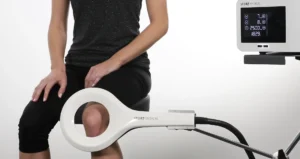
SoftWave therapy and EMTT target the tissue itself, using acoustic and magnetic energy to support repair in tendons and joints that have not healed on their own. These are often central to treating rotator cuff and tendon-related shoulder pain.
The aim is to help the tendon or joint repair rather than to simply quiet it, so the improvement has a chance to hold.
Cold Laser Therapy
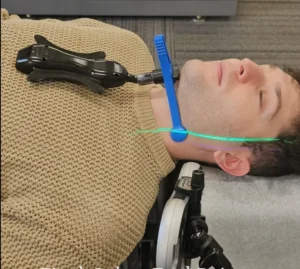
Cold laser therapy is used to reduce inflammation and support healing at the cellular level, which can help calm an irritated shoulder without medication.
NeuFit for Strength and Function
A shoulder that has been painful for a while often has muscles that have quietly switched off. NeuFit therapy uses direct current to help wake those muscles back up and rebuild function, which matters because a strong, stable shoulder is what keeps pain from coming back. This piece on how NeuFit differs from a standard TENS unit explains why the type of current makes a difference.
Addressing the Joints Around the Shoulder
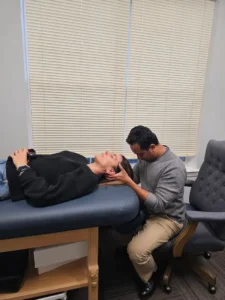
The shoulder does not work in isolation. The neck, upper back, and shoulder blade all influence how it moves, so hands-on chiropractic care to those areas is often part of restoring normal, pain-free motion.
Finding the Cause First
None of these tools mean much without knowing which structure is the problem. That is why care starts with a two-day process: a full evaluation on the first visit, then a plan built around the findings on the second. It is the same principle that guides the whole practice, which is to treat the cause, not just the symptom.
For the shoulder specifically, that means figuring out whether you are dealing with a tissue problem, a mobility problem, a strength problem, or some combination, since each points to a different mix of tools.
When Surgery Is the Right Call
Non-surgical care helps a great many shoulders, but not all of them. A large complete rotator cuff tear, significant structural damage, or a shoulder that fails to respond to conservative care may genuinely need a surgical consult.
Part of an honest evaluation is recognizing those cases. The goal is not to avoid surgery at all costs, but to make sure you have explored the effective non-surgical options first, and to point you toward the right care if surgery is truly needed.
Frequently Asked Questions
Do I need an MRI before starting?
Not always. A thorough exam can often identify the likely cause, and imaging is recommended when it will change the plan. If you already have imaging, bringing it along is helpful.
Can chiropractic care help shoulder pain, or just back pain?
It can help many shoulder problems, especially when the neck, upper back, or surrounding muscles are involved. When combined with regenerative therapies, it addresses both the joint mechanics and the tissue.
How long until my shoulder improves?
That depends on the cause and how long it has been present. Tissue-based healing takes time and usually unfolds over a series of visits, which your evaluation will map out.
Is it too late if my shoulder has hurt for months or years?
Usually not. Even long-standing shoulder problems can improve once the actual cause is identified and treated directly. Chronic cases may simply take a more layered plan, which the evaluation will outline.
Get Your Shoulder Looked at Properly
If rest and painkillers have not fixed your shoulder, a proper evaluation can identify what will. Call the practice at (609) 228-9996 or reach out through our contact page to schedule a visit in Princeton, NJ.