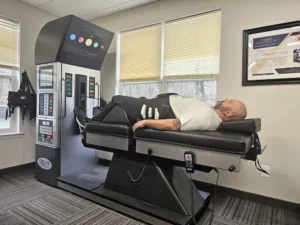
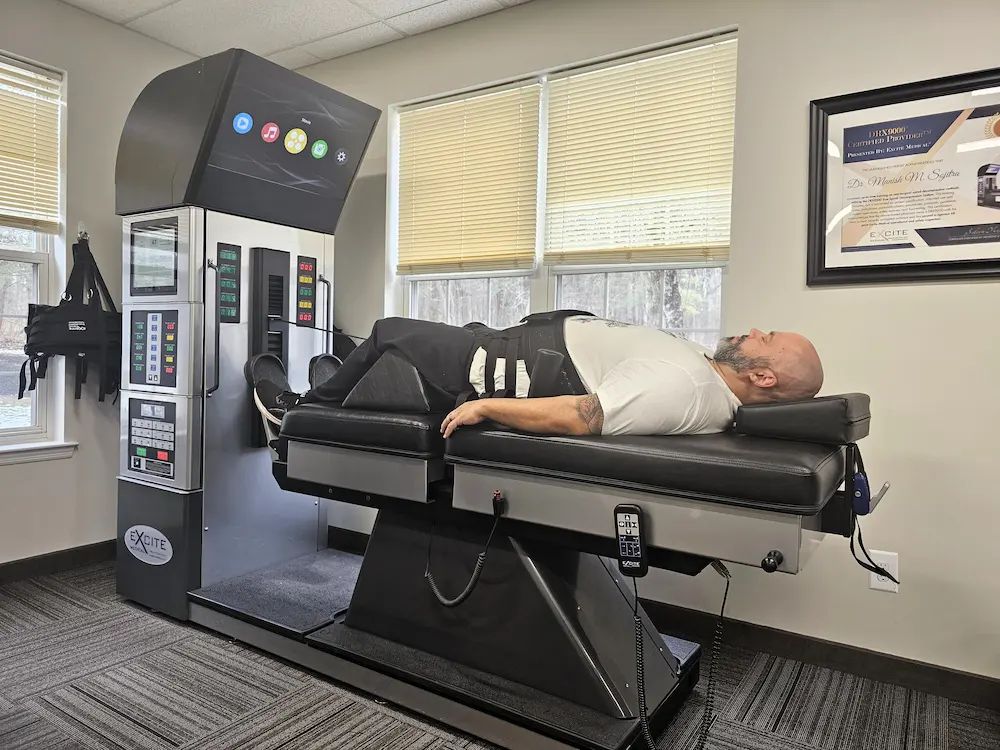
Spinal decompression is a non-surgical treatment that gently stretches the spine to take pressure off compressed discs and nerves. In Princeton, NJ, Dr. Sojitra uses a computer-controlled DRX9000 table that targets specific disc levels, creating a light negative pressure that can help pull herniated or bulging material away from nearby nerves. It is a common choice for people with disc pain and sciatica who want to avoid surgery. Sessions are quiet, comfortable, and usually last around twenty minutes.
What Is Spinal Decompression?
When a disc is compressed, it presses on the nerves around it and loses the space it needs to stay healthy. Spinal decompression reverses that pressure. Instead of pushing on the spine, it carefully pulls, easing the load on the disc so it has room to recover.
The key difference from a basic stretch or traction is precision. The system is programmed to focus on a specific disc level and to work in gentle cycles, which keeps the surrounding muscles from tensing up and fighting the pull.
How the DRX9000 Works
The DRX9000 is a computer-controlled decompression table. You lie down comfortably while the table applies a measured, cyclical pull to the targeted area of your spine. That pull creates a slight negative pressure inside the disc.
That negative pressure does two useful things. It can help draw bulging or herniated disc material back toward the center and away from the nerve, and it encourages fluid, oxygen, and nutrients to move back into the disc, which supports healing. This is the same machine Dr. Sojitra used during his own disc recovery.
What Conditions Spinal Decompression Can Help
Decompression is most useful for pain that traces back to the discs and the nerves they can irritate.
Herniated and Bulging Discs
These are the core reasons people come in for decompression. If you are still sorting out the difference between the two, this guide on herniated disc vs bulging disc breaks it down. Either way, taking pressure off the disc is often the priority.
Sciatica
When a lower back disc presses on the sciatic nerve, pain can travel through the buttock and down the leg. By relieving that compression, decompression addresses the source of many cases of sciatica rather than just numbing the symptom.
Other Related Issues
Decompression can also help with degenerative disc changes and certain kinds of ongoing back pain tied to disc pressure. It is available for the neck as well as the lower back, so cervical disc problems can be addressed in-office too.
What to Expect During a Session
A session is calm and low-effort. You stay fully clothed, get positioned on the table, and are secured with a comfortable harness. From there, the machine does the work while you rest.
A typical lumbar session runs about twenty minutes. Most people find it relaxing, and some even doze off. There is no recovery time afterward, so you can head back to your day.
The Doctor Who Recovered From His Own Disc Herniation
Dr. Sojitra’s approach to disc care is personal. Years into his career, he suffered an 11.5mm herniation at the L5-S1 level. At its worst, he could not sleep properly, dress himself, or lift his young daughter.
He chose spinal decompression and chiropractic care instead of surgery. Over time, follow-up MRIs documented that herniation shrinking to around 3.5mm. That experience shapes how he treats disc patients today, and you can read the full story on the Meet Dr. Sojitra page.
How Many Sessions Will You Need?
There is no single answer, because it depends on how long the problem has been building and how severe it is. As a general guide, moderate cases often run around twelve sessions, while more severe cases can call for sixteen to twenty-four.
The specifics come from your evaluation. Dr. Sojitra does not recommend a care plan until the first-visit assessment is complete, so the number reflects your actual condition, not a preset package. You can see how that process works on the Our Process page.
When Surgery or a Medical Referral Comes First
Decompression is a strong non-surgical option, but it is not right for every situation. Certain warning signs point to a problem that needs immediate medical care instead.
- Loss of bladder or bowel control
- Numbness in the groin or saddle area
- Progressive weakness or foot drop
- Severe, unrelenting pain that keeps getting worse
If any of these are present, seek emergency care. An honest evaluation is part of the point here, and Dr. Sojitra will refer out when that is the safer path.
Frequently Asked Questions
Is spinal decompression painful?
It should not be. Most patients describe a gentle stretching feeling and often find the session relaxing rather than uncomfortable.
Is it the same as being cracked or adjusted?
No. Decompression is a slow, mechanical stretch performed on a table. It can be combined with chiropractic adjustments, but the two are separate treatments.
Ready to Explore a Non-Surgical Option?
If a herniated disc or sciatica is running your life, spinal decompression may be worth a serious look. Call the practice at (609) 228-9996 or reach out through our contact page to schedule an evaluation in Princeton, NJ.