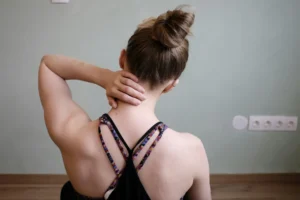

Most people write off a stiff, aching neck as a bad night’s sleep or too many hours at a screen. Sometimes that is all it is. But when the stiffness keeps coming back, spreads into headaches, or never fully lets go, it often points to a structural issue rather than simple muscle fatigue. For neck pain in Princeton, NJ, Dr. Sojitra at Princeton Spine Disc and Chiropractic focuses on telling those two apart, because they call for very different care.
What “tech neck” is doing to your spine
Your head weighs roughly ten to twelve pounds when it sits balanced over your shoulders. Tip it forward to look at a phone or laptop, and the effective load on your neck climbs dramatically as the angle increases.
Hold that posture for hours a day, day after day, and the muscles at the back of the neck stay under constant strain while the natural curve of the cervical spine starts to flatten. That is what people mean by tech neck, and it is showing up younger and younger.
Early on it feels like tightness and fatigue. Left alone, it can progress into joint restriction, changes in the disc, and headaches that seem to have no obvious trigger.
Simple strain versus a structural problem
So how do you tell ordinary stiffness from something deeper? A few patterns tend to separate the two.
Everyday strain usually eases within a day or two, responds to rest, and does not radiate anywhere. A more structural issue tends to linger, keep returning to the same spot, or send symptoms into the shoulders, arms, or head.
Warning signs worth taking seriously include pain that travels down an arm, numbness or tingling in the hands, weakness in a grip, or neck pain paired with recurring headaches. Those suggest the joints, discs, or nerves are involved, not just tired muscles.
Why the neck and head are so closely linked
Here is a connection many people never hear about. The upper cervical spine, the top few segments of your neck, sits right where a great deal of nerve traffic between the head and body passes through.
When those upper segments get restricted, the effects rarely stay local. Tension headaches, pain at the base of the skull, and even jaw discomfort can all trace back to what is happening in the neck. Treating the headache alone, without addressing the neck, often means the relief does not last.
How Dr. Sojitra approaches neck pain
Care here starts with an evaluation before any treatment plan is offered. Rather than assuming every stiff neck is the same, Dr. Sojitra looks at how the cervical spine is moving, how the surrounding muscles are behaving, and whether the nervous system is under stress using Zone Technique analysis.
From there, the plan depends on what turns up. Options can include:
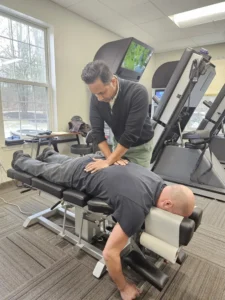
- Targeted chiropractic adjustments to restore motion in restricted cervical joints
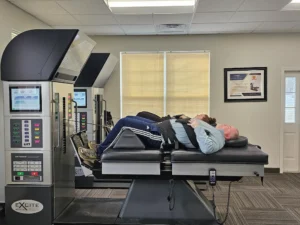
- Cervical decompression when a disc is compressed and contributing to the pain
- Cold laser or other supporting therapies to calm inflamed tissue
- Posture and movement guidance to reduce the daily load that started the problem
The aim is to correct the mechanics driving the pain, not just loosen the muscles for an afternoon. That distinction is what tends to keep neck pain from cycling back.
What you can do between visits
Small changes to how you use screens add up. Raising your monitor to eye level, bringing your phone up instead of dropping your head down, and taking short breaks to reset your posture all reduce the strain that feeds tech neck.
These habits will not undo a structural problem on their own, but they stop you from constantly re-loading the very tissue you are trying to heal. Think of them as protecting the progress you make in care.
Common questions about neck pain and tech neck
Can tech neck be reversed?
In many cases the effects can be meaningfully improved, especially when the issue is caught before major disc changes set in. The right approach depends on how far the pattern has progressed, which is what the evaluation determines.
When should I be concerned about neck pain?
Pain that radiates down an arm, numbness or weakness in the hands, or neck pain following an accident deserves prompt attention. Dr. Sojitra screens for signs that point toward a medical referral when appropriate.
If your neck pain keeps coming back, it may be worth understanding why. Contact Princeton Spine Disc and Chiropractic or call (609) 228-9996 to book an evaluation in Skillman.