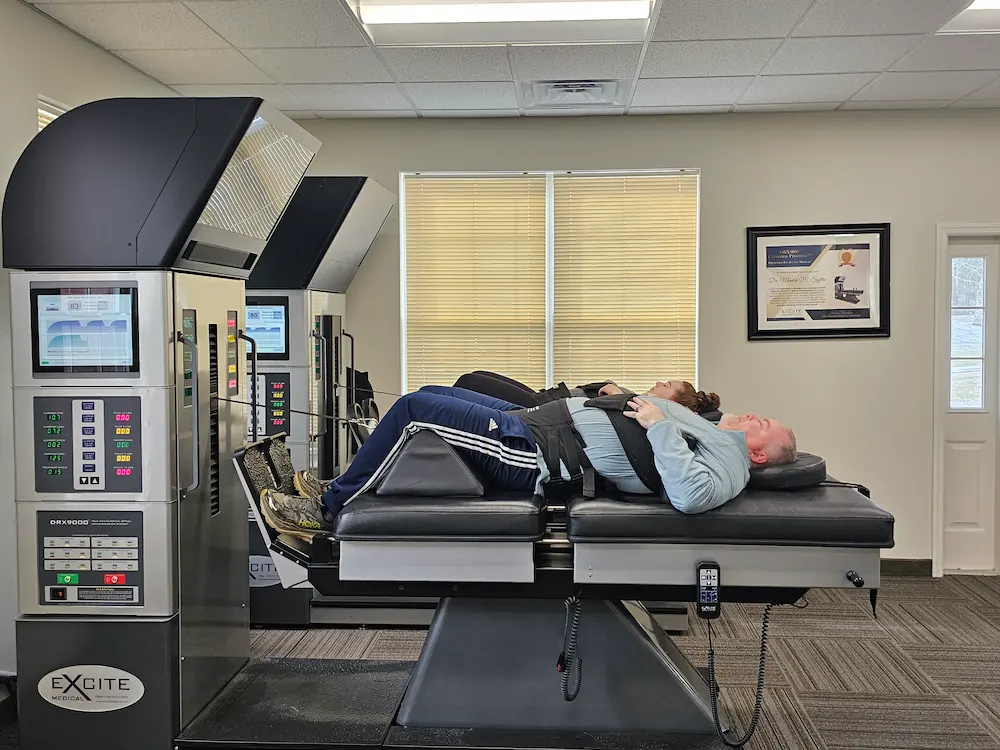
Spinal decompression and chiropractic adjustment are often confused, but they do different jobs, and the right choice depends on what is actually wrong with your spine. An adjustment restores movement to joints that are stuck or misaligned, while decompression gently stretches the spine to take pressure off a disc and nerve. Some problems call for one, some for the other, and many do best with both. At Princeton Spine Disc and Chiropractic in Princeton, NJ, Dr. Sojitra matches the approach to the diagnosis rather than applying a single method to everyone.
Two Different Tools for Two Different Problems
It is easy to assume all chiropractic care is the same set of movements, but decompression and adjustment are genuinely different. They solve different problems, feel different, and are chosen for different reasons.
Understanding the distinction helps explain why a good plan is not about picking a favorite technique. It is about matching the tool to the actual problem in your spine.
The confusion is understandable. Both happen on a treatment table, both are done by a chiropractor, and both aim to relieve back or neck pain. But under the surface they work on completely different mechanisms, and that is what determines when each one helps.
What a Chiropractic Adjustment Does
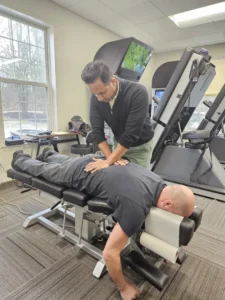
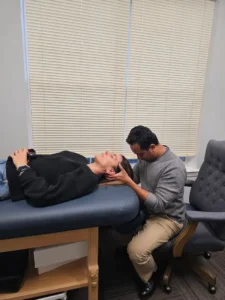
A chiropractic adjustment restores proper movement to joints that have become restricted, stuck, or misaligned. Using a controlled, precise force, it frees up the joint, which can reduce pain, ease muscle tension, and improve how the spine moves.
Adjustments are well suited to mechanical problems: a joint that is not moving the way it should, stiffness, and many cases of everyday back and neck pain. The focus is on motion and alignment.
Many people also notice an immediate sense of relief and looser movement after an adjustment, because restoring motion to a stuck joint can quickly reduce the muscle guarding built up around it. For the right problem, it is direct and effective.
What Spinal Decompression Does
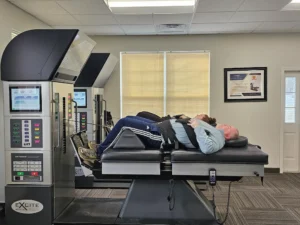
Spinal decompression takes a different approach. Rather than adjusting a joint, it uses a specialized table to gently stretch and lengthen the spine, creating space between the vertebrae.
That gentle traction reduces pressure on the discs and nerves. As the space opens, it can help take load off a bulging or herniated disc and relieve the nerve irritation behind conditions like disc pain and sciatica. The focus here is pressure, not alignment.
Decompression also tends to be a more gradual process. Rather than a single movement, it works over a series of sessions, slowly encouraging the disc to recover and the nerve to settle. That patience is part of why it suits disc problems, which do not resolve in a single moment.
Spinal Decompression vs. Adjustment: Key Differences
- What it targets: joint movement and alignment for adjustments, disc and nerve pressure for decompression.
- How it feels: a quick, controlled movement versus a slow, sustained stretch.
- Best for: stiff or restricted joints versus herniated or bulging discs and nerve compression.
- The mechanism: restoring motion versus creating space and reducing load.
Which One Does Your Spine Need?
This is the question that actually matters, and the honest answer is that it depends on the diagnosis. Here is how the choice generally breaks down.
When an Adjustment Is the Right Fit
If the problem is a restricted or misaligned joint, stiffness, or mechanical back and neck pain without significant disc involvement, an adjustment is often the more direct solution. It addresses the movement problem at its source.
When Decompression Is the Right Fit
If the problem centers on a disc, such as a herniation or bulge pressing on a nerve, decompression is usually the better tool. In those cases, forcing motion is not the goal; relieving pressure is. This is the approach Dr. Sojitra used for his own severe disc herniation, which you can read about in this overview of spinal decompression in Princeton, NJ.
It is also why decompression, not repeated adjusting, is often the centerpiece when a herniated disc is clearly the culprit.
When Both Work Together
Often the best results come from combining them. A disc problem may respond to decompression while nearby joints benefit from adjustment, and the two together can address both the pressure and the mechanics. Matching that combination to your case is part of the plan.
This is actually where having both available under one roof helps. Because the practice offers adjustment and decompression, the plan is not limited by what a given clinic happens to do; it is shaped by what your spine needs.
Why Choosing the Wrong One Holds You Back
Using the wrong approach is rarely harmful, but it can waste time. Repeated adjustments on a spine whose real problem is a compressed disc may bring only brief relief, because the pressure on the nerve was never reduced. Likewise, decompression for what is really a simple mechanical restriction may be more than the situation calls for.
That mismatch is a common reason people feel like they have “tried chiropractic” without lasting results. Often the technique was fine; it just did not fit the problem. Matching the two is what turns treatment into progress.
Why the Diagnosis Comes First
You may have noticed the theme: the right technique depends entirely on what is wrong. That is why Dr. Sojitra does not decide between decompression and adjustment until after a full evaluation.
The practice uses a two-day process for exactly this reason. The first visit is spent identifying the cause, and the plan, including which of these approaches to use, comes on the second visit. Choosing a technique before understanding the problem is how care goes sideways.
It is the same reasoning behind every plan here: understand the problem fully, then reach for the tool that fits it.
Frequently Asked Questions
Is spinal decompression safer than an adjustment?
Neither is inherently safer; they are simply suited to different problems. Both are gentle when matched to the right situation and performed appropriately. The evaluation determines which is appropriate for you.
Can I just choose the one I prefer?
It is better to let the diagnosis guide the choice. Picking a technique based on preference rather than cause is a common reason treatment underdelivers. The goal is the right tool for your specific spine.
Do adjustments help herniated discs?
They can play a supporting role, but a significant disc herniation pressing on a nerve typically responds better to decompression, sometimes combined with adjustment of the surrounding joints. Your evaluation will clarify the mix.
Will I know which one I am getting before we start?
Yes. After the evaluation, Dr. Sojitra explains what he found and which approach fits, and why. You are not left guessing, and the plan is discussed with you before treatment begins.
Find Out Which Your Spine Actually Needs
Rather than guessing between decompression and adjustment, an evaluation can tell you which one fits your spine. Call the practice at (609) 228-9996 or reach out through our contact page to schedule a visit in Princeton, NJ.