SoftWave therapy and shockwave therapy sound like the same treatment, but they work in different ways. Shockwave (E-PAT) uses radial pressure waves that spread out near the surface, which suits tendon and soft tissue problems. SoftWave uses focused electrohydraulic acoustic waves that reach deeper into joints, discs, and bone to trigger tissue repair. At Princeton Spine Disc and Chiropractic in Princeton, NJ, Dr. Sojitra offers both, so the real question is not which is better overall, but which one matches the tissue that actually needs help.
SoftWave Therapy vs. Shockwave Therapy: The Short Version
Both are non-invasive, drug-free treatments that use acoustic energy to stimulate healing. The difference is in how that energy is created and how deep it travels.
Shockwave sends waves out in a spreading pattern that concentrates near the surface. SoftWave focuses its energy so it can reach deeper structures without losing strength. That single difference shapes almost everything about which conditions each one treats best.
What Is Shockwave Therapy (E-PAT)?
The shockwave therapy used at the practice is radial pulse technology, the E-PAT system by Storz. It delivers pressure waves that radiate outward and work well on soft tissue that sits closer to the surface.
It tends to be the better fit for conditions like:
- Plantar fasciitis and heel pain
- Achilles tendinopathy
- Tennis elbow and golfer’s elbow
- Calcific shoulder and rotator cuff issues
- IT band syndrome and patellar tendinopathy
Many of these fall under the broader category of extremity and joint pain, where the problem is a specific tendon or soft tissue area rather than a deep joint.
What Is SoftWave Therapy?
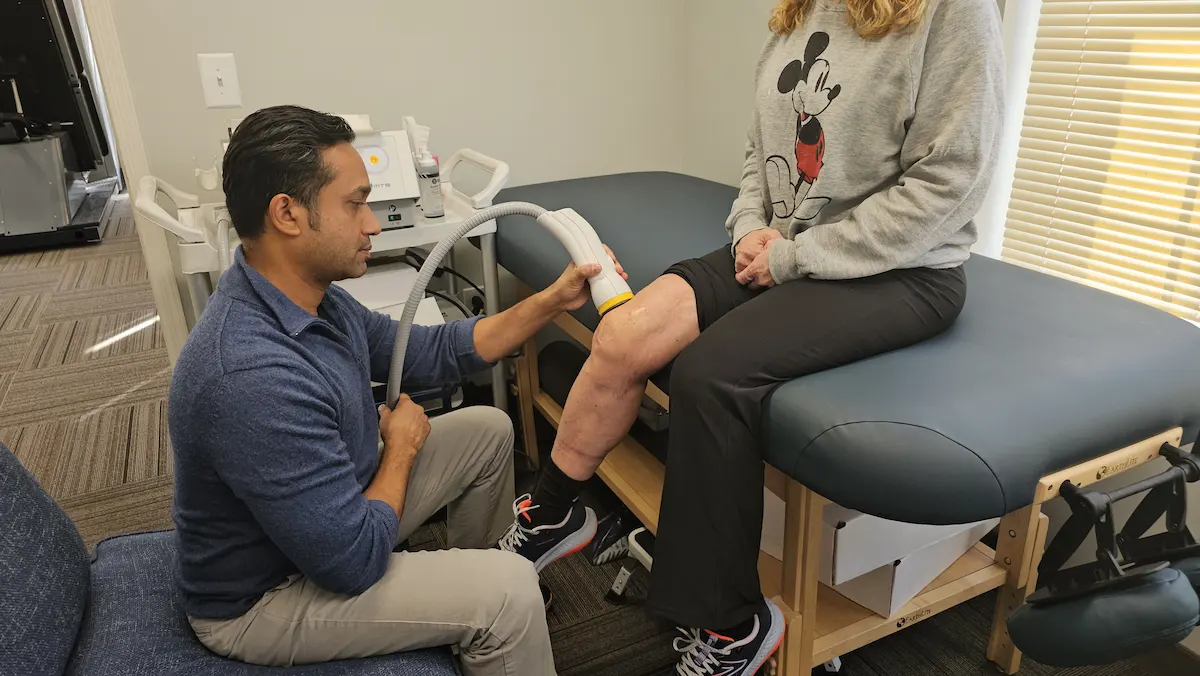
SoftWave therapy uses electrohydraulic acoustic wave technology, which is actually the original tech that standard shockwave was later derived from. Its focused energy reaches deeper tissue and is designed to prompt regeneration, not just temporary pain relief. Dr. Sojitra was among the first 100 providers nationwide to offer it.
Because it goes deeper, SoftWave is often used for:
- Knee pain and joint degeneration
- Disc-related pain
- Shoulder pain
- Neuropathy and nerve-related symptoms
- Plantar fasciitis and stubborn extremity issues
It also has a practical advantage that sets it apart. SoftWave is safe to use on bone, near organs, on the face, and even for patients with a pacemaker, which is not the case for many other devices in this category.
The Key Differences at a Glance
- Depth: shockwave works near the surface, SoftWave reaches deeper.
- Best for: shockwave for surface tendon and soft tissue conditions, SoftWave for deeper joint, disc, and nerve issues.
- Safety range: SoftWave can be used safely on bone, on the face, and with a pacemaker.
- Goal: both reduce pain, but SoftWave leans toward long-term tissue regeneration.
Which One Do You Actually Need?
You should not have to decide this on your own, and you will not need to. An evaluation looks at where the problem sits and how deep it goes before anything is recommended. That said, here is the general logic Dr. Sojitra uses.
Shockwave (E-PAT) tends to fit when
The issue is a specific tendon or soft tissue area near the surface, such as heel pain, tennis elbow, or a calcific shoulder problem. These respond well to radial waves that concentrate their energy where the tissue is easy to reach.
SoftWave tends to fit when
The problem is deeper or more complex, such as knee pain from joint wear, disc-related pain, or nerve symptoms. It is also the go-to option for patients who cannot use standard shockwave because of a pacemaker.
Why It Helps to Have Both Under One Roof
Most clinics in the Princeton area offer only one of these technologies, which means the treatment gets chosen to fit the machine on hand. At the Princeton office, both are available, so the technology is matched to the tissue instead of the other way around.
SoftWave is also frequently combined with other tools. For deep joint problems like an arthritic knee, it often works alongside knee decompression as part of a layered plan. You can read more about that approach in this piece on non-surgical options for a bone-on-bone knee.
Frequently Asked Questions
Does either treatment hurt?
Most patients describe a tapping or pulsing sensation rather than pain. Sessions are short, usually ten to fifteen minutes, and there is no downtime afterward.
How many sessions will I need?
It varies by condition, but many SoftWave plans average around twelve sessions, often starting at twice per week and tapering off. Shockwave protocols are commonly shorter. Your evaluation will map out a realistic number.
Can I have both?
Sometimes, yes. Certain cases benefit from combining approaches or pairing SoftWave with other therapies. This is decided based on your specific results, not a fixed package.
Not Sure Which One Fits Your Situation?
The fastest way to find out is a proper evaluation. Call the practice at (609) 228-9996 or use our contact page to book a visit in Princeton, NJ, and let Dr. Sojitra match the right technology to what your body needs.