Zone Technique Chiropractic in Skillman NJ
How Chiropractic Care Works at Princeton Spine Disc and Chiropractic
At Princeton Spine Disc and Chiropractic, adjustments target a more fundamental level than the spine alone: the nervous system. Dr. Sojitra’s adjustments are guided by Zone Technique analysis, which evaluates all six bodily systems through six palpation points on the posterior skull. Each point corresponds to a brain center regulating a specific system: glandular, eliminative, nervous, digestive, muscular, or circulatory.
A reactive point indicates neurological stress, revealing precisely which spinal segments require adjustment to facilitate a homeostatic brain reset. By addressing why the body generates a pain signal rather than just where it hurts, patients frequently experience systemic benefits beyond the primary treatment area, including improved sleep, enhanced digestion, clearer thinking, and reduced anxiety as the central nervous system regulates more efficiently.
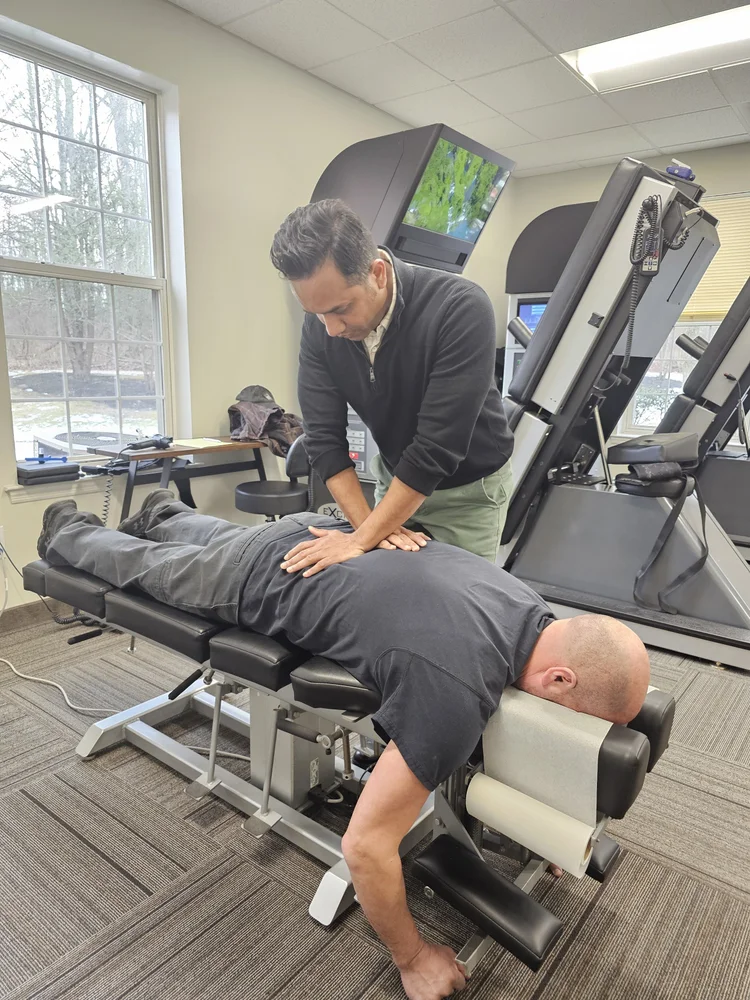
- Zone Technique analysis identifies neurological stress patterns before any adjustment is made
- DRX9000 spinal decompression for lumbar, cervical, and disc conditions
- Full-body adjusting includes the spine, extremities, ribs, cranial structures, and intraoral joints
- Drug-free, non-surgical approach that supports the body's own healing capacity
- Care plans are built around findings, not a fixed number of visits
Chiropractic Techniques at Princeton Spine Disc and Chiropractic
Zone Technique
The analytical foundation for every adjustment. By palpating six points on the posterior skull, Dr. Sojitra identifies which systems are under neurological stress and adjusts the corresponding spinal segments to help the brain re-establish proper signaling.
Diversified Technique
Gonstead Technique - Seated Cervical and Lumbar
ArthroStim Instrument Adjusting
Light Touch Adjusting
SOT - Sacro-Occipital Technique
Vagus Nerve Technique
Upper cervical adjusting focused on the C1 segment to directly influence vagal tone relevant for anxiety, digestive issues, heart rate irregularities, brain fog, and post-concussion symptoms. Often combined with NeuFit or the NMS-460 Stimpod.
Pettibon Wobble Chair and Extension Traction
Extremity and Full-Body Adjusting
Prenatal and Pediatric Adjusting
Conditions We Treat with Chiropractic Adjustments in Skillman NJ
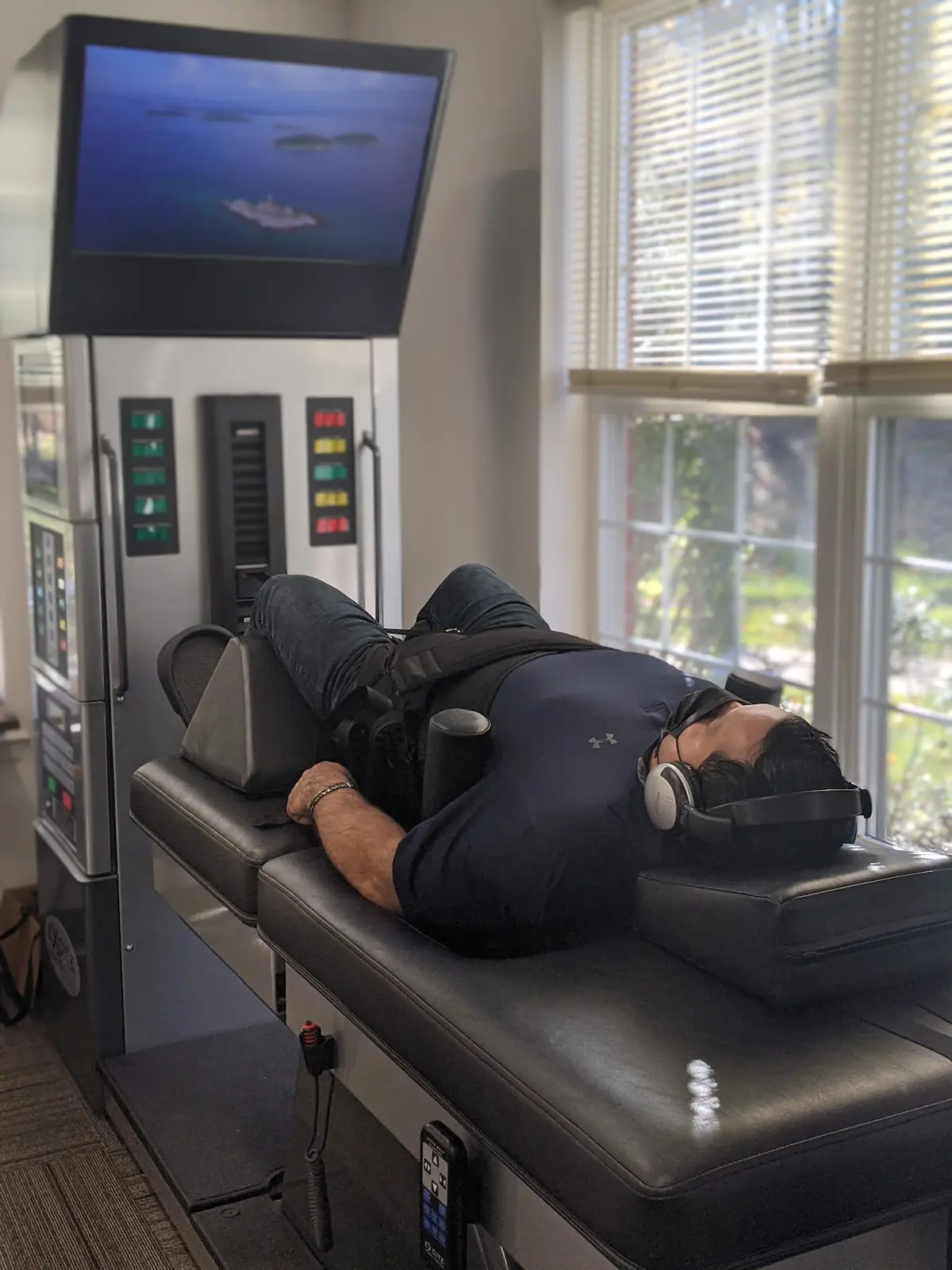
- Disc pain - herniated and bulging discs : Adjustments restore joint motion and reduce mechanical stress at affected disc levels - often combined with DRX9000 decompression for cases with significant nerve involvement.
- Back pain: Lumbar and pelvic adjustments address joint restrictions, sacroiliac dysfunction, and muscle guarding patterns that perpetuate the pain cycle.
- Sciatica: Zone Technique and lumbar adjustments address the spinal contribution to sciatic nerve compression, with pelvic corrections targeting SI joint involvement.
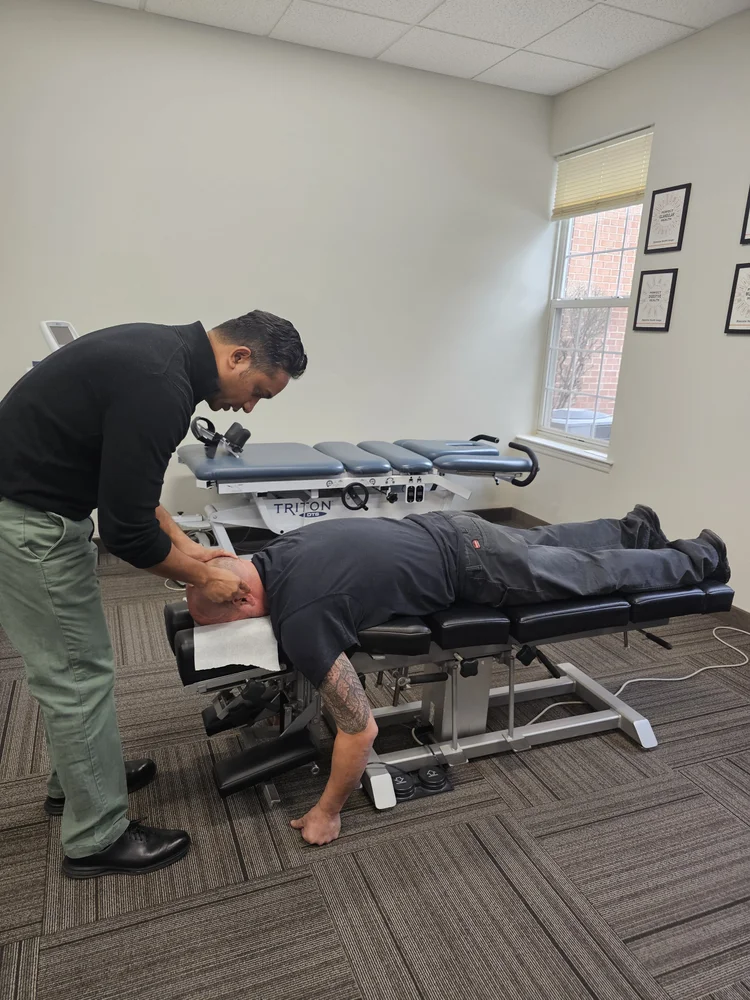
- Neck pain: Seated cervical adjustments, extension traction, and vagus nerve technique address cervical disc conditions, postural dysfunction, and upper cervical nerve irritation.
- Headaches and migraines: Upper cervical adjustments at C1, C2, and C3 directly address the cervicogenic component of tension and migraine headaches.
- TMJ: Specific TMJ adjustments, intraoral cranial work, SOT pelvic blocks, and Zone Technique address the jaw, skull, cervical spine, and pelvis simultaneously.
- Extremity and joint pain: Direct adjustments to the shoulder, elbow, wrist, hip, knee, ankle, and foot restore joint mechanics and reduce compensatory pain patterns.
- Vagus nerve dysfunction: Upper cervical and vagus nerve technique address anxiety, digestive dysfunction, post-concussion symptoms, and other conditions driven by impaired vagal tone.
Benefits of Consistent Chiropractic Care
- Reduced frequency and intensity of recurring pain episodes
- Improved sleep quality as the nervous system settles out of chronic stress patterns
- Better energy and cognitive clarity as the brain-body communication improves
- Improved posture and movement mechanics as structural corrections hold longer
- Reduced muscle tension and faster recovery from physical activity
- Earlier detection of developing restrictions before they become symptomatic
The Only Cranial Facial Release Provider in New Jersey
Princeton Spine Disc and Chiropractic primarily serves adults in the Princeton and Montgomery Township area, including desk-bound professionals, commuters, and active individuals whose unique physical demands create distinct patterns of spinal and nervous system stress. Dr. Sojitra specializes in resolving complex, recurring conditions that have plateaued under standard rehabilitation protocols, commonly treating:
- Chronic Pain Sufferers: Treating stubborn, recurring pain that signals the underlying neurological cause has not yet been identified.
- Post-Surgical & Post-Injury Patients: Restoring structural function when standard rehabilitation fails to return full mobility.
- Athletes & Active Adults: Addressing overuse injuries, extremity joint dysfunction, or recovery plateaus following traditional physical therapy.
- Caregivers & Parents: Resolving accumulated, long-term physical stress that has lacked proper corrective care.
- Desk Workers & Commuters: Managing chronic neck pain, forward head posture, or disc conditions from prolonged sitting.
What Our Patients Are Saying
Trustindex verifies that the original source of the review is Google. Working with Dr. Manish and going through his Cranial Facial Release (CFR) procedure has been one of the best health decisions I've made. What immediately stood out was his thoroughness. He doesn't take a narrow or one-dimensional approach. He evaluates all six systems and looks at the body as an integrated whole. That full body perspective was exactly what I was looking for... not a quick fix, but a thoughtful, comprehensive strategy. Equally impressive was how much time he took to educate me. He didn't just "do the procedure" - he explained what he was seeing, why it mattered, and how everything is connected. As someone who values understanding the why behind the process, I appreciated that level of detail. For anyone who believes in solving problems at their source rather than masking symptoms, I can't recommend Dr. Manish highly enough. I'm incredibly glad I decided to move forward with CFR.Posted on GoogleTrustindex verifies that the original source of the review is Google. I came to this clinic with lot of issue with my back pain which was flaring up even after doing Physio therapy and resting. I was in a bad spot and given up at times. However with Dr Manish help and care my situation has improved. One thing I like about him is his honesty and his expertise in the field of Chiropractic care. Not only he is excellent doctor his clinic has state of art equipment to help his patients. I would advice everyone to get the assessment of your spinal health and you will learn few things and start the journey of fitness and balanced life.Posted on GoogleTrustindex verifies that the original source of the review is Google. I came in with chronic back pain I have dealt with for three years, starting after I had my fourth child. Dr. Manish’s care feels holistic and has made my recovery last, not just give quick relief. I do not just come in to get my back cracked. He focuses on strengthening the muscles that support a strong core and back so I can stay well between visits. I wholeheartedly recommend his practice if you want long term change and whole body support!Posted on GoogleTrustindex verifies that the original source of the review is Google. I’ve undergone four trauma surgeries in the last five years, the most recent a spiral fracture to my femur which led to neuropathy. After searching I found Dr. Manish who treats many types of conditions, with neuropathy being on his list. After completing two scripts of orthopedic PT Dr. Manish worked, using nerve stimulation, back decompression, balance/strength and manual manipulation as well as a home routine (red light/vibration/water bath/supplements) to set me on the right path to healing. I no longer use a cane at home and look forward to continued success outside the house. Highly recommended. Kelly AllenPosted on GoogleTrustindex verifies that the original source of the review is Google. Excellent. Friendly. Great care. Highly recommend.Posted on GoogleTrustindex verifies that the original source of the review is Google. I came in with a herniated disc S5L1 that I had been battling with for 3.5 years. Within two weeks of my program here I had relief I haven't felt in years. Highly recommend.Posted on GoogleTrustindex verifies that the original source of the review is Google. Helps a lot with pain in a knee. Softwave procedure is quick and very efficient. I can walk much better now.Posted on GoogleTrustindex verifies that the original source of the review is Google. I was a little hesitant to visit a chiropractor, but Dr. Manish proved his expertise to beworth the time. My symptoms were affecting my everyday activities along with numerous hobbies of mine. My pain in my knee was precisely evaluated, and with a few treatments my symptoms drastically subsided, I plan to continue with my treatment. I can say that I recommend him wholeheartedly and will undoubtedly continue to choose him for my healthcare.Posted on GoogleTrustindex verifies that the original source of the review is Google. I was a little hesitant to visit a chiropractor, but Dr. Manish proved his expertise to be worthwhile. My symptoms were affecting life’s everyday activities along with numerous hobbies of mine. My pain from injuries was precisely evaluated, and within just a few visits my symptoms drastically subsided. I am nearly done my treatment plan and I am back to enjoying my days pain free, revitalized, and rehabilitated. I am very grateful for Dr. Manish and team!
Frequently Asked Questions About Chiropractic Adjustments
For most patients, no. Diversified adjustments produce pressure and sometimes an audible pop. ArthroStim feels like rapid tapping. Light touch feels like almost nothing. Patients in significant acute pain may feel mild soreness in the first day or two. Dr. Sojitra always calibrates the approach to what your nervous system can tolerate.
Ready to See What Care Can Look Like in Skillman When It Actually Starts With Why?
If you have been living with pain that other providers have not been able to resolve – or have been told to simply manage it – we would like the chance to take a different look. Princeton Spine Disc and Chiropractic serves patients throughout Skillman, Princeton, Princeton Junction, Montgomery Township, and the surrounding central New Jersey area.